





Satinwood Bedroom Cupboard
Satinwood bedroom cupboards are practical bedside cabinets and tall storage pieces finished in luminous timber, prized for brightening period bedrooms.

Satinwood Bedroom Cupboard
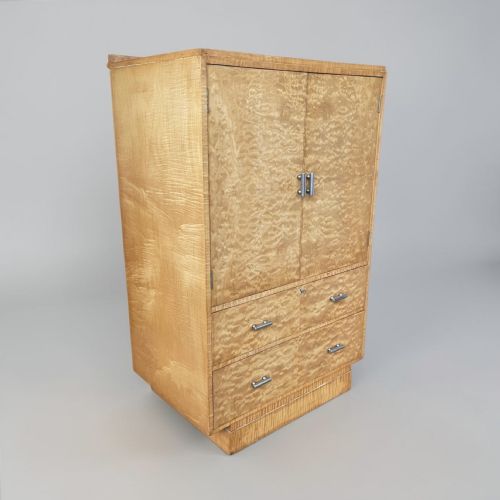
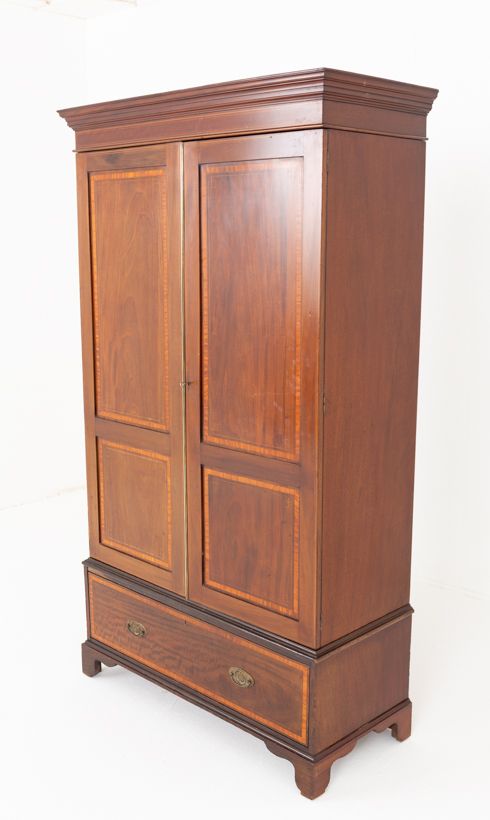
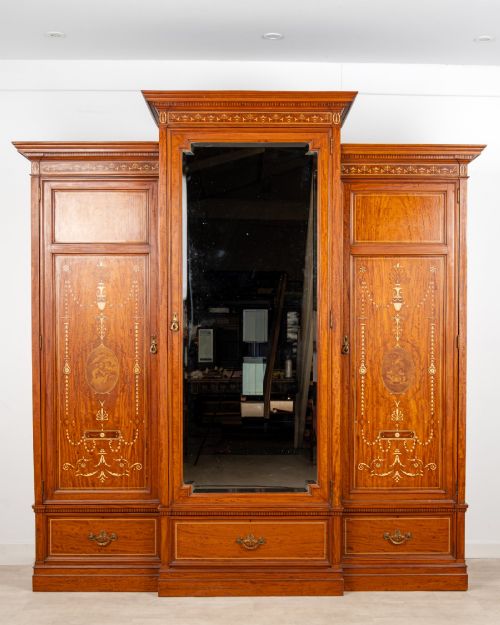
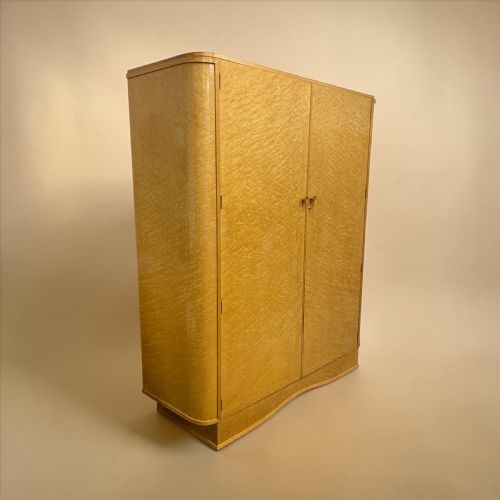
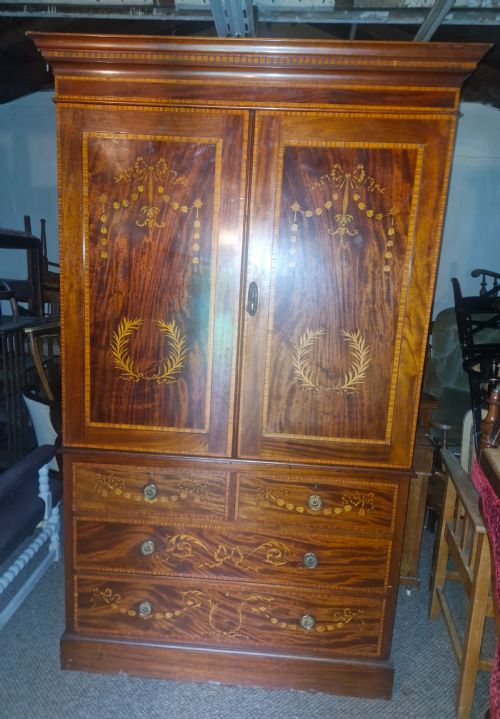
A satinwood bedroom cupboard encompasses compact bedside cabinets, nightstands, and large linen presses or wardrobes designed for domestic storage. When searching for this phrase, a buyer most frequently encounters Edwardian and Art Deco examples alongside Victorian and nineteenth-century pieces.
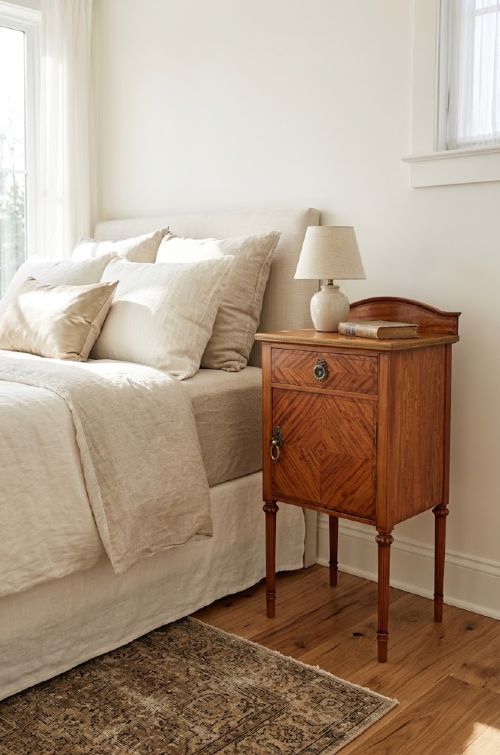
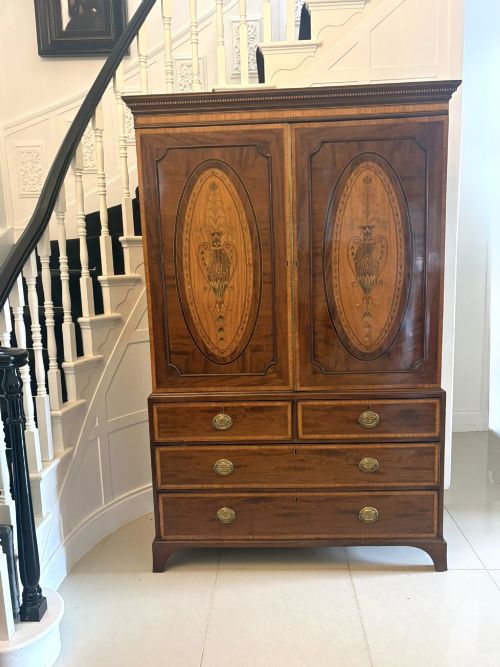
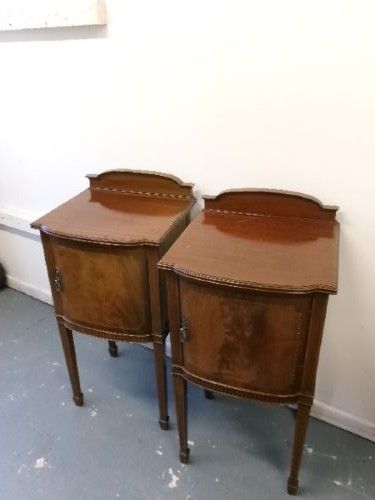
Bedside cabinets form the bulk of the smaller pieces, often appearing in pairs with single doors or drawers. Larger storage items take the form of tallboys, wardrobes, and linen presses featuring panelled doors and fitted interior shelving.
Materials and construction methods
Cabinet makers utilised satinwood as a primary timber or as decorative veneer applied over structural carcases of mahogany, birch, or walnut. Boxwood and brass frequently provide contrasting stringing, inlay, and hardware details.
Joinery methods combine traditional solid timber framing with fine marquetry and painted decoration, particularly in Edwardian and Sheraton Revival pieces. Surfaces receive polish that enhances the natural sheen and golden tone of the timber.
Housekeepers once stored folded linens flat inside deep press cupboards to prevent creases, keeping household textiles pristine before modern wardrobes took over.
Distinctions in craftsmanship
Quality rests in the selection of the timber figures, the precision of the boxwood inlays, and the integrity of the underlying carcase construction. Superior pieces maintain matching veneer grains across drawer fronts and door panels.
Maker attribution and the sophistication of decorative elements, such as hand-painted panels or elaborate brass handles, separate standard production items from workshop pieces created by prominent cabinet makers.
Druce & Co·Waring & Gillow·Heal's·Maple & Co·Edwards & Roberts·Lamb of Manchester
The Satinwood Bedroom Cupboard Glossary
- Satinwood
- A dense, lustrous hardwood with a natural golden sheen used extensively for fine furniture veneers and stringing. It reflects light brightly in domestic interiors.
- Linen press
- A tall storage cupboard featuring upper sliding trays or shelves enclosed by doors, positioned above lower drawer sections. They originated for storing household textiles flat.
- Marquetry
- Decorative patterns formed by fitting together thin slices of various coloured woods and materials into a veneered surface. This technique creates pictorial or geometric designs.
- Stringing
- Thin lines of contrasting timber inlaid into the surface of a cabinet to outline drawers, panels, or tabletops. It defines the structural geometry of the piece.
- Tallboy
- A tall chest of drawers standing upon another chest or a support frame, providing high-capacity vertical storage. They emerged in the eighteenth century and persisted through later revival periods.
Satinwood Bedroom Cupboard: Frequently Asked Questions
What is a satinwood bedroom cupboard?
A satinwood bedroom cupboard is an item of antique bedroom furniture finished in bright, golden timber, functioning either as a small bedside cabinet or a larger wardrobe.
These pieces range from compact Edwardian nightstands to substantial nineteenth-century linen presses and art deco tallboys.
How do I style a bedside cabinet?
Bedside cabinets in satinwood introduce warmth and reflected light to a modern or traditional bedroom scheme. Their compact proportions allow them to sit beside standard bed heights while offering concealed storage.
Pairing matching cabinets creates visual symmetry, whereas individual tables introduce eclectic character to a room.
How do I distinguish Edwardian pieces from Victorian ones?
Edwardian satinwood furniture often displays lighter tones, refined boxwood stringing, and Sheraton Revival influences with painted floral motifs. Victorian examples tend to be heavier in build, utilising deeper mahogany carcases with satinwood veneers and bolder mouldings.
Proportions also shift, with Edwardian pieces favouring lighter visual weight and Victorian pieces emphasising robust utility.
Were these cupboards made in pairs?
Many bedside cabinets and smaller cupboards survive as matched pairs intended to flank a double bed. Cabinet makers frequently produced matching sets alongside larger wardrobes and dressing tables for coordinated bedroom suites.
Single cupboards usually originated as standalone bedside stands or pieces from larger dispersed suites.