
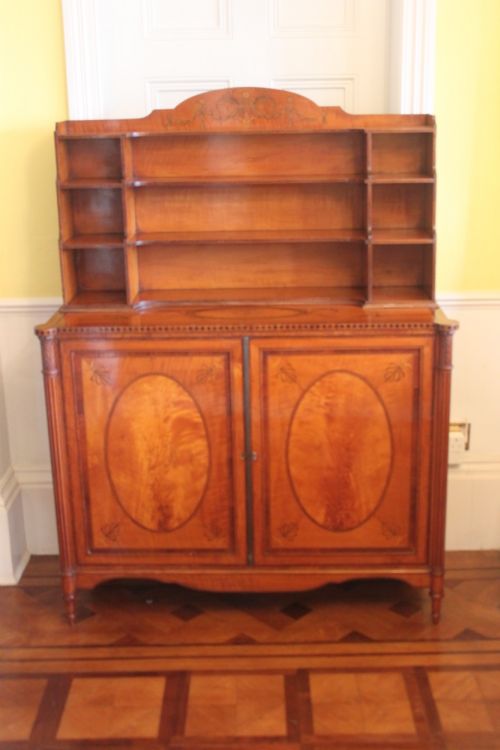


Satinwood Display Credenza
A satinwood display credenza brings a luminous timber finish and glass-fronted storage into a room.
Satinwood Display Credenza
A satinwood display credenza functions as a low cabinet designed for showing porcelain and decorative objects while providing enclosed storage. These pieces combine flat top surfaces with glazed or open central compartments flanked by side cupboards.
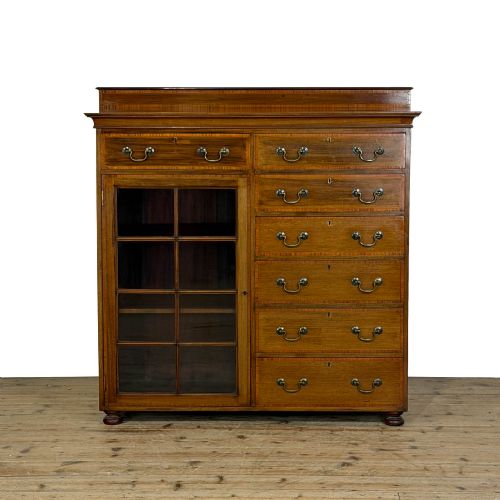
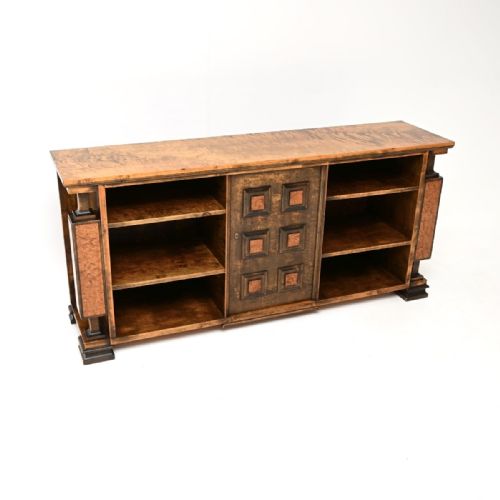
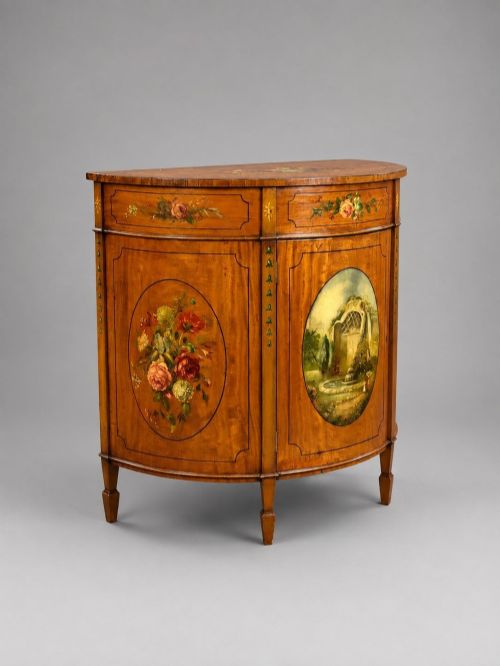
Buyers encountering this search phrase find examples ranging from Sheraton period and Edwardian satinwood pieces to Victorian and Art Deco variations. The forms encompass demi-lune side cabinets, glazed vitrines, and heavy ormolu-mounted credenzas.
Many items recorded in the evidence demonstrate the revival of eighteenth-century aesthetics through Sheraton Revival and Victorian French Revival interpretations. The structural shapes vary from straight-fronted sideboards to curved half-moon cabinets.
Construction and Materials
Makers utilised pale satinwood veneers applied over secondary carcase timbers such as mahogany and walnut, often accentuating the grain with contrasting stringing. Inlaid details, marquetry, and hand-painted panels frequently decorate the primary surfaces of these cabinets.
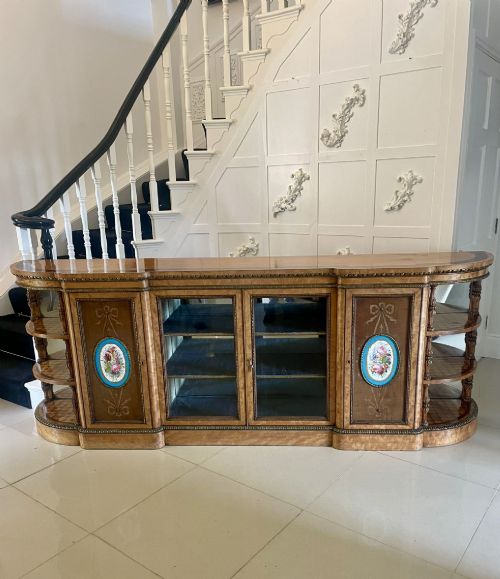
Gilded bronze or ormolu mounts frame the glazed doors, corners, and plinths of nineteenth-century examples. Glass panels are fitted into wooden or gilt-metal frames to create the display sections intended for viewing contents from the room.
Listings span periods from around eighteen-hundred through the Edwardian era to nineteen-thirty, demonstrating shifts from neoclassical inlay to Art Deco forms.
Assessing Quality and Execution
Quality reveals itself in the crispness of the marquetry cutting and the precision of the timber matching across the cabinet front. Superior examples integrate hand-painted detailing and finely cast ormolu mounts that fit the contours of the carcase seamlessly.
The choice of secondary woods and the joinery visible inside the cupboards and drawers indicate the workshop standards. Heavier proportions and simpler veneering distinguish more utilitarian output from masterworks signed by prominent makers.
James Hicks·Edwards and Roberts
The Satinwood Display Credenza Glossary
- Satinwood
- A hard, yellowish timber with a natural sheen, prized for fine furniture veneers. It takes a high polish and provides a bright, reflective surface.
- Credenza
- A low cabinet or sideboard, traditionally used for displaying plate and serving food. In nineteenth-century contexts, it frequently incorporates central glass doors flanked by curved side cupboards.
- Ormolu
- Gilded bronze mounts applied to furniture for decorative effect. These cast metal ornaments highlight architectural breaks and frame door panels.
- Marquetry
- The art of applying pieces of veneer to a structure to form decorative patterns and pictures. Craftsmen cut contrasting timbers together to achieve tight joints.
- Demi-lune
- Half-moon shaped in plan. This curved furniture profile allows cabinets to sit flush against a wall while projecting into the room.
Satinwood Display Credenza: Frequently Asked Questions
How do I date a satinwood credenza?
Dating relies on observing the combination of timber framing, mount styles, and decorative motifs across the piece. Sheraton Revival examples from the Edwardian period often employ lighter proportions and delicate painted panels compared to heavy mid-Victorian designs.
Secondary woods and construction methods inside the carcase provide further clues to the decade of manufacture. Comparing the hardware and internal linings against documented examples from the same stylistic era helps confirm the period.
Where should I place a display credenza?
These low cabinets suit dining rooms, drawing rooms, or wide hallways where their reflective satinwood surfaces can catch natural light. Placing them against a solid wall allows the silhouette and any curved demi-lune front to stand clear of foot traffic.
Because the surfaces incorporate delicate veneers and hand-painted details, positioning them away from direct sunlight and strong heat sources preserves the finish. The glazed display sections make them ideal for showcasing collections of ceramics and glassware.
How do I care for antique satinwood?
Maintaining satinwood requires regular dusting with a soft, dry cloth and avoiding silicone-based polishes that build up over time. Applying an occasional coat of appropriate furniture wax helps nourish the timber veneer and protects the polished surface.
Keep the humidity in the room stable to prevent the underlying carcase woods from expanding and causing the veneer to lift. Protecting the top surface from moisture and direct heat ensures the delicate inlay and paintwork remain intact.