
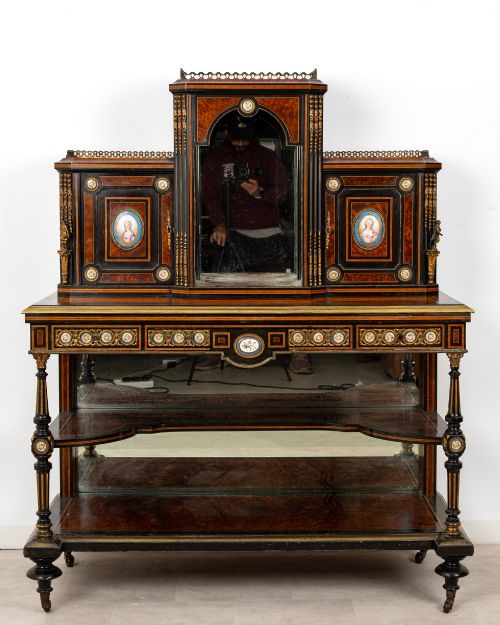
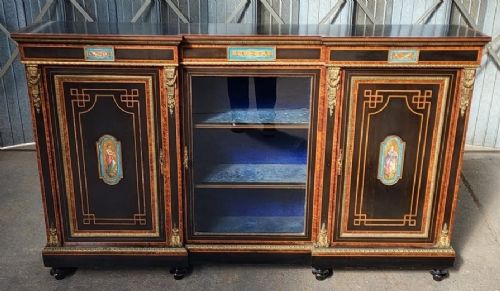
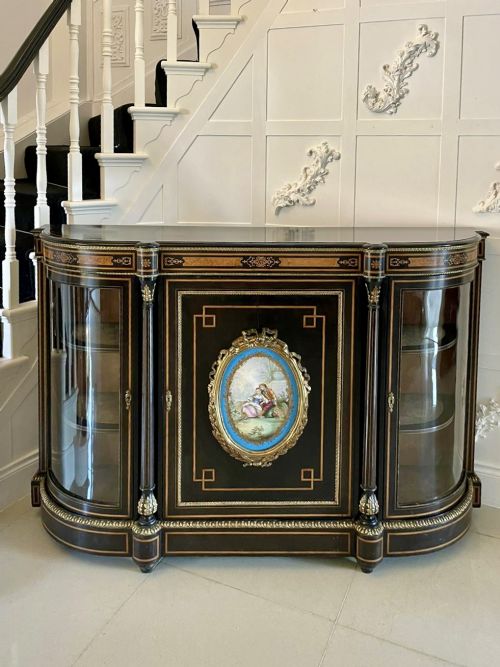
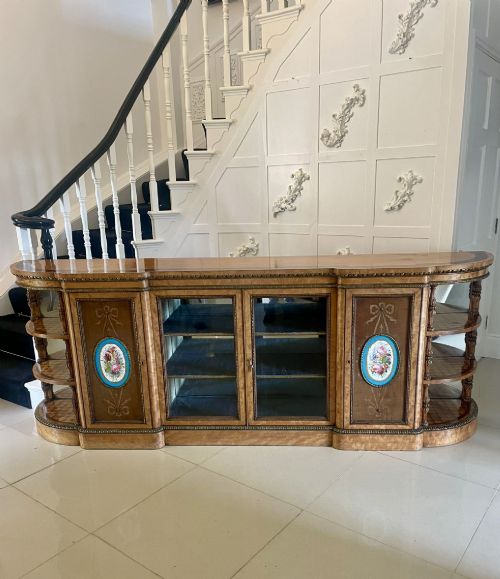


Victorian Porcelain Plaque Sideboard
These pieces for a victorian porcelain plaque sideboard combine rich timbers and ceramic panels to anchor a room.
Victorian Porcelain Plaque Sideboard
When you search for a victorian porcelain plaque sideboard, you encounter credenzas, side cabinets, and desks housing ceramic inserts. The most common form on this page is the walnut or burr walnut credenza featuring glazed doors and mounted plaques.
Makers adapted French and English revival styles during the nineteenth century, blending marquetry, ormolu, and contrasting woods. Pieces range from single cabinets to monumental display furniture with multiple doors.
How they were made
Cabinetmakers utilised burr walnut, amboyna, satinwood, and ebonised wood as foundations for intricate marquetry and gilt mounts. Porcelain plaques, often painted with floral or figural subjects, were set directly into the timber or framed in brass and ormolu.
Glass panels and mirrored backs were integrated into display sections, while brass hardware secured doors and fitted interiors.
One cabinet bears the stamp of Lamb of Manchester, proving that northern workshops competed directly with London cabinetmakers.
What varies in quality
Quality rests on the depth of the timber grain, the crispness of the bronze or ormolu cast, and the hand-painted detail on the porcelain plaques. Finer examples display meticulous marquetry work and heavy, well-chased mounts rather than simple pressed brass.
Lamb of Manchester
The Victorian Porcelain Plaque Sideboard Glossary
- Ormolu
- Gilt bronze mounts applied to furniture for decoration and edge protection. This technique creates metallic highlights against dark woods.
- Credenza
- A low cabinet with doors, frequently used for display and storage in nineteenth-century interiors. It often serves as the primary base for porcelain plaques.
- Marquetry
- Fitted wood veneers forming decorative patterns on cabinet surfaces. Craftsmen cut contrasting timbers to create floral or geometric designs.
- Bonheur du Jour
- A small writing desk featuring an upper cabinet section with shelves or drawers. These delicate pieces sometimes incorporate porcelain plaques into the superstructure.
Victorian Porcelain Plaque Sideboard: Frequently Asked Questions
What is a credenza?
A low enclosed cabinet designed for display and storage during the nineteenth century. It frequently incorporates glass doors and decorative panels.
These pieces typically sat against primary reception room walls to display porcelain and silver.
Where were porcelain plaques made?
Many ceramic plaques mounted on these cabinets originated from European factories like Sevres. They were imported and fitted into English and French furniture frameworks.
Makers utilised them to add colour and pictorial interest to dark wood surfaces.
How do I care for burr walnut?
Burr walnut requires stable indoor humidity and protection from direct sunlight to prevent veneer cracking. Regular dusting with a soft cloth maintains the polished surface.
Avoid liquid polishes containing harsh chemicals that might damage the historical finish.
What is ebonised wood?
Timber treated with a dark stain or finish to imitate expensive ebony. Makers utilised fruitwoods and other common timbers for this process.
It provides high contrast when paired with gilt bronze mounts and colourful porcelain plaques.