




Golden Satinwood Chest
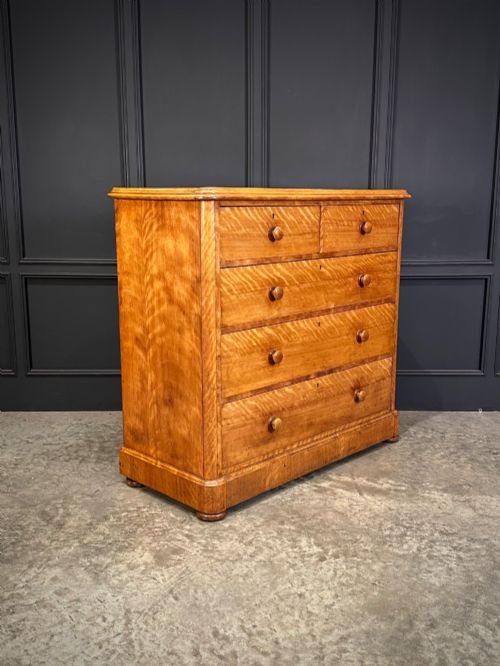
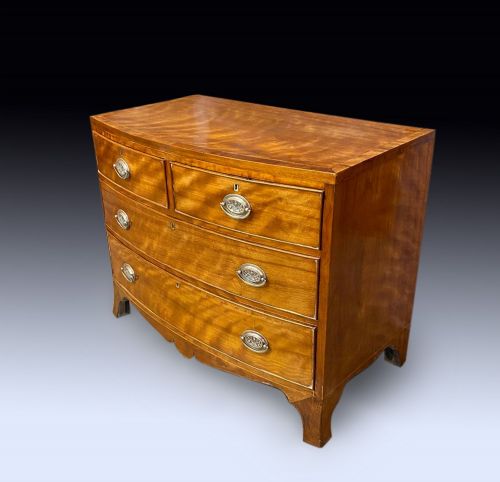
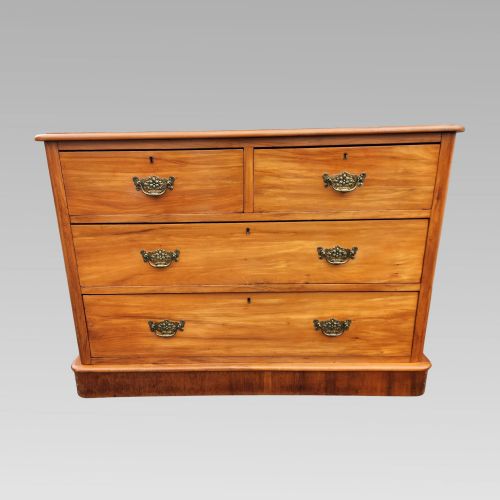
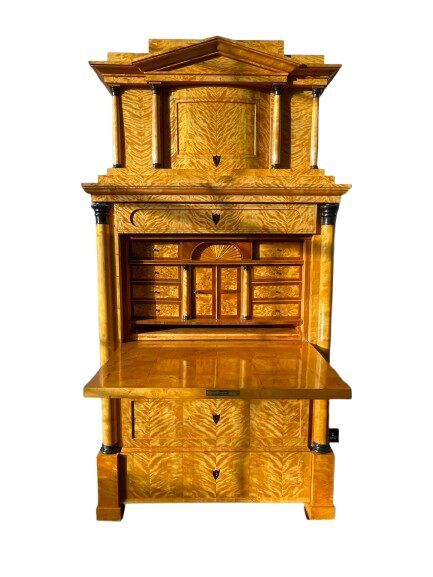
A golden satinwood chest brings luminous timber grain and refined joinery into a room, spanning periods from George III to Edwardian eras.
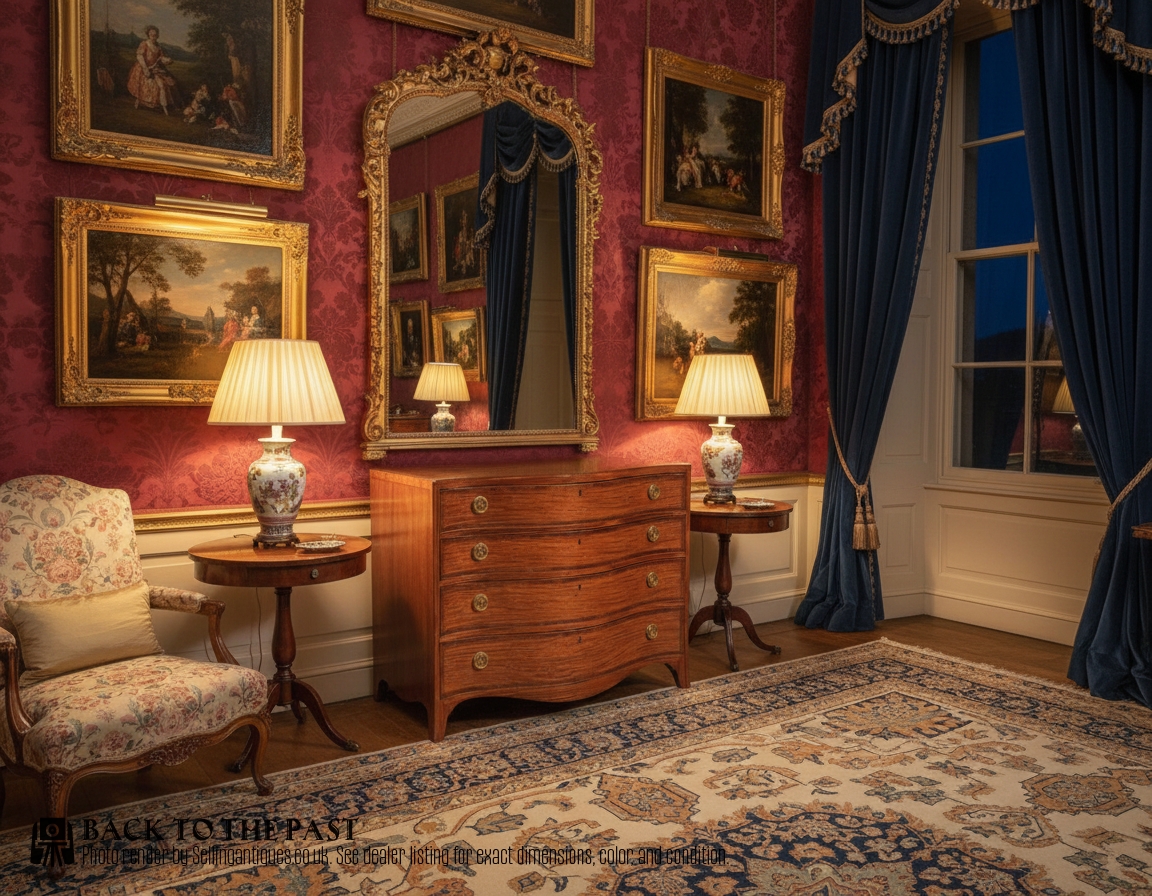
Golden Satinwood Chest
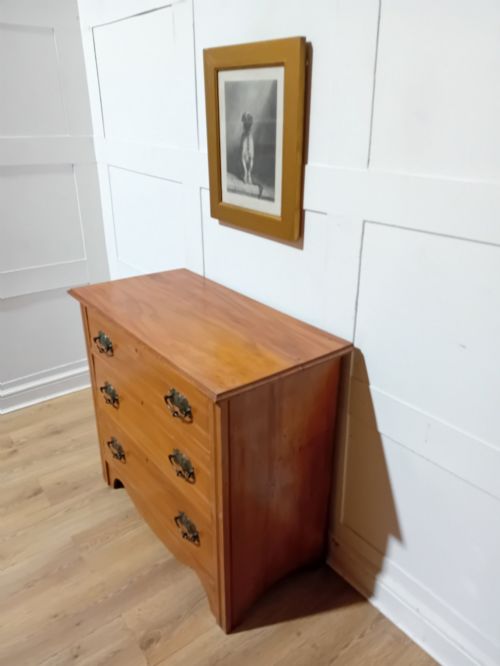
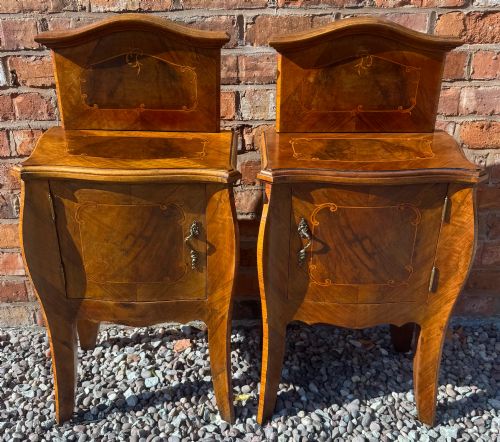
A golden satinwood chest is a storage piece constructed or veneered in prized exotic or domestic timber, notable for its shimmering chatoyant grain. When searching for a golden satinwood chest, a buyer encounters forms ranging from compact bedside cabinets and tea caddies to serpentine commodes, tallboys, and full-scale drawer chests.
The pieces on this page span the 18th century, the Regency period, the Victorian era, and the Edwardian years. Edwardian and Victorian chests of drawers and dressing tables appear most frequently, alongside Georgian bow fronts and Sheraton Revival interpretations.
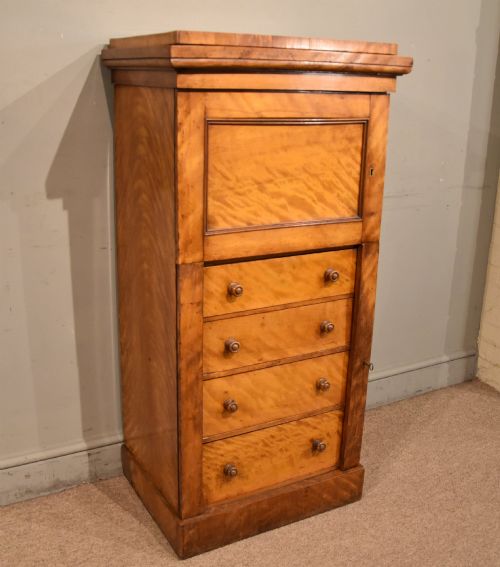
Alongside standard drawer chests, the selection includes related timber forms such as Wellington chests, work tables, gentleman's dressing chests, and decorative boxes. These items serve domestic storage needs while displaying pale, golden-hued hardwoods.
Materials and Construction
Cabinet makers utilised satinwood timber, often laid as fine veneers over secondary woods like mahogany or pine to showcase intricate grain patterns. Regional variations include satin birch and satin walnut, supplemented by contrasting inlay materials such as ebony, bone, and assorted dark woods.
Construction techniques involve dovetail joints for drawer construction and precise edge-banding or stringing. Many examples incorporate decorative elements like hand-painted motifs, brass handles, or shell inlays set into curved serpentine and bow-front carcases.
Listings feature satinwood alongside alternative light hardwoods including satin birch, satin walnut, and Swedish birch across the 18th, 19th, and early 20th centuries.
Assessing Quality and Execution
Quality rests in the intensity and figure of the timber grain, together with the precision of the cabinet work. Superior pieces display book-matched veneers and tightly fitted dovetails that remain structurally sound over centuries.
The sophistication of the design dictates distinction, separating simple vernacular items from high-style Sheraton Revival or George III commodes. Original hardware, intact hand-painted details, and well-preserved internal drawer linings elevate the standing of a piece.
Harris Lebus of Tottenham·Gillows·Heals
The Golden Satinwood Chest Glossary
- Satinwood
- A hard, durable timber known for its yellowish colour and natural sheen that catches light. It was widely utilised by 18th and 19th-century cabinet makers for high-status furniture.
- Serpentine
- A curved furniture front characterised by a convex centre flanked by concave ends. This shape requires advanced woodworking skill to match veneers along undulating lines.
- Bow Front
- A convex, outward-curving front profile popular on chests of drawers during the Georgian and Regency periods. It softens the geometric angles of a room.
- Tallboy
- A tall chest of drawers consisting of one chest stacked on top of another. This form maximises vertical storage space while maintaining a compact footprint.
- Stringing
- Thin lines of contrasting wood inlay used to outline drawer fronts and panels. It defines the geometric boundaries of the cabinet work.
- Teapoy
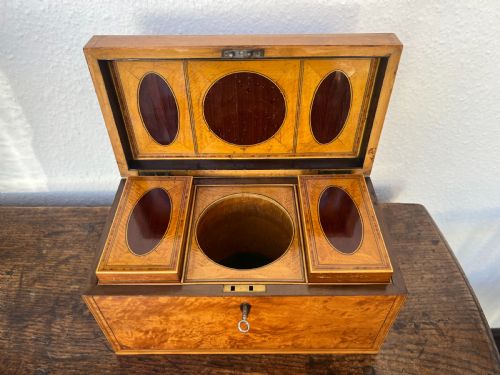
- A small stand or caddy designed to hold tea canisters, often fitted with internal compartments. These portable boxes reflect the high status of tea in historical households.
Golden Satinwood Chest: Frequently Asked Questions
How do I care for a satinwood chest?
Keep the timber away from direct sunlight and sudden temperature shifts to protect the dry veneer and polished surface. Dust gently with a dry, soft cloth and avoid chemical polishes that build up residue over time.
Maintain a stable indoor humidity level to prevent the underlying wood from expanding or contracting. This prevents cracking in the delicate grain and preserves the joints.
Were these chests used in bedrooms?
Historically, larger chests served in sleeping quarters for garments and linens, while smaller variants sat in drawing rooms or hallways. Dressing chests and tallboys specifically catered to personal grooming and wardrobe organisation.
Today, these pieces transition easily into modern living spaces as bedroom storage or hallway focal points. Their modest proportions and bright timber tones suit contemporary interiors.
How do I distinguish George III from Edwardian pieces?
George III pieces, dating to the late 18th century, typically feature hand-cut dovetails, heavy oak or pine secondary woods, and restrained classical inlays. The construction methods reflect manual timber preparation and traditional joinery.
Edwardian items often display Sheraton Revival styling from around 1900, sometimes incorporating machine assistance, lighter secondary timbers, and painted floral motifs. Understanding these structural differences clarifies the age of the item.
What is the difference between a commode and a chest?
A commode generally refers to a low, decorative cabinet or chest with doors or drawers, often featuring serpentine or curved front profiles. They were designed as ornamental statement pieces for formal rooms.
A standard chest of drawers focuses primarily on practical vertical storage with stacked horizontal drawers. While both utilise satinwood, commodes frequently showcase more elaborate veneer work.