
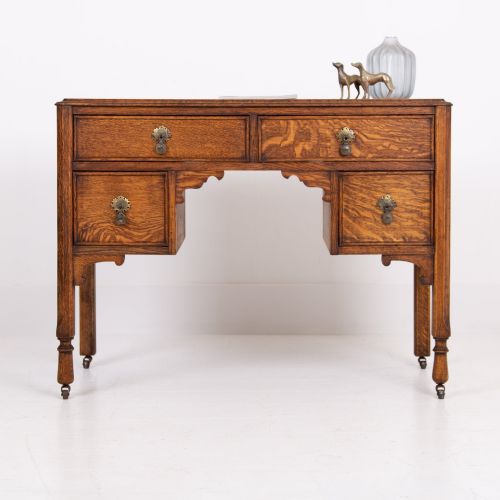
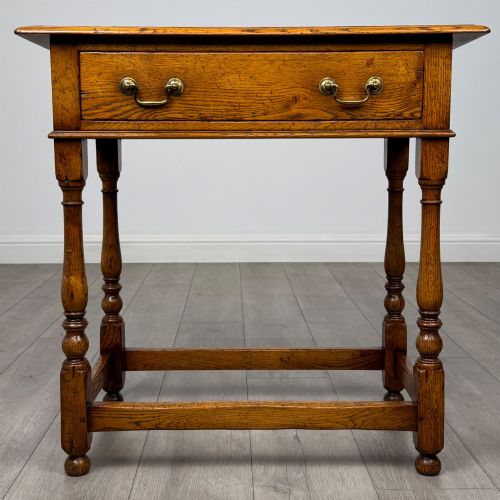
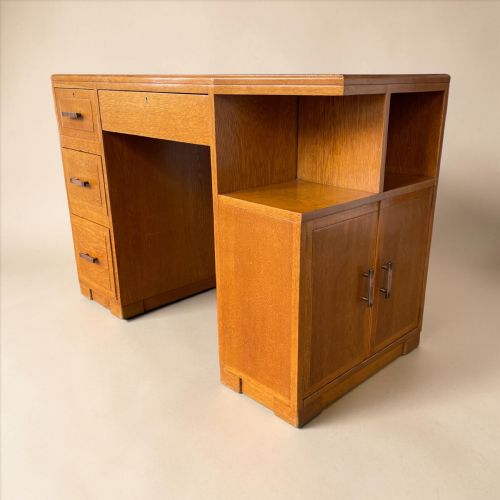
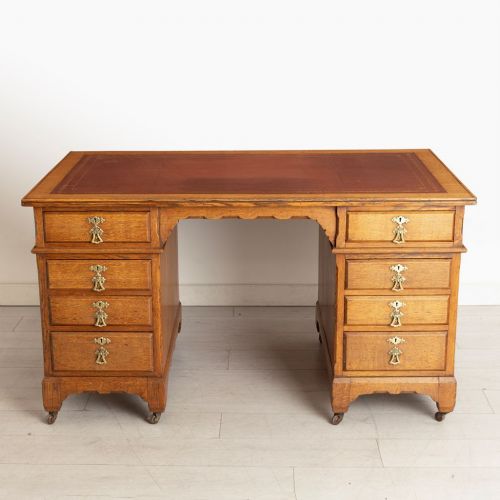
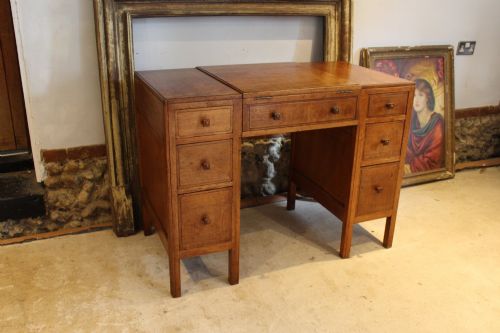


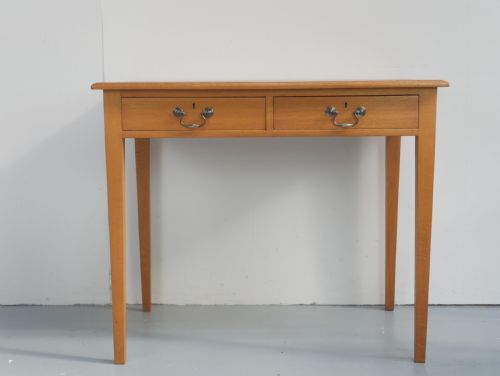


Golden Oak Writing Table
These golden oak writing table examples bring warm tone and honest grain to a study, drawing on centuries of cabinet making.
Golden Oak Writing Table
When you search for a golden oak writing table, you are looking at practical workspaces built from durable timber with a warm, honeyed hue. These pieces span several distinct eras, stretching from the Regency period and the Victorian age through to Edwardian workshops and the 1930s.
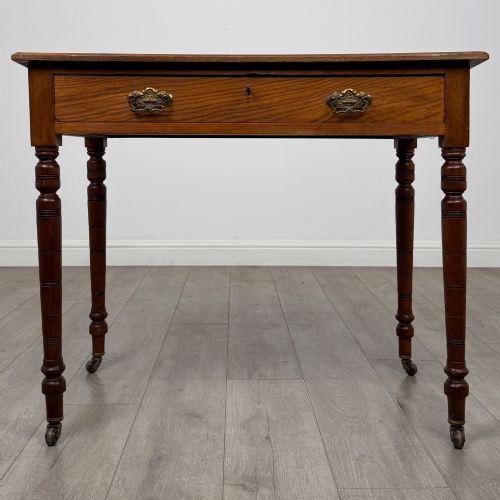
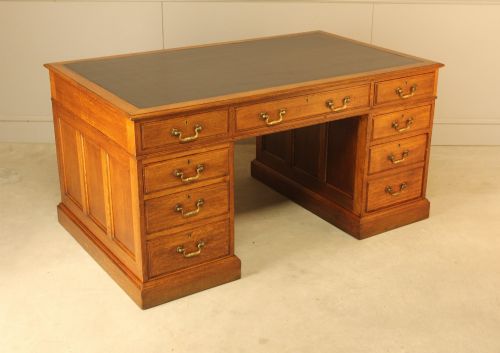
You will most frequently meet Victorian and Edwardian examples on this page, alongside sturdy partners desks and simpler writing surfaces. They appear in forms ranging from compact side tables and pedestal desks to grand library tables.
How they were made
Cabinet makers utilised solid oak and burr or pollard oak veneers, selecting timber for its rich figure and natural grain pattern. Brass handles, leather writing surfaces, and iron or chrome details complete the construction of these desks.
Joinery techniques varied from traditional dovetailing in the drawers to sturdy structural framing designed for daily office use or library work.
Some Victorian library tables include rotating drum tops that spin quietly to reveal hidden compartments for secret correspondence.
What varies in quality
The standard of a golden oak writing table rests upon the selection of the timber and the depth of the grain figure. Quartered oak and pollard oak finishes elevate a piece well above plain utility items.
Proportion and the integration of secondary woods like satinwood or mahogany, alongside the presence of original brass hardware, separate standard commercial desks from workshop masterworks.
Heal and Sons·Williams and Gibton·Johnstone Jeanes and Co·Thomas Turner·Howard and Son·James Lamb·Shapland and Petter·Gillows
The Golden Oak Writing Table Glossary
- Golden oak
- A warm honey-toned finish characteristic of specific Victorian and Edwardian furniture pieces. It highlights the natural medullary rays in quarter-sawn timber.
- Partners desk
- A large double-sided desk designed for two people to sit opposite one another. These typically feature drawers and cupboards on both faces.
- Pollard oak
- Timber taken from trees that have been pollarded, producing a dense and highly decorative knotty grain. It was favoured for high-status library tables and fine desks.
- Pedestal desk
- A heavy freestanding desk supported by two banks of drawers or plinths. They provide substantial storage beneath the main writing surface.
Golden Oak Writing Table: Frequently Asked Questions
What is a golden oak writing table?
A golden oak writing table is a wooden desk or work surface characterised by the warm, pale amber tone of its timber. These pieces span the nineteenth and twentieth centuries.
They serve as functional writing desks, library tables, and partner workstations in domestic and professional interiors.
How do I date a golden oak desk?
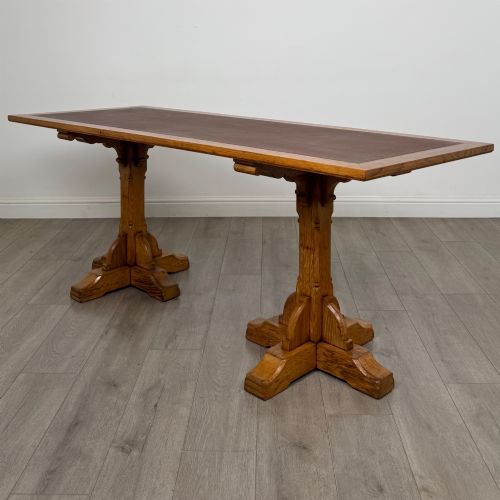
Dating relies on observing construction methods, handle styles, and design movements such as Arts and Crafts, Gothic Revival, or Art Deco. Victorian pieces often display heavier proportions.
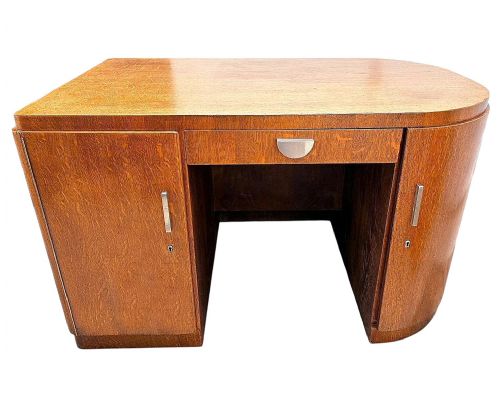
Later Edwardian and 1930s versions tend towards lighter framing or modernist lines while retaining oak construction.
Where were these tables used?
These tables were deployed in private libraries, home studies, banking halls, and grand Victorian offices. Partners desks allowed two clerks or associates to work face to face.
Smaller side tables and console formats functioned in hallways and drawing rooms for correspondence.
How do I care for leather inserts?
Many of these desks feature inset leather writing surfaces that require gentle cleaning and conditioning to prevent cracking. Avoid harsh chemical cleaners on the surrounding oak timber.
Wax polishing helps maintain the golden hue and protects the grain from moisture and daily wear.