


1930s Modernist Office Desk
These pieces for a 1930s modernist office desk bring clean lines and industrial materials straight into a workspace, offering a distinct architectural presence.
1930s Modernist Office Desk
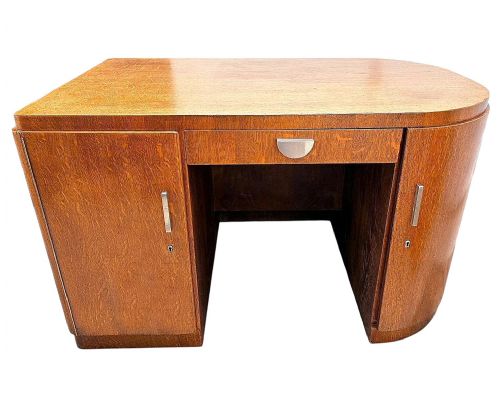
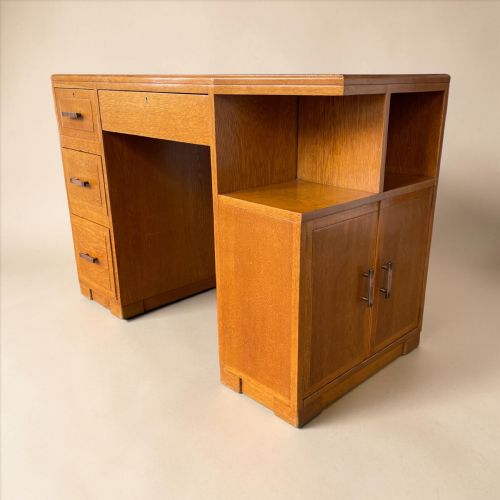
A 1930s modernist office desk brings together the sharp geometric forms of the interwar period and the functional demands of a workspace. You are looking at furniture designed with clean silhouettes, often featuring D-end configurations or robust timber construction intended for practical daily use.
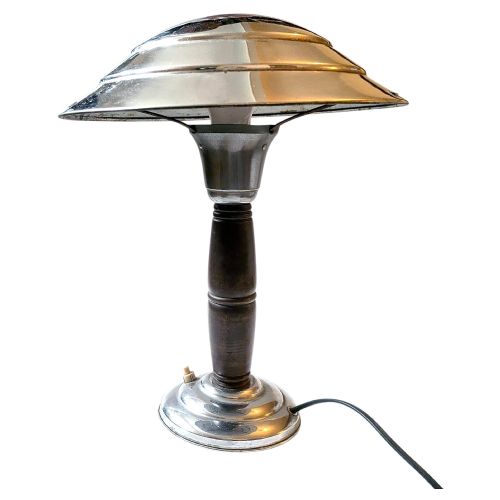
The pieces on this page span English and French origins from around nineteen thirty, incorporating related workspace accessories like chrome desk lamps, clocks, and bakelite lighting alongside the primary tables. These items reflect the transition towards industrial efficiency and stripped-back elegance characteristic of the era.
How they were made
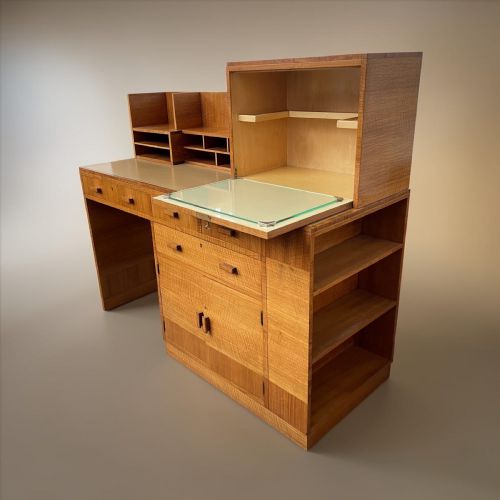
Construction relies heavily on a combination of warm timber such as oak and sturdy metal frames finished in polished chrome. Workshops utilised contrasting materials to accentuate the industrial aesthetic, pairing smooth wooden surfaces with gleaming metallic supports.
Details often incorporate glass tops and moulded bakelite components, showcasing the manufacturing methods of the machine age. These materials were chosen for both their tactile qualities and their ability to project a forward-looking, modern sensibility.
The listings feature pieces from nineteen thirty, utilising oak, chrome, glass, and bakelite within Art Deco and Machine Age styles.
What varies in quality
The distinction between standard commercial pieces and exceptional examples often lies in the sophistication of the joinery and the purity of the geometric line. Maker attribution, such as work associated with Heal's or Étienne Kohlmann, naturally elevates a piece through documented design provenance.
Quality also shows in the finish of the chrome plating and the preservation of original materials like bakelite and glass. Well-executed pieces maintain a balance between architectural mass and functional grace without feeling overly heavy.
Heal's·Eileen Grey·Étienne Kohlmann
The 1930s Modernist Office Desk Glossary
- Art Deco
- A design style spanning the twenties and thirties characterised by sleek geometric shapes, stylised motifs, and modern industrial materials. It represents a move away from traditional ornamentation towards streamlined elegance.
- Machine Age
- An early twentieth-century aesthetic embracing the forms, materials, and efficiency of industrial machinery. It heavily influenced the design of metal furniture and lighting.
- Bakelite
- An early form of synthetic plastic prized in the thirties for its durability and rich, dark lustre. It was frequently utilised for electrical fittings, lamp bases, and desk accessories.
- D End
- A table configuration featuring a semicircular end that allows modular placement or standalone prominence. This shape was popular in interwar office and dining furniture.
1930s Modernist Office Desk: Frequently Asked Questions
What defines a 1930s modernist office desk?
These desks are defined by their geometric forms, lack of excessive carving, and the integration of industrial materials like chrome and glass with traditional timber.
They reflect an era that prioritised functional efficiency and clean architectural lines in domestic and commercial interiors.
How do I style a modernist desk today?
Pair the furniture with period-appropriate accessories such as a chrome task lamp or a bakelite desk clock to maintain the cohesive industrial aesthetic of the nineteen thirties.
Keep surrounding decor uncluttered to let the linear framework and material contrast of the desk remain the focal point of the room.
Are these desks suitable for daily work?
Many of these pieces were built for professional use, offering sturdy wooden construction and practical configurations such as two-sided layouts.
Their robust timber frames and durable surfaces handle contemporary office equipment while providing substantial knee clearance and workspace.
How do I identify French pieces from English ones?
French examples from this period often display more daring attribution to specific designers and incorporate bolder transitions between wood and metal.
English pieces tend to focus on restrained proportions and traditional craftsmanship adapted to modern geometric tastes.