

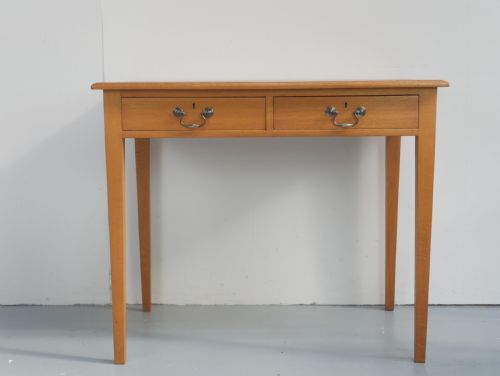


Vintage Oak Home Office
These vintage oak home office pieces bring solid timber charm and practical workspace to a room, offering enduring utility for daily tasks.
Vintage Oak Home Office
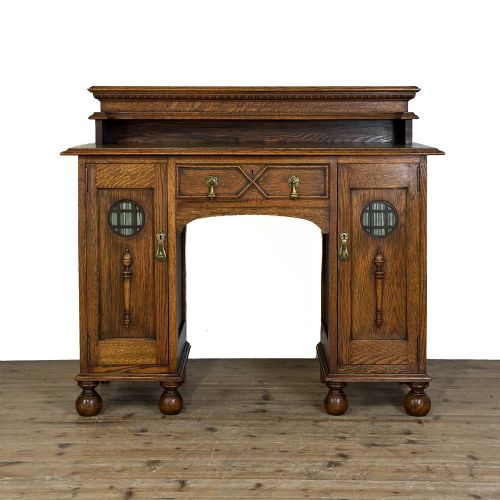
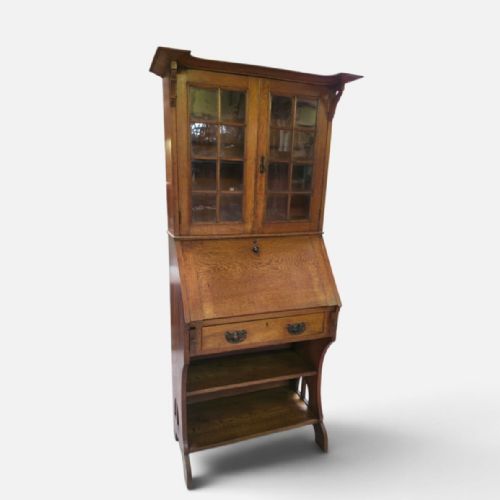
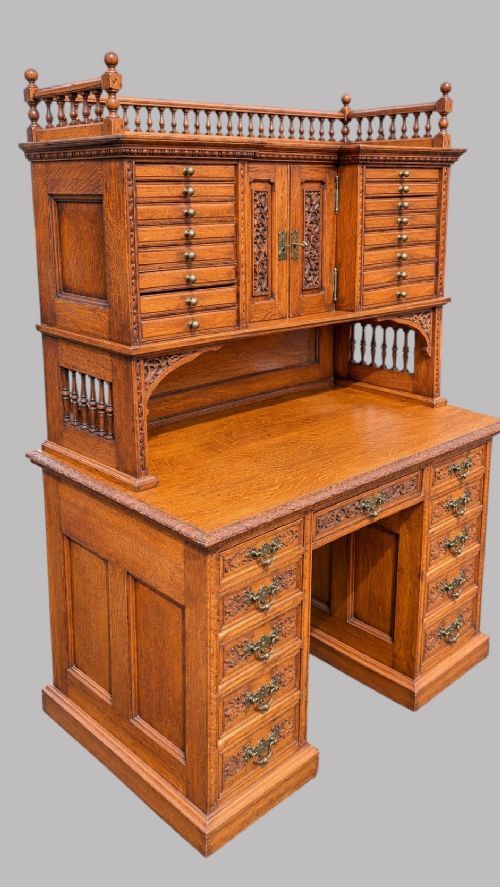
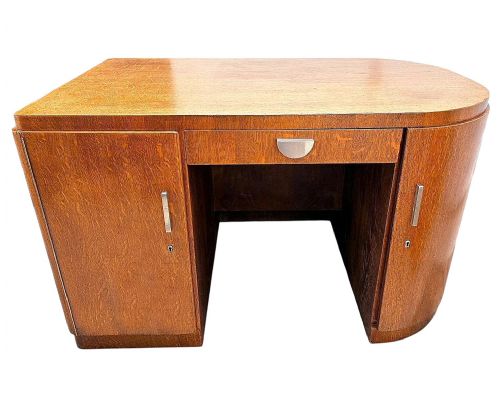
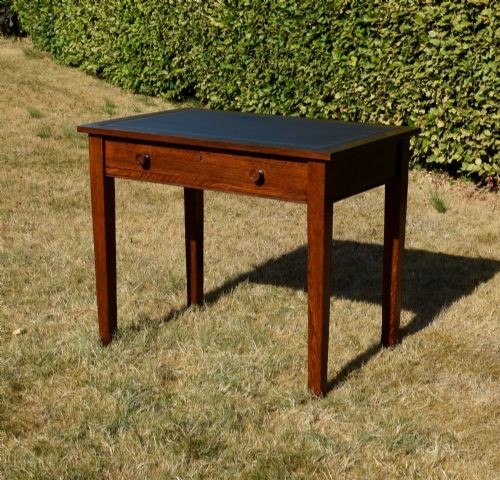
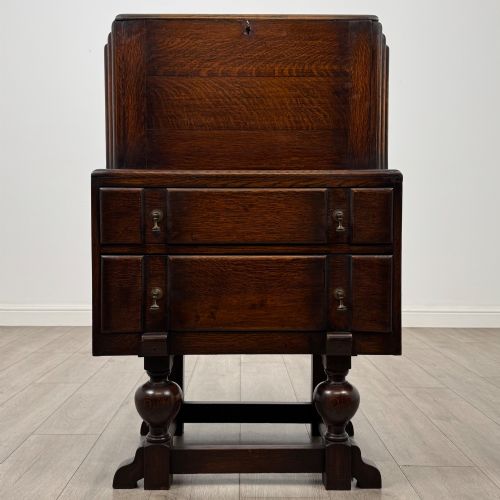
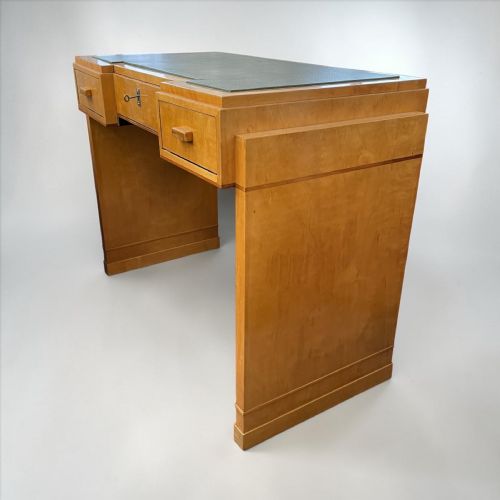
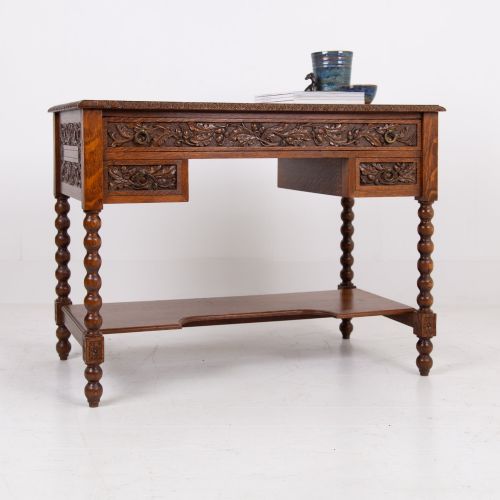
When you search for a vintage oak home office, you are looking at substantial workspace furniture built from durable timbers spanning the Victorian era through the Art Deco period. The selections here predominantly feature desks, writing tables, and bureaus shaped by Victorian, Edwardian, and Arts and Crafts traditions.
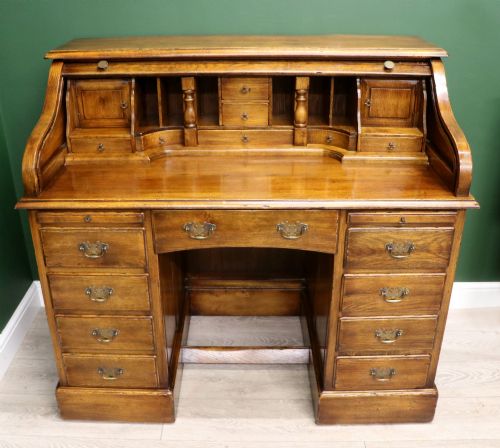
Pedestal desks and kneehole desks dominate the offerings, often equipped with multiple drawers for storage. You will also encounter roll-top desks and writing bureaus that provide enclosed compartments for correspondence and paperwork.
Origins stretch from English workshops to Scottish and French makers, utilising the strength of oak to create functional architectural pieces. These items bridge historical craftsmanship and modern workspace requirements without losing their period character.
Materials and construction methods
Construction relies heavily on solid oak and figured oak timbers, frequently complemented by secondary woods like ash and birch. Surfaces often incorporate contrasting materials such as inset leather writing pads and brass handles or pulls.
Joinery techniques span traditional hand-cut dovetails for drawer construction and panel framing suited to the stresses of daily writing use. Metal fittings, chrome accents, and roll-top tambour mechanisms appear in later Art Deco examples.
Makers employed carving, burr walnut veneers, and polished finishes to enhance the natural grain of the wood. These methods ensure structural rigidity while displaying the distinct decorative vernacular of each decade.
Listings span eight distinct decades from the 1880s through the 1940s, uniting Victorian revival styles with later Art Deco modernist designs.
Distinctions in quality and execution
The division between standard commercial pieces and finer examples rests on timber selection and secondary wood usage. Higher grade items employ figured or solid oak throughout, paired with superior internal framing and substantial brass hardware.
Execution of detail defines the upper tier, visible in precise dovetailing, crisply carved motifs, and well-fitted tambour mechanisms that operate smoothly. Lesser examples rely on simpler construction and thinner veneers over secondary timbers.
The integrity of original fitted interiors within bureaus and the preservation of inset leather writing surfaces mark the difference between an intact survivor and a heavily altered workstation.
Jenners·Merryweather and Son·Edwards and Roberts
The Vintage Oak Home Office Glossary
- Kneehole desk
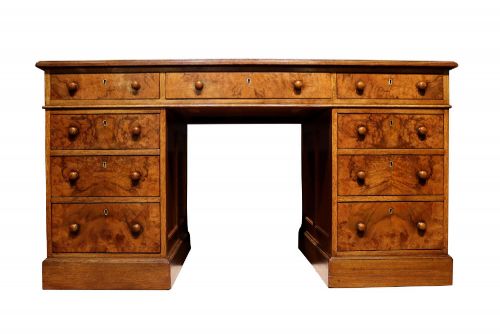
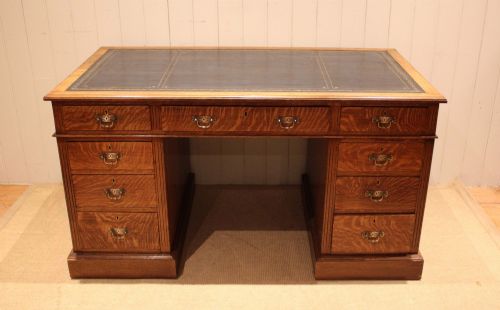
- A desk featuring a central recessed space for the legs, flanked by pedestals of drawers on both sides. This form provides substantial surface area and partitioned storage.
- Bureau
- A desk fitted with a sloping hinged flap that drops down to form a writing surface, concealing small drawers and pigeonholes inside. Edwardian and Victorian iterations often stand on tall legs or integrated drawer bases.
- Roll top desk
- A cylinder-top desk equipped with a slatted tambour door that slides down in a track to secure the writing surface and pigeonholes. It offers complete closure for workspace clutter.
- Partners desk
- A large double-sided pedestal desk designed for two people to sit opposite one another, featuring drawers and cupboards accessible from both sides. These heavy pieces originated in large administrative offices and libraries.
- Pedestal desk
- A freestanding desk supported by two vertical columns or pedestals containing banks of drawers. They represent the standard heavy-duty workspace form of the nineteenth and early twentieth centuries.
Vintage Oak Home Office: Frequently Asked Questions
How do I distinguish a Victorian desk from an Edwardian one?
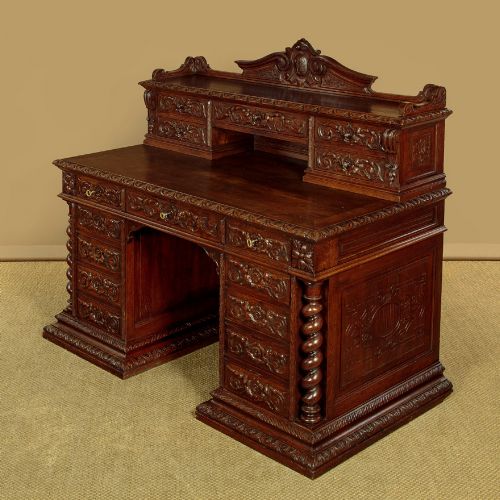
Victorian pieces generally display heavier proportions, darker finishes, and more ornate carved decoration such as Renaissance Revival motifs. Edwardian furniture tends to feature lighter golden oak tones, simplified lines, and restrained ornament.
The hardware and internal construction also shift between these periods, with Victorian pieces favouring robust brass pulls and Edwardian examples introducing sleeker, more functional layouts.
What is the difference between a writing table and a pedestal desk?
A writing table stands on four legs without built-in banks of drawers beneath the top, offering a lighter visual footprint. A pedestal desk uses two solid columns of drawers to support the work surface.
Writing tables suit rooms requiring an open feel, while pedestal desks provide permanent storage and a heavier architectural presence.
Are roll-top desks practical for daily computer use?
Roll-top desks provide extensive pigeonholes and surface space, but the internal tambour mechanism requires careful measurement against modern computer monitor heights. The fixed interior cubbies can restrict the placement of wide hardware.
Checking the internal clearance dimensions ensures your equipment fits comfortably behind the closed slatted shutter.
How should I care for vintage leather desk inserts?
Leather writing surfaces require gentle cleaning with a damp cloth and occasional treatment with specialist leather balms to prevent cracking. Avoid harsh chemical cleaners or excessive moisture.
Keeping the leather conditioned preserves its supple texture and maintains the original contrast against the surrounding oak timber.