
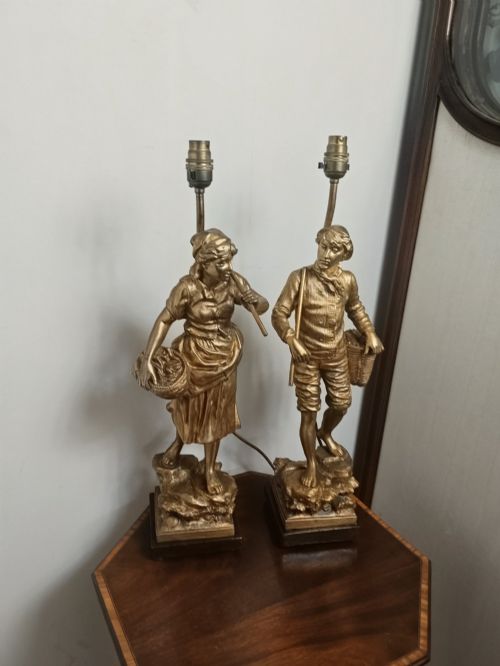



Gold Spelter Statue
A gold spelter statue brings the sleek geometry of the early twentieth century or the grand theatre of the late nineteenth directly into a room.
Gold Spelter Statue
A gold spelter statue sits at the crossroads of decorative sculpture and functional lighting, taking the form of dancers, harvesters, and female figures. When searching for a gold spelter statue, a buyer encounters figures cast from zinc alloy with a gilt or cold painted surface.
The pieces appearing on this page stretch from the turn of the nineteenth and twentieth centuries through the 1920s and 1930s. Art Deco examples dominate the selection, frequently paired with bases of onyx or alabaster.
Sculptural forms range from standalone table figurines to integrated table lighters and figural table lamps. Many carry the distinct styling associated with makers like Josef Lorenzl or French ateliers of the period.
How they were made
Makers cast spelter, a zinc-based alloy, into detailed moulds to capture the fluid drapery and kinetic poses characteristic of Art Deco design. This metal offered an economical alternative to bronze while permitting intricate surface detail.
The golden finish is achieved through gilding, bronzing, or cold painting applied directly to the metal surface. These figures are then mounted onto heavy stone plinths, most commonly onyx, marble, or alabaster, to provide structural stability.
Several ladies from the 1930s double quite usefully as table lighters, proving that glamour and a steady flame have long kept company.
What varies in quality
The choice of base material also separates categories of manufacture. Heavy, polished slabs of genuine onyx or alabaster elevate a piece above simpler wooden or composite mounts.
E Rousseau·Josef Lorenzl
The Gold Spelter Statue Glossary
- Spelter
- A zinc alloy commonly used as a base metal for decorative sculptures and lamps. It was often finished with metallic paints or gilding to imitate bronze.
- Art Deco
- A design style prevalent in the 1920s and 1930s characterised by sleek lines, geometric forms, and stylised representations of the human figure.
- Onyx
- A banded variety of chalcedony frequently used as a heavy, decorative base for sculptural figures and table lighters.
- Cold Painted
- A method of applying non-fired paint to metal surfaces after the casting process is complete.
- Alabaster
- A fine-grained, translucent stone used historically for sculptural bases and decorative objects.
Gold Spelter Statue: Frequently Asked Questions
Are these statues solid gold?
These pieces are cast from spelter, which is a zinc alloy, rather than solid precious metal. The golden appearance comes from applied gilding, bronzing, or metallic paint finishes.
Over decades of handling, these surfaces acquire a distinct patina that distinguishes vintage metalwork from modern reproductions.
How do I clean my statue?
Dust the surface gently with a soft, dry cloth to prevent the accumulation of grit in the recesses of the casting. Avoid liquid cleaners and polishes, which can strip the original cold paint or gilt finish.
Stone bases like onyx or marble respond well to a slightly damp cloth, provided moisture is kept away from the metal junction.
What is a figural table lighter?
A figural table lighter incorporates a mechanical lighter mechanism directly into the sculptural design of the piece. These functional items were popular accessories in mid-century domestic interiors.
The metal figure often conceals the fuel reservoir and operating lever within its sculptural composition.
How can I date a piece?
Dating relies on stylistic markers such as the rigid geometry of the 1930s Art Deco movement versus the more ornate historicism of 1900. Material combinations, such as spelter mounted on genuine onyx, also point to specific manufacturing decades.
Attributions to known designers provide further chronological anchor points for identification.