


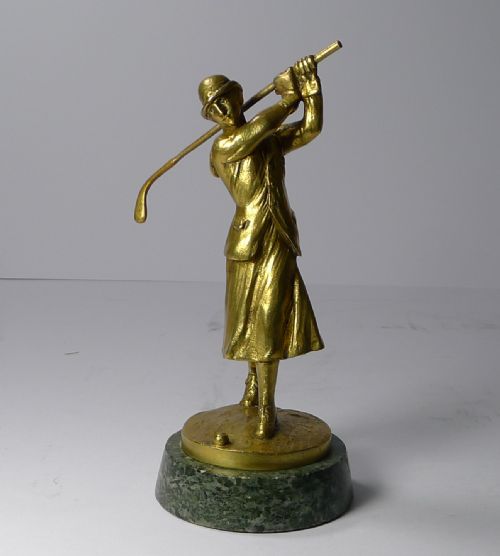
Gold Lady Figurine
These gold lady figurine pieces are decorative sculptures and trinket boxes capturing female figures with gilt finishes, sought after for their striking stylistic presence.
Gold Lady Figurine
A gold lady figurine represents female subjects across periods from the nineteenth century into the nineteen-thirties, spanning sculpture, decorative figurines, trinket boxes, and car mascots. Buyers searching for a gold lady figurine encounter diverse forms created during distinct stylistic movements including Art Deco, Art Nouveau, French Renaissance Revival, and Orientalism.
The versions most commonly met on this page combine metallic gilt surfaces or bronze with marble, onyx, alabaster, or porcelain bases. These pieces portray dancing women, ladies with scarves or hand mirrors, and serving figures, reflecting the varied sculptural output of their respective eras.
Materials and construction methods
Makers utilised cast bronze, cold painted bronze, spelter, and porcelain as the primary foundational media for shaping these female subjects. Gilt bronze, gold leaf, and enamel applied to surfaces provided the characteristic metallic lustre seen across the inventory.
Support elements frequently incorporated carved marble, onyx, or alabaster bases to anchor heavier metallic sculptures and car mascots. Porcelain pieces relied on detailed ceramic moulding and glazing techniques to achieve smooth contours and finished decorative surfaces.
Listings feature items spanning the nineteenth century through to nineteen thirty, utilising marble, porcelain, bronze, onyx, and gold leaf.
Factors influencing quality
The integration between the primary figure and its secondary base material, such as marble or alabaster, determines the structural integrity and aesthetic balance of the entire object. Superior pieces demonstrate careful matching of materials and secure mounting without excessive wear to the gilt or painted finishes.
Josef Lorenzl·Ernst Wahliss·Demetre Chiparus·Jennings Brothers·Franz Bergman·Royal Dux·Jose Dunach
The Gold Lady Figurine Glossary
- Chryselephantine
- A sculpture executed in a combination of bronze and ivory, often associated with Art Deco figures. This technique brings contrasting textures and tones to the subject.
- Spelter
- A zinc alloy utilised as a cheaper alternative to bronze for casting decorative figures. It is frequently plated or painted to simulate more expensive metals.
- Cold painted bronze
- Bronze sculpture finished with oil-based paint applied after casting without subsequent firing. This technique produces detailed polychrome finishes common in Austrian and American studios.
- Car mascot
- A sculptural ornament mounted on the radiator cap of a motor car. These pieces translate human and animal subjects into aerodynamic forms suited for exterior display.
Gold Lady Figurine: Frequently Asked Questions
How do I identify an Art Deco piece?
Art Deco pieces display geometric lines, stylised drapery, and sleek silhouettes typical of the nineteen-twenties and nineteen-thirties.
Materials often include spelter or bronze mounted on marble or alabaster bases, reflecting modern industrial aesthetics of the period.
Are these figures functional?
Certain items serve dual purposes beyond display, functioning as powder box jars, trinket boxes, or automotive mascots.
Sculptures and decorative figurines remain purely ornamental, designed for placement on mantels, desks, or cabinets.
How are porcelain figures dated?
Porcelain figures are dated by stylistic markers such as Art Nouveau curves or Art Deco angles, alongside maker marks.
Works from manufacturers like Royal Dux or Ernst Wahliss often carry impressed stamps or numbers indicating their production era.