






Vintage Spelter Table Sculpture
These vintage spelter table sculpture pieces bring expressive figures and lighting into a room, shaped by Art Deco and earlier twentieth-century tastes.
Vintage Spelter Table Sculpture
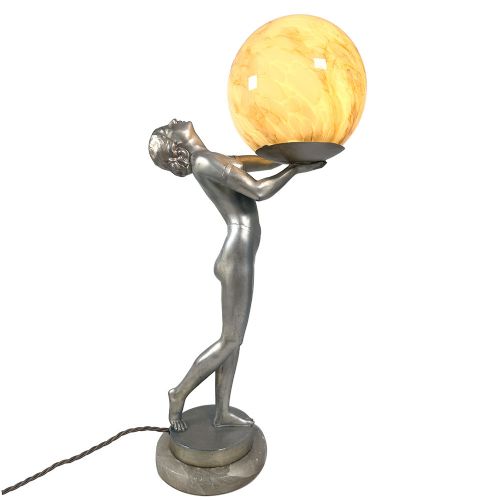
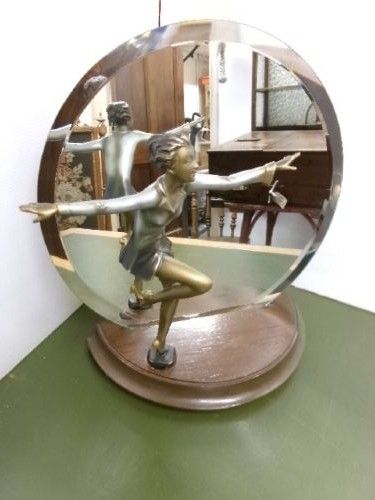
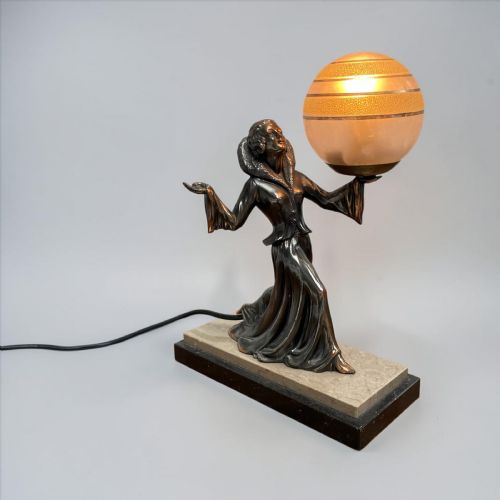
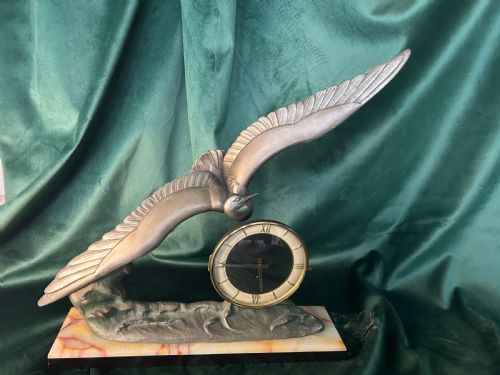
When you search for vintage spelter table sculpture, you encounter figural works, lighting and clocks produced across the early decades of the twentieth century. These objects combine metal figures with functional elements like lamps, lighters and clock faces.
The versions you meet most frequently on this page belong to the Art Deco period, often depicting dancers, nudes or female figures alongside greyhounds, swans and torches. Alongside these, turn-of-the-century and neo-classical designs appear.
Makers such as Geo Maxim, Josef Lorenzl, P. Sega and Moreau produced these works in France and elsewhere, pairing metal with marble, onyx, alabaster, wood and frosted glass bases.
How they were made
Makers cast spelter, a zinc-based alloy, into detailed figurative moulds to create dancers, ladies and animals. This metal took patination well, allowing workshops to apply finishes that imitated bronze.
Artisans mounted these figures onto heavy stone bases made of marble, onyx or alabaster, sometimes incorporating glass shades, torchere fittings or mechanical clock movements into the composition.
Materials documented across these objects include patinated metal, marble, onyx, alabaster, wood and frosted glass.
What varies in quality
The selection of the base material also differentiates pieces, with dense, variegated marble and carved alabaster elevating the overall presence compared to simpler wood or metal mounts.
Geo Maxim·Josef Lorenzl·P.Sega·Moreau
The Vintage Spelter Table Sculpture Glossary
- Spelter
- A zinc alloy commonly utilised as an economical alternative to bronze for decorative figures and lamps during the nineteenth and twentieth centuries. It accepts patination and metallic paint finishes readily.
- Art Deco
- A design style spanning the 1920s and 1930s characterised by streamlined forms, geometric patterns and stylised depictions of the human figure. It heavily influences the lamps and sculptures found in this category.
- Patinated Metal
- Metal treated with chemicals, heat or paints to produce a specific surface colour and aged appearance. This finish protects the underlying spelter while creating the look of bronze.
- Torchere
- A standing ornamental light or a lamp featuring an upturned shade resembling a torch. Several vintage spelter table sculpture pieces incorporate this lighting form.
- Alabaster
- A fine-grained, translucent stone used for carving decorative bases and lamp components. It provides a soft, warm glow when illuminated from within or nearby.
Vintage Spelter Table Sculpture: Frequently Asked Questions
What is spelter metal?
Spelter is a zinc-based alloy that manufacturers cast into decorative sculptures, lamps and clock figures during the late nineteenth and early twentieth centuries. It served as a popular, more affordable alternative to bronze.
Because the alloy is relatively soft, objects made from it often feature applied patinated finishes or metallic paints to simulate the appearance of older bronzes.
How do I clean a vintage lamp?
Dust these pieces gently with a soft, dry cloth to protect the patinated metal surface from wear. Avoid liquid cleaners and harsh chemicals, which can strip the original finish.
Take care around marble, onyx and alabaster bases, using only a lightly damp cloth if necessary and drying them immediately afterwards.
Are these pieces French?
Many of the figural lamps and sculptures from this era originated in France, reflecting the dominant artistic styles of Paris workshops and studios. French makers frequently paired cast metal figures with stone bases and frosted glass.
Not every piece carries a clear country of origin, though the design vocabulary often points to European workshops of the 1920s and 1930s.
How are lamps and sculptures dated?
Dating relies on stylistic markers such as the geometric lines of Art Deco, the flowing curves of Art Nouveau or the classical motifs of earlier decades. Signatures from known artists also help establish a production period.
The materials used, including specific types of frosted glass shades and marble bases, further indicate whether an object belongs to the turn of the century or the interwar period.