




Gold Satsuma Ceramic
Gold satsuma ceramic pieces bring intricate Japanese artistry to interiors through earthenware vessels and decorative objects richly worked in gold leaf.
Gold Satsuma Ceramic
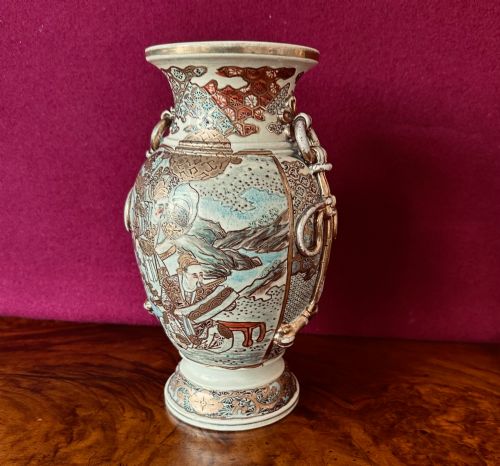
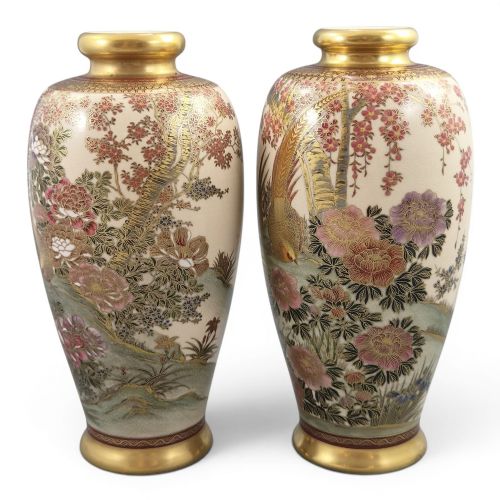
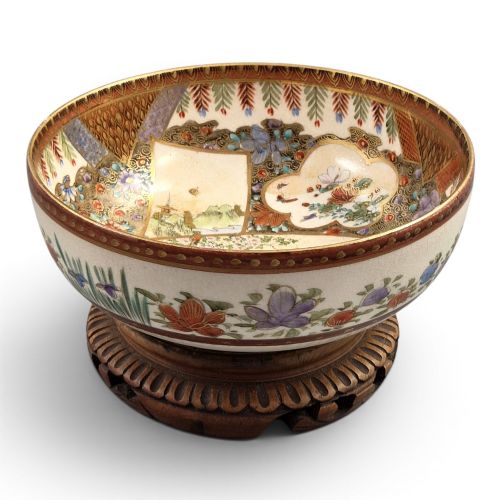
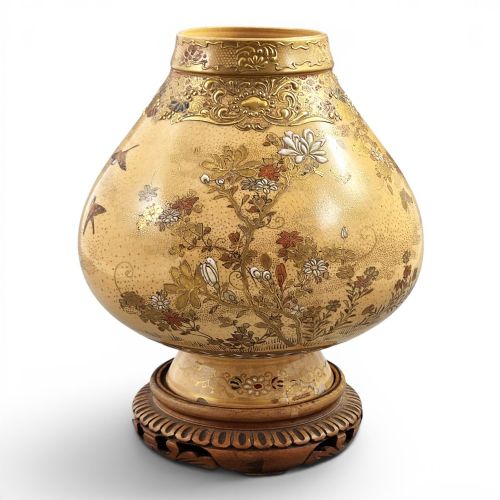
Gold satsuma ceramic encompasses Japanese earthenware pieces produced across the nineteenth, Edwardian, and Victorian periods, extending into the Showa era. These objects take forms such as vases, decorative bowls, incense burners, and figurines, often decorated with elaborate figural or floral scenes.
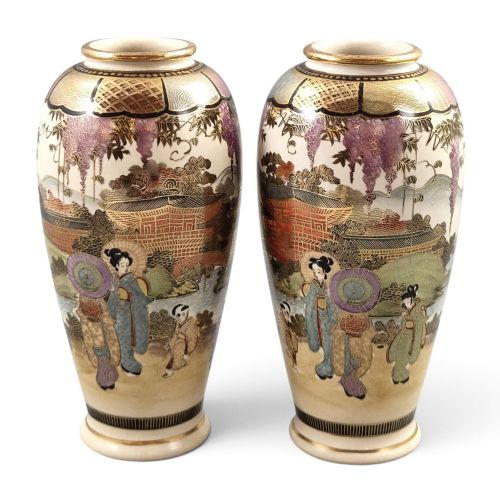
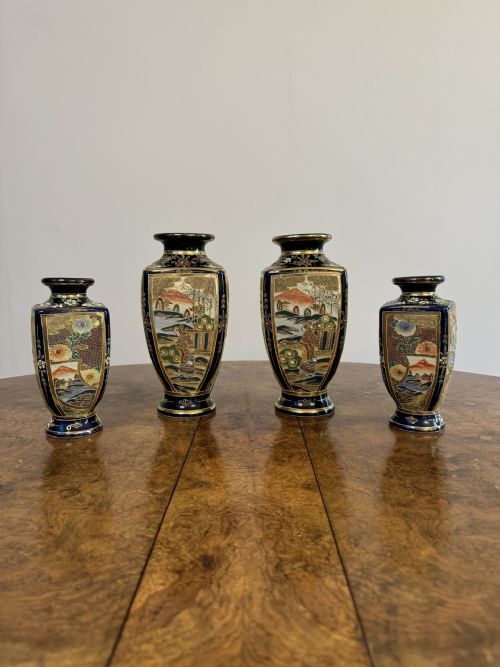
The pieces most frequently met on this page belong to the Meiji period, represented by baluster vases, garnitures, and plates decorated with detailed enamel and gilding. Workshops in Kyoto produced substantial quantities of these works, alongside items from other centres.
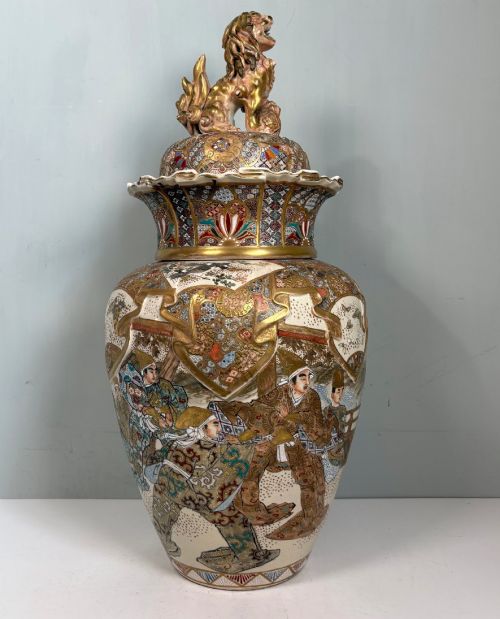
Collectors encounter smaller items alongside monumental vases, including miniature vases, trinket boxes, and saucers. Many carry signatures or artist marks denoting specific kilns and makers from Japan.
Materials and technique
The foundation of these works is earthenware, finished with a distinctive crackle glaze that provides a network of fine lines across the surface. Artisans then applied painted enamel details alongside extensive gilding and gold leaf.
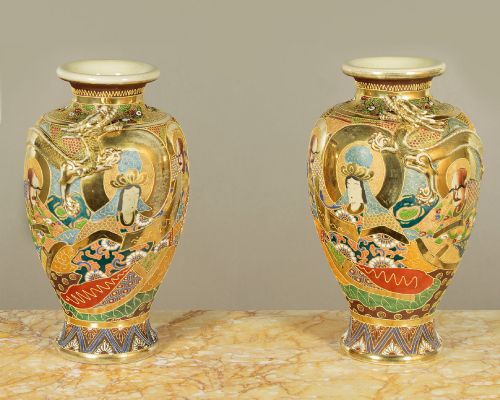
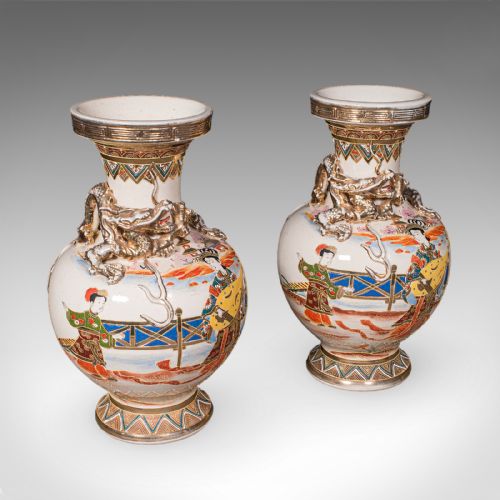
Moriage technique appears frequently, using raised slip decoration beneath the enamel and gold to create tactile, three-dimensional surface patterns. Skilled painters built up complex compositions of figures, flowers, and dragons before firing the pieces to fix the pigments and metal accents.
The listings show pieces spanning the nineteenth century through the Edwardian period, featuring earthenware forms decorated with gold leaf, enamel, and glaze.
Distinctions in quality
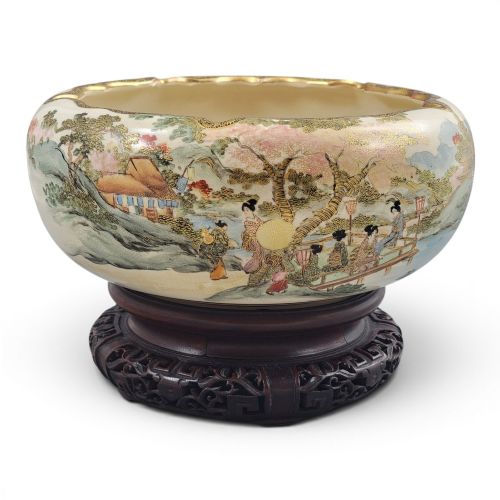
Quality rests in the precision and density of the hand-painted brushwork, particularly within complex figural scenes depicting arhats, women and children, or processions. Pieces originating from renowned workshops display finer line work and more controlled application of gold gilding.
The execution of the raised moriage work and the clarity of the crackle glaze distinguish finer examples from standard production items. Pieces bearing recognised signatures from Kyoto masters or workshop marks hold greater interest for collectors.
Koshida·Shozan·Manpei·Kozan·Kinkozan·Hotoda·Shizan·Toshozan·Chosei·Nanzan·Seiko-en Chokei·Shuzan·Nikko·Kizan·Hakusan
The Gold Satsuma Ceramic Glossary
- Satsuma ware
- Japanese earthenware characterised by a pale, ivory-coloured crackle glaze and ornate enamel and gilt decoration. It originated in Satsuma Province before production spread to Kyoto and Yokohama.
- Moriage
- A ceramic technique using piped clay slip to build up raised surface designs before glazing and firing. This creates a textured, relief effect beneath the enamel and gold leaf.
- Koro
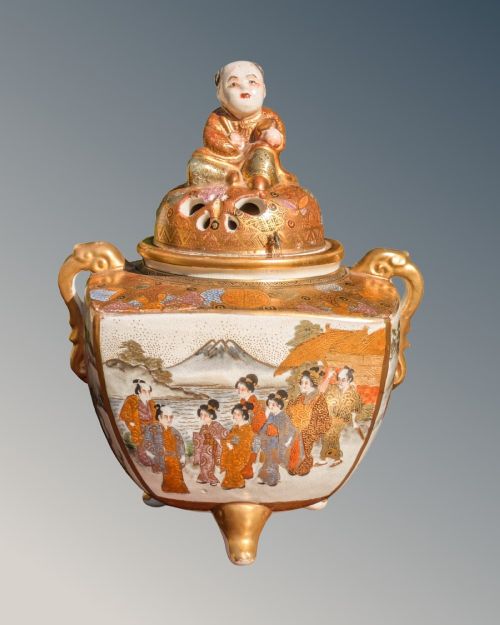
- A traditional Japanese incense burner, typically featuring a pierced lid and three or more feet. These vessels often appear in matching garniture sets.
- Bijin
- A traditional Japanese depiction of a beautiful woman, frequently shown in flowing robes within garden or interior settings on ceramics. These figures form a primary subject for Meiji period painters.
- Shimazu mon
- The heraldic crest of the Shimazu clan, featuring a cross within a circle. This mark frequently appears on satsuma ceramics associated with the province and its kilns.
Gold Satsuma Ceramic: Frequently Asked Questions
How do I identify a Meiji period satsuma piece?
Meiji period pieces typically display dense, intricate enamel work combined with heavy gilding upon a fine ivory crackle glaze. Look for artist signatures or workshop stamps on the base, often associated with Kyoto production.
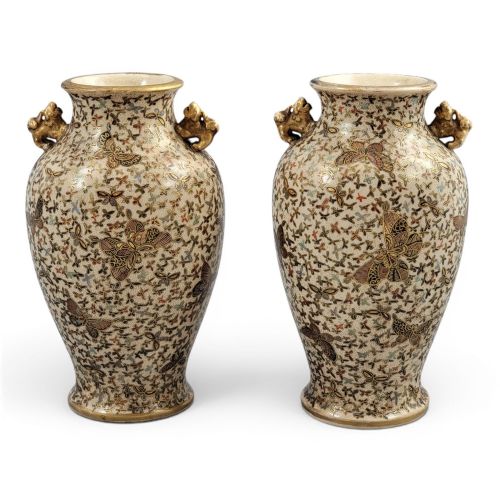
The subjects frequently include traditional figures, arhats, and thousand butterfly motifs executed with high precision. The presence of the Shimazu mon crest also points towards traditional production contexts.
Where were gold satsuma ceramics made?
While production originated in Satsuma Province on Kyushu Island, the major export production centres established themselves in Kyoto and Tokyo during the nineteenth century. Workshops in these cities refined the crackle-glazed earthenware and developed the elaborate enamelling styles intended for Western markets.
Renowned families and studios operated within Kyoto, creating both miniature vases and monumental temple jars. Yokohama also served as an important hub through which these decorated ceramics left Japan.
How should I care for antique satsuma ceramics?
Display these earthenware pieces away from direct sunlight and areas subject to sudden temperature shifts to protect the glaze and gold leaf. Dust them gently with a soft, dry cloth without applying water or chemical cleaning agents.
Because the earthenware body and crackle glaze can be porous and delicate, avoid immersion in liquids. Handle items firmly by their main body rather than protruding handles or rims.
What are garniture sets used for?
Garniture sets consist of matched vases or jars designed to be displayed together on mantelpieces, sideboards, or altars. In Meiji interiors, these groupings provided symmetrical visual balance and showcased the potter's skill across multiple related vessels.
Complete sets featuring consistent patterns and signatures remain particularly sought after by collectors. They offer a comprehensive display of the workshop's decorative repertoire.