
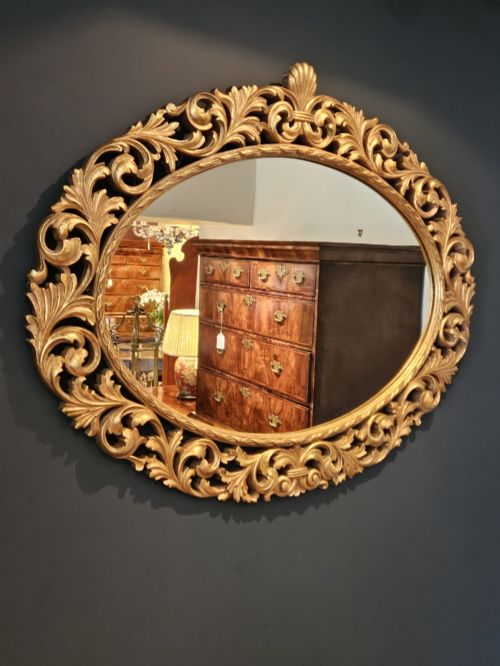
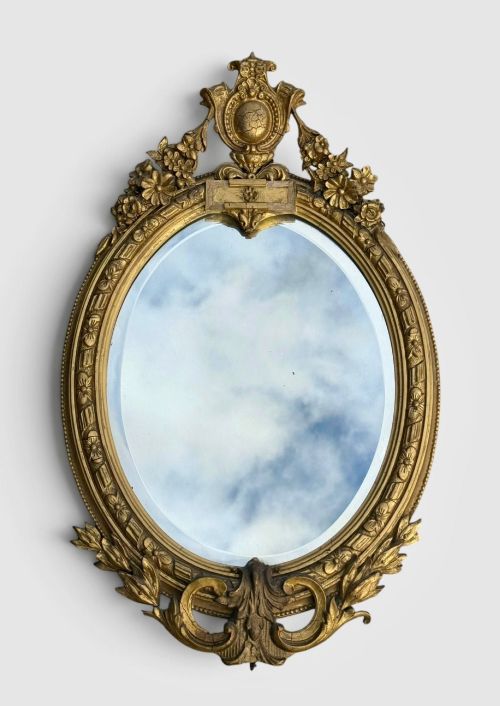
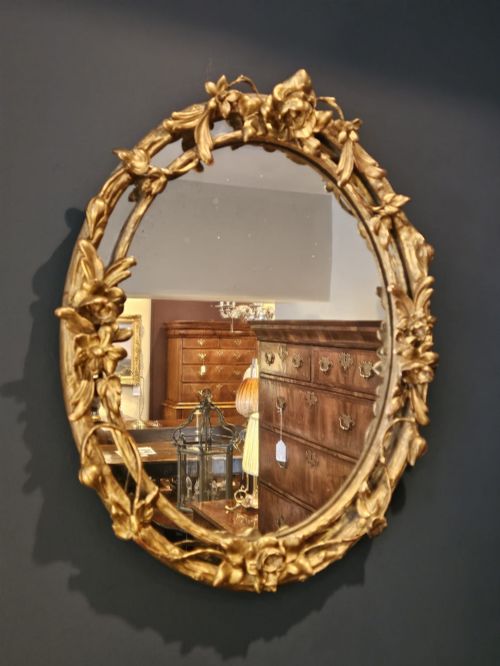
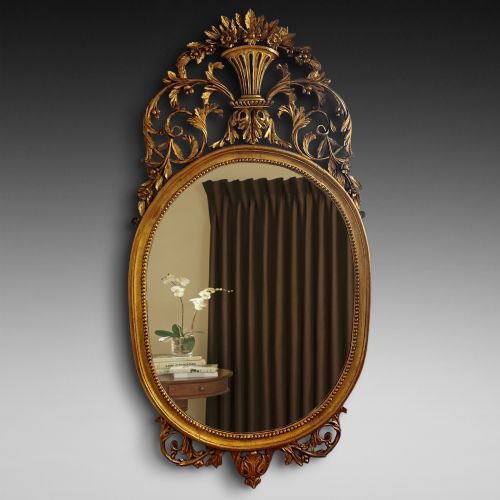
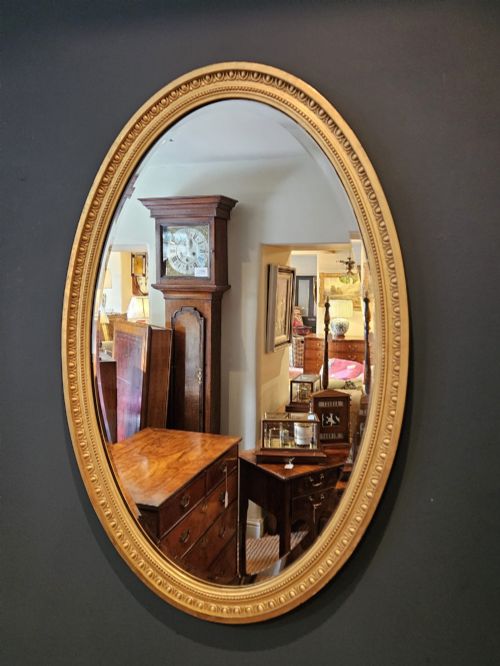
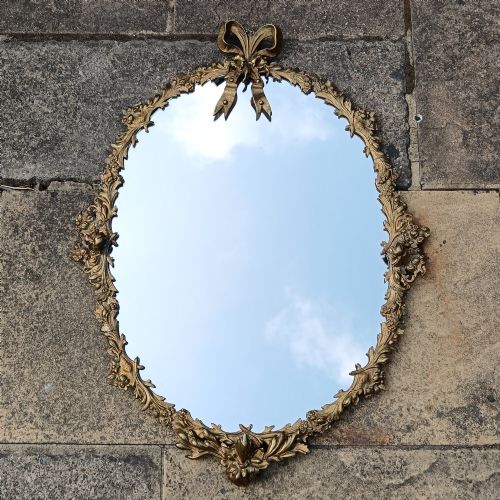
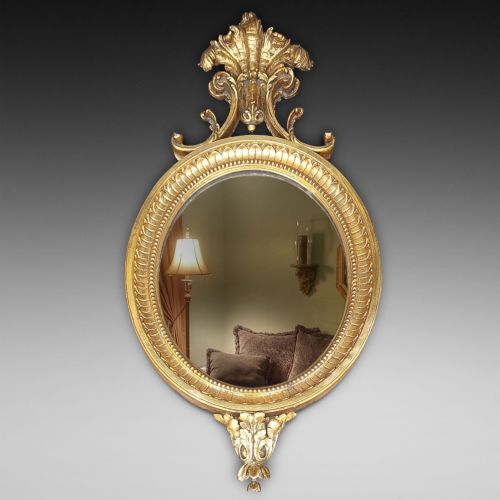
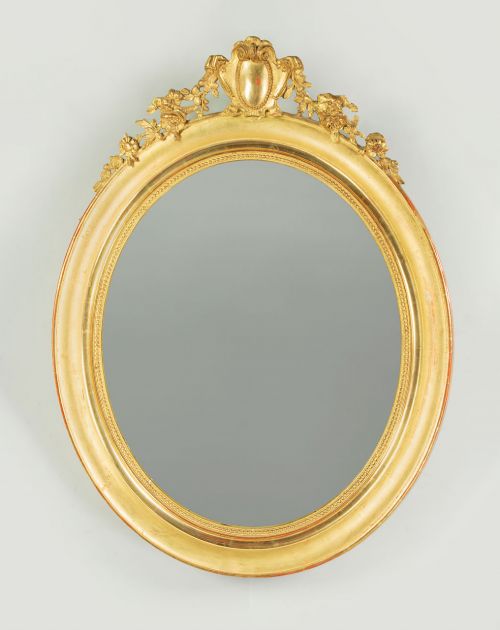
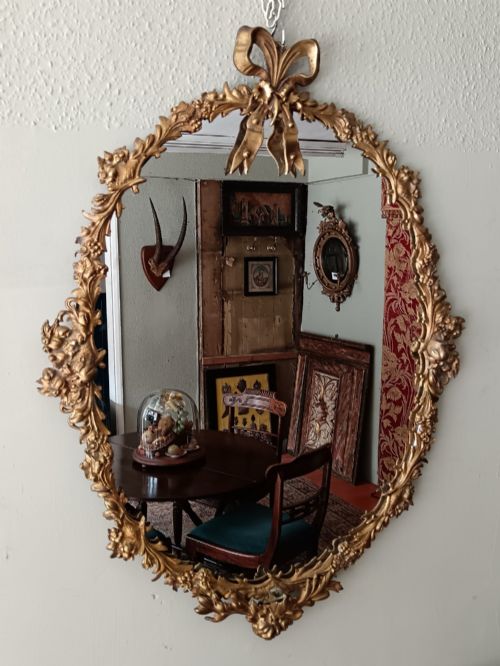
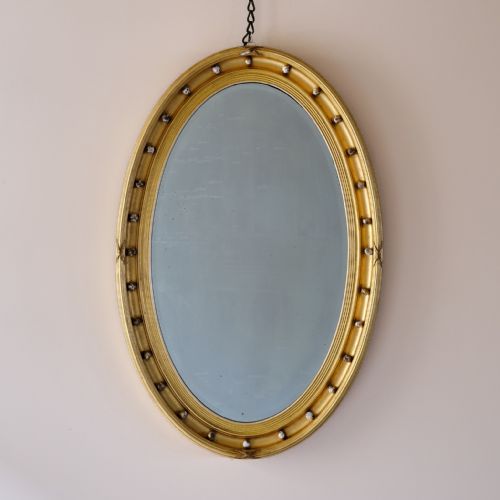
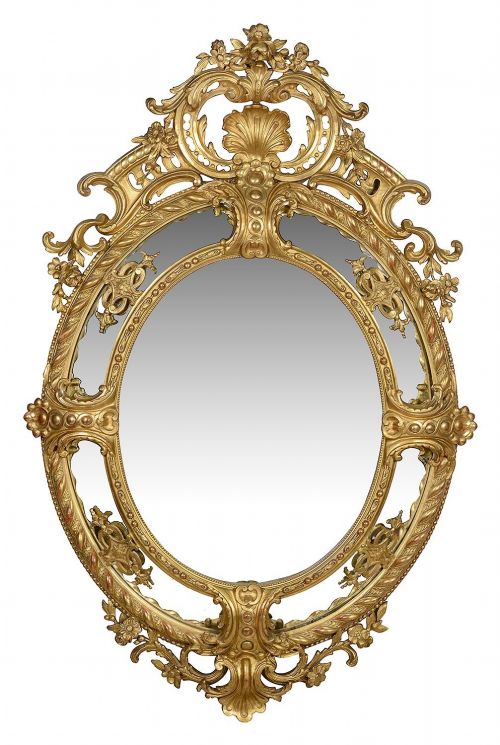


Gold Oval Hanging Mirror
A gold oval hanging mirror brings vertical balance to a room, catching light in its gilt frame across Georgian, Victorian, and Edwardian designs.
Gold Oval Hanging Mirror
A gold oval hanging mirror is a wall-mounted glass plate held within a curved wooden, plaster, or bronze frame finished in gold leaf, composition, or gesso. These pieces span periods from the Georgian and Regency eras through the Victorian age and into the Edwardian years.
Most examples found here date from the nineteenth and early twentieth centuries, featuring revival styles such as Adam, Louis XVI, Rococo, and Chippendale. The vertical sweep of the oval shape softens hard room corners while reflecting interior daylight.
Materials and Construction
Craftsmen shaped frames from carved timber or moulded composition and gesso over a wood base, applying layers of gold leaf or gilt finish by hand. Early examples utilise timber grounds while later Victorian and Edwardian pieces often incorporate moulded plaster details.
Mirrors from the eighteenth and nineteenth centuries frequently contain original mercury plates or early silvered glass, secured within frames joined at the corners with traditional pegs or mitres.
Materials recorded across the inventory include giltwood, gesso, timber, gilt bronze, and original glass plates.
Markers of Quality
Quality rests in the depth and crispness of the carved or moulded ornamentation on the frame, where hand-carved giltwood outclasses cast composition. The purity of the gilding and the weight of the timber ground determine the lasting presence of the piece.
The condition and age of the mirror plate itself matter greatly, with original mercury glass and bevelled edges showing superior craftsmanship compared to later replacements.
The Gold Oval Hanging Mirror Glossary
- Gesso
- A plaster mixture applied to wood frames as a smooth base for gilding. It takes fine detail during moulding.
- Giltwood
- Timber carved and coated in gold leaf. This material represents the highest standard of frame construction.
- Composition
- A moulded mixture of whiting, resin, and glue pressed onto frames to imitate carved wood. It was widely used in Victorian and Edwardian workshops.
- Mercury Plate
- An early mirror glass backed with a tin-mercury amalgam. It produces a distinctive mottled reflection.
- Adam Style
- A neoclassical design language characterised by urns, husks, and ribbons. It influences many Georgian and revival frames.
Gold Oval Hanging Mirror: Frequently Asked Questions
How do I hang a heavy gilt oval mirror?
Secure the mirror directly into wall studs using appropriate steel fixings rated for the weight of the timber and glass. Heavy frames require a robust picture wire or dual mounting brackets attached firmly to the structural wood at the back.
Ensure the hanging height places the centre of the glass at eye level for balanced room placement.
How do I clean an antique mirror frame?
Dust the gilt surface gently with a soft, dry brush to remove particles without disturbing the delicate gold leaf or gesso. Avoid water, alcohol, or chemical solvents, which strip historical finishes from wood and composition.
Clean the glass plate separately using a mild glass cleaner applied to a cloth rather than sprayed directly onto the frame.
How can I date an antique oval wall mirror?
Examine the construction of the wooden frame, the type of gesso used, and the backboards for tool marks and fixings. Georgian and Regency pieces show hand-cut joinery and heavy timber grounds, while Victorian and Edwardian examples often feature moulded composition.
The silvering and edge wear of the glass plate also offer clues to the manufacturing decade.