

Gold Marble Table
A gold marble table combines gleaming gilded frames with cool stone surfaces, bringing historic grandeur to any interior.
Gold Marble Table
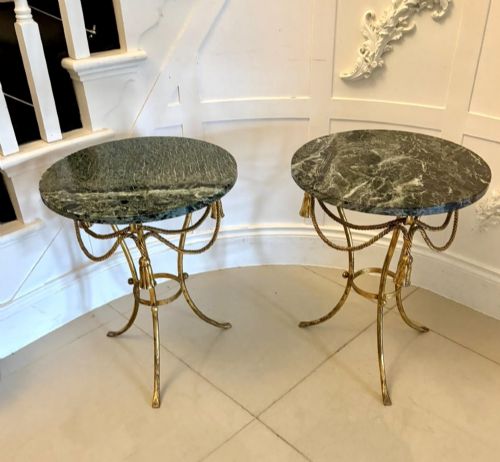
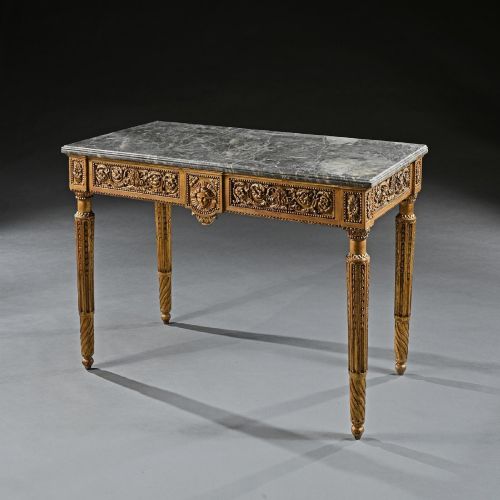
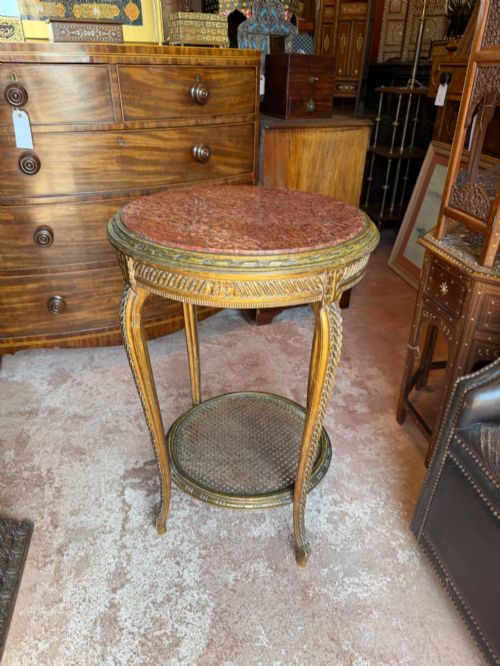
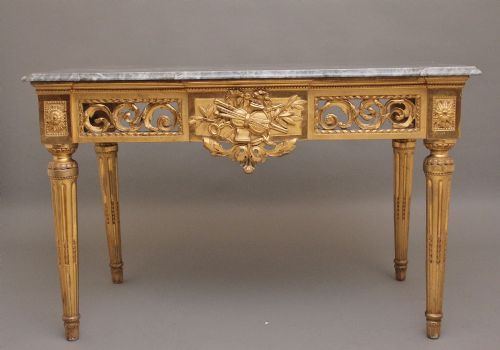
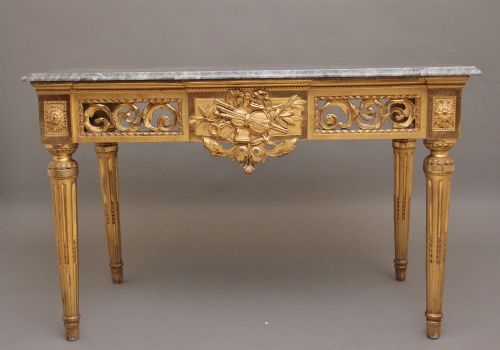
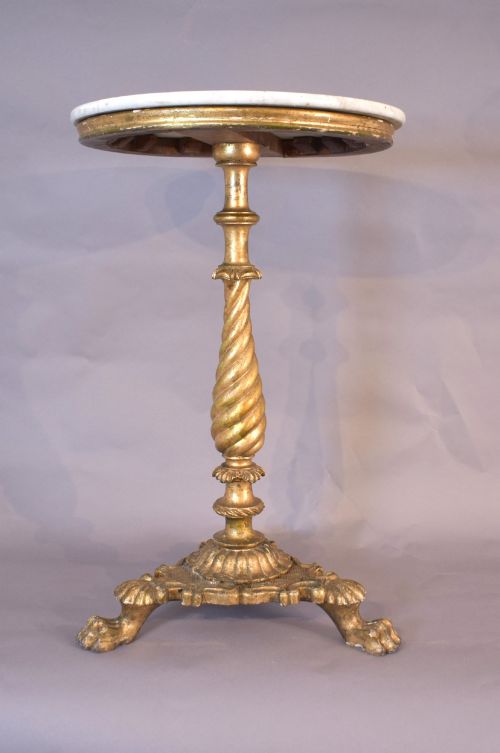
A gold marble table encompasses various forms designed to display polished stone surfaces within gilded or brass frames. When searching for a gold marble table, buyers frequently encounter 18th and 19th century console tables, side tables, and occasional tables originating from Italy, France, and Britain. These pieces range from compact gueridons to monumental console tables with elaborate architectural supports.
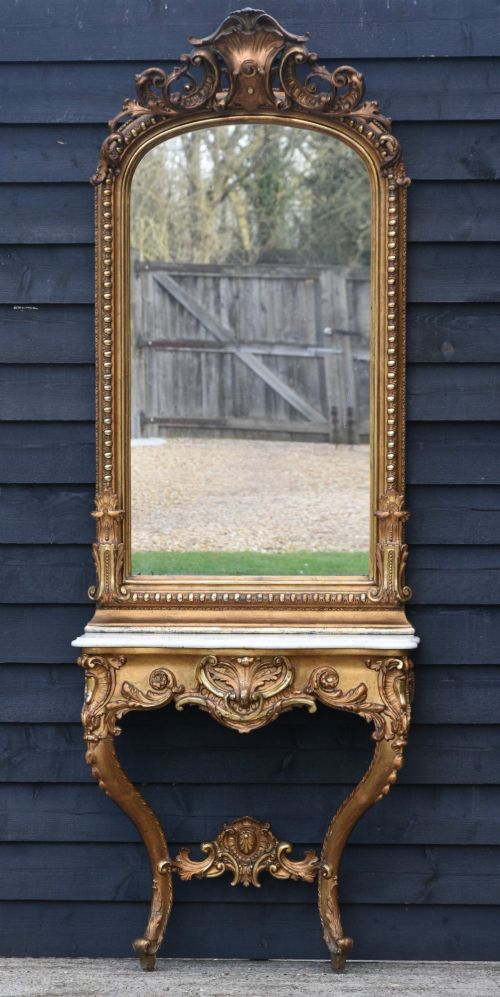
The material combination typically unites a heavy marble top with a wooden frame finished in gold leaf, gesso, or ormolu. Console tables intended to stand against a wall dominate the selection, often accompanied by matching pier mirrors or smaller occasional and coffee tables adapted from earlier designs. French and Italian workshops produced the majority of these variations, drawing on Neoclassical, Louis XVI, and Rococo revival vocabularies.
How they were made
Carved timber frames provide the foundational structure for most examples, shaped from woods such as oak or pine before receiving layers of gesso and gold leaf. Artisans applied thin sheets of gold metal manually over prepared grounds, sometimes burnishing specific areas to create contrast between matte and reflective surfaces.
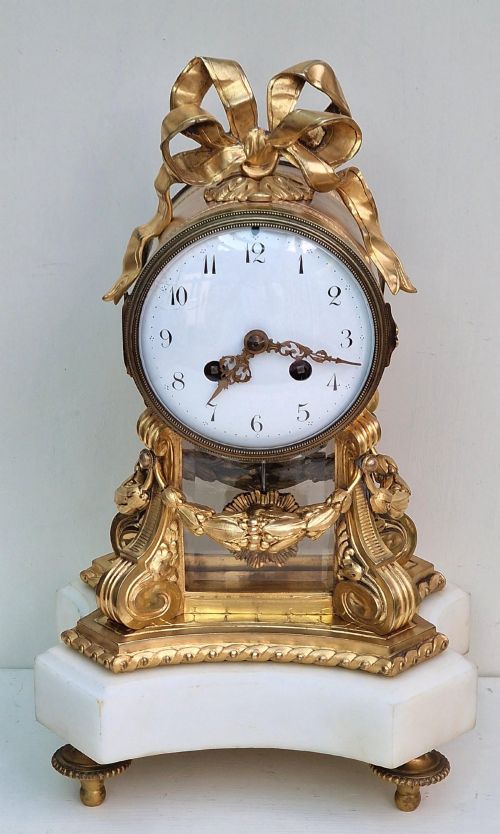
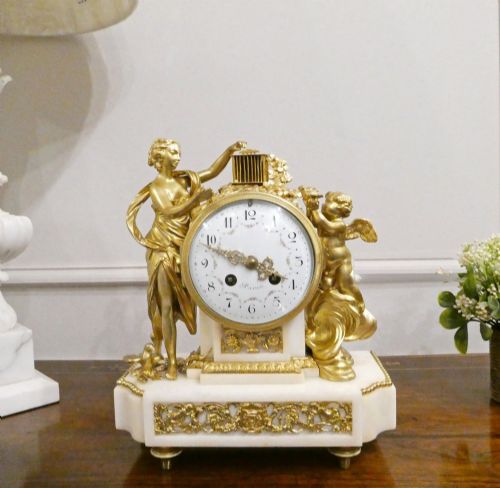
Marble and onyx tops were cut and polished to precise dimensions, resting loose upon the wooden or cast metal bases due to their substantial weight. Ormolu, gilt bronze, and cast brass mounts were secured with pins or screws to embellish corners, legs, and aprons on tables and related items like mantel clocks.
Several tables come equipped with fierce lion's paw supports ready to pounce across your parquet floor.
What varies in quality
Depth and precision of woodcarving set the foundation of quality, distinguishing hand-carved acanthus leaves and scrolls from mechanical or heavily cast ornament. The crispness of the gilding and the integrity of the underlying gesso reveal the original workshop's standard of execution.
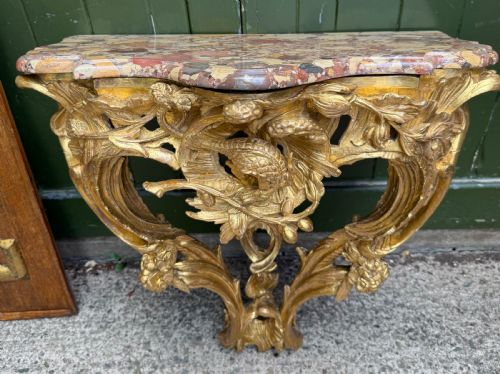
The selection of the marble top dictates upper tiers of craftsmanship, where figured varieties like breccia or breche d'alep show complex natural patterning. Superior examples maintain structural harmony between the heavy stone slab and the supporting gilded framework without excessive reinforcement.
Amleto Bertoni
The Gold Marble Table Glossary
- Console table
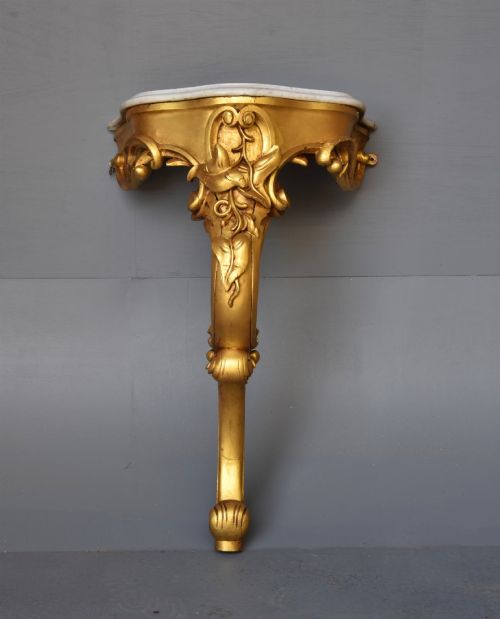
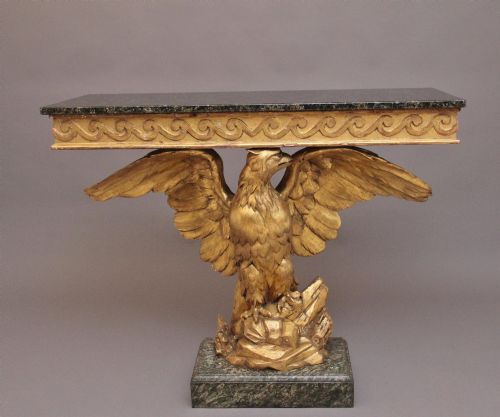
- A table designed to stand against a wall, frequently fixed with brackets or resting on front legs. These items often feature shaped marble slabs on top.
- Giltwood
- Timber coated with gold leaf over a prepared gesso ground. This technique creates a rich metallic sheen common on period furniture frames.
- Ormolu
- Gilded bronze mounts applied to furniture and decorative objects. The process involves an amalgam of mercury and gold heated onto a bronze base.
- Breccia marble
- A composite stone consisting of angular rock fragments embedded in a fine-grained matrix. It yields variegated patterns highly prized for table tops.
- Gueridon
- A small circular occasional table supported by a central pillar or tripod legs. French makers frequently utilised this form for display surfaces.
Gold Marble Table: Frequently Asked Questions
What is a gold marble table?
A gold marble table is a piece of furniture featuring a polished stone top paired with a gilded wooden or cast bronze frame. These items range from small occasional tables to large console tables designed for formal rooms.
Most examples date from the eighteenth and nineteenth centuries, reflecting historical European design movements such as Neoclassical and Rococo revival styles.
How were console tables used historically?
Console tables served primarily as decorative furniture placed against drawing room walls, often beneath matching mirrors. They displayed ornamental objects like clocks, candelabra, and porcelain.
Because many were secured to the wall for stability, they functioned more as architectural fixtures than as movable dining or writing surfaces.
How do I care for giltwood and marble?
Giltwood requires dusting with a soft, dry cloth to protect the delicate gold leaf layer from moisture and abrasion. Liquid cleaners can damage the historic surface finish.
Marble tops benefit from immediate wiping of spills to prevent staining, using mild soap and water when necessary followed by thorough drying.
How can I tell the period of a table?
Examining the construction methods, tool marks on the timber, and the composition of the gesso helps determine the age of a piece. Older frames often display hand-sawn wood and organic preparation layers beneath the gold leaf.
Stylistic cues such as the severity of Neoclassical lines or the asymmetry of Rococo revival carving also point toward specific manufacturing decades.