


Carved Wall Bracket Table
A carved wall bracket table is a wall-mounted console designed to anchor a room and display objects above.
Carved Wall Bracket Table
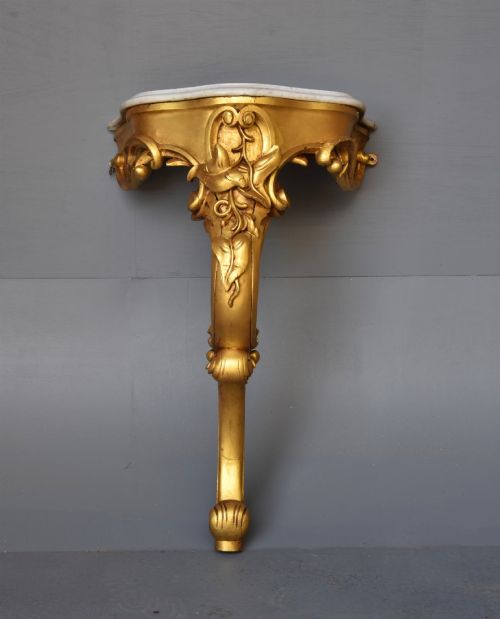
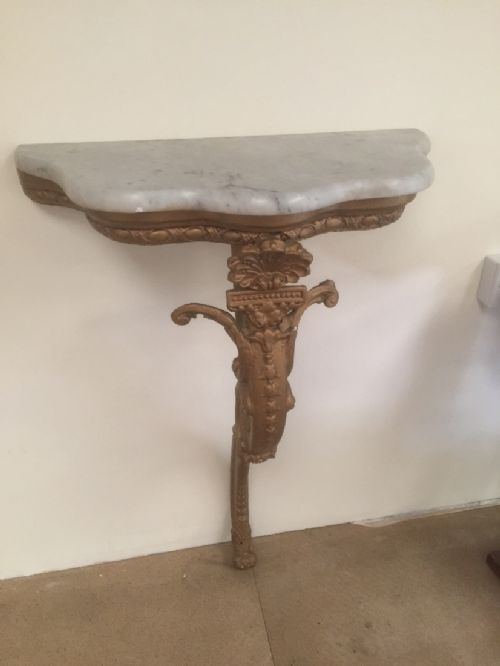
A carved wall bracket table combines the structural support of a wall bracket with the surface utility of a small table or console. When you search for a carved wall bracket table, you encounter pieces that mount directly to the wall, often paired with matching marble tops or mirror glass.
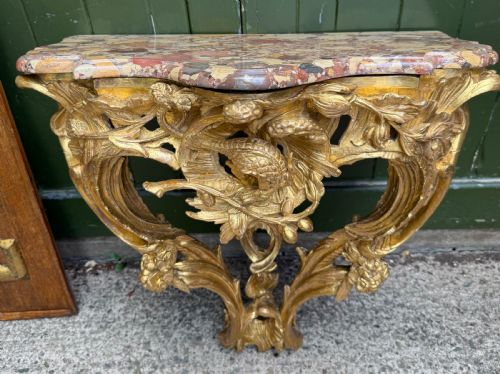
The selections span from the eighteenth century through to the nineteen thirties, encompassing French Rococo revival, Baroque, and Neoclassical styles. You will frequently find console tables, pier tables, and wall consoles executed in giltwood, walnut, and carved wood with painted finishes.
Origins stretch across French and Italian workshops, alongside English interpretations in the Adam style. These pieces range from small nineteenth-century examples to large walnut tables featuring detailed eagle carvings.
Materials and construction methods
Makers utilised solid timbers such as walnut and mahogany alongside softer woods carved for gilding. Giltwood pieces rely upon layers of gesso applied over carved wood to receive gold leaf, creating a reflective surface suited to formal interiors.
Stonemasonry and glassmaking intersect with woodwork through the integration of figured marble tops, such as breche d'alep, and inset mirror glass. Carving ranges from hand-carved naturalistic foliage and rococo scrolls to architectural neoclassical motifs.
French and Italian design dominates the selection, encompassing Rococo, Neoclassical, and Baroque styles.
Judging the work
Quality rests upon the crispness and depth of the hand-carving within the wood or gesso. Finer pieces display undercut foliage and sharply defined scrolls rather than soft, moulded contours.
The integration of materials dictates the finish, particularly the weight and selection of the marble top and the integrity of the original gilding. Proportion and balance in the scrollwork distinguish ambitious architectural consoles from simpler wall brackets.
The Carved Wall Bracket Table Glossary
- Console table
- A table designed to be fixed against a wall, frequently supported by ornamental brackets or legs rather than standing independently on four corners.
- Giltwood
- Timber coated with gold leaf over a prepared base of gesso and size. This finish was favoured for formal reception rooms.
- Gesso
- A plaster mixture applied to wood surfaces as a smooth base for gilding or painting. It allows intricate relief work to be modelled before applying gold leaf.
- Breche d'alep
- A distinctive type of multi-coloured figured marble utilised for table tops. It typically displays brecciated patterns of brown, cream, and grey.
- Pier table
- A table designed to stand against the wall space between two windows, often placed beneath a matching mirror. They share architectural similarities with wall consoles.
Carved Wall Bracket Table: Frequently Asked Questions
How do I secure a wall bracket table safely?
These tables require secure fixing directly into structural wall studs or masonry using appropriate brackets. Because many incorporate heavy marble tops, professional installation ensures the weight is distributed properly without damaging the plaster.
Once anchored, the bracket structure provides stable support for display objects without needing floor legs.
Are these tables designed to stand without floor support?
Most pieces classified as wall consoles or bracket tables rely on wall attachment for their primary support. Some variations include front legs that touch the floor, while others project entirely from the wall.
Examining the underside reveals whether the piece requires wall anchoring or uses supplementary legs for balance.
What is the difference between a console table and a pier table?
Console tables mount to the wall or stand on legs against a vertical surface, functioning primarily as decorative ledges. Pier tables specifically occupied the narrow wall space between windows, frequently accompanied by a tall mirror above.
Both forms utilise carved wooden frames and decorative tops, but their historical placement within a room dictated their exact proportions.
How do I care for giltwood and painted finishes?
Giltwood surfaces require gentle dusting with a soft, dry brush to protect the delicate gold leaf layer. Moisture and abrasive cleaners damage both gesso and antique paintwork.
Keeping the table away from direct sunlight and excessive humidity preserves the underlying wood and prevents the gesso from cracking.