

French Giltwood Side Table
A french giltwood side table brings gilded warmth and carved serpentine grace to a room, offering a functional surface topped with figured marble.
French Giltwood Side Table
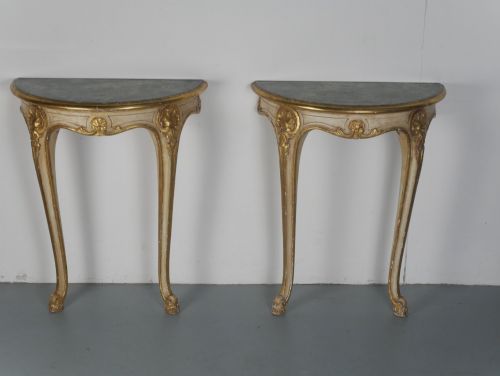
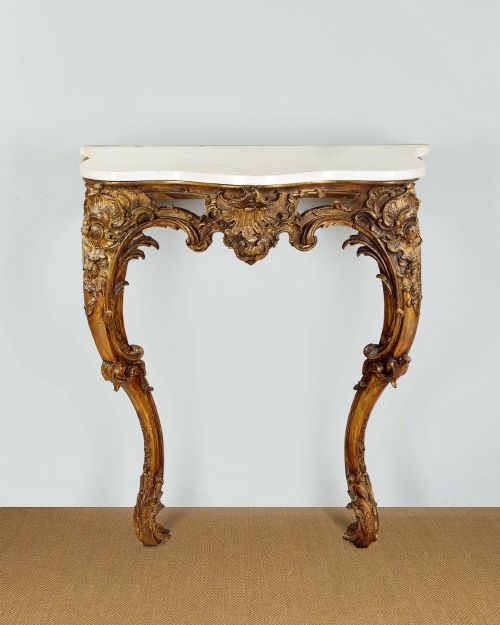
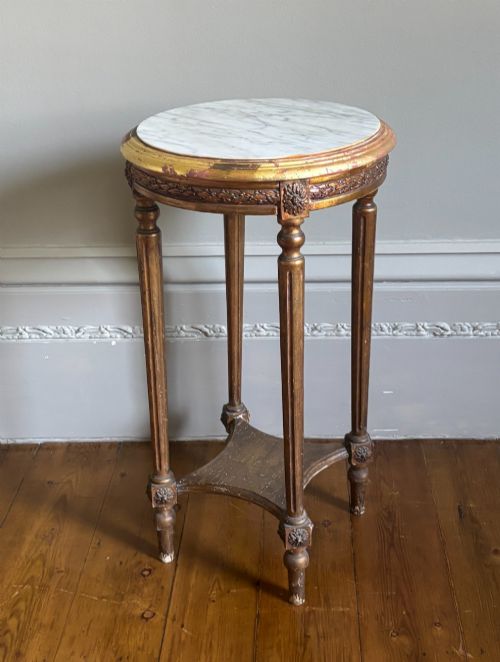
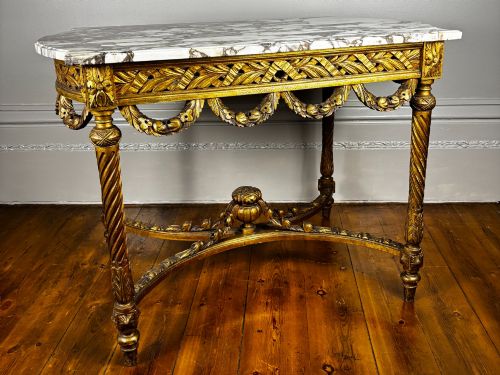
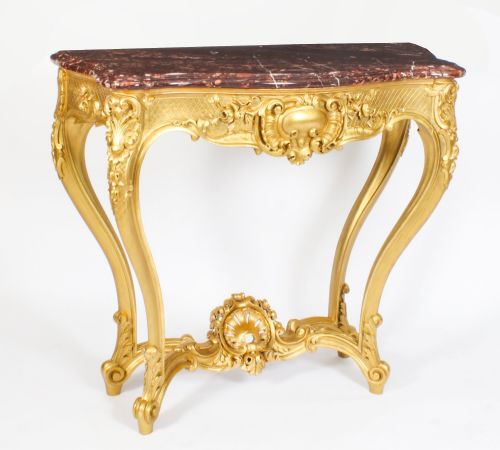
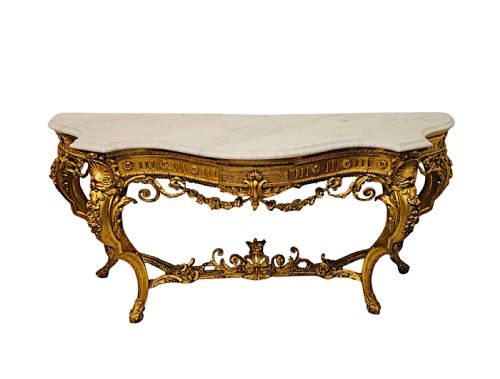
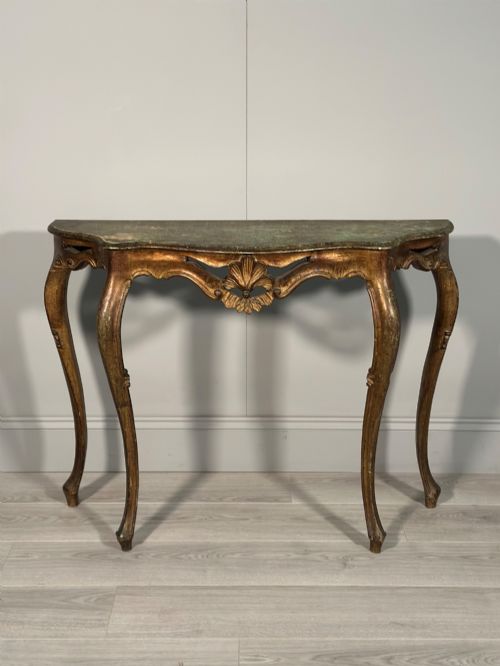
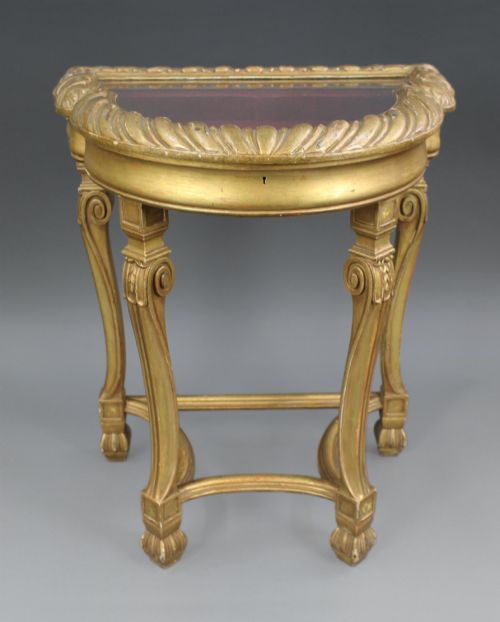
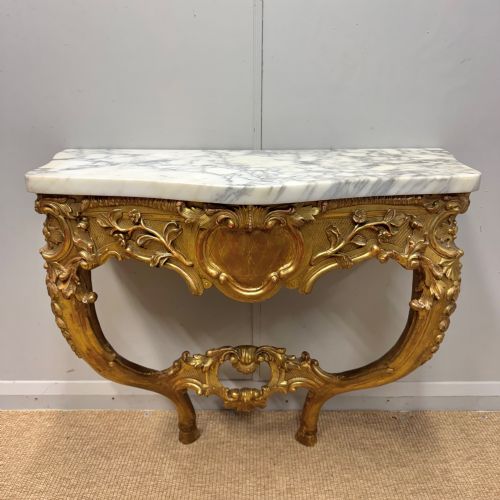
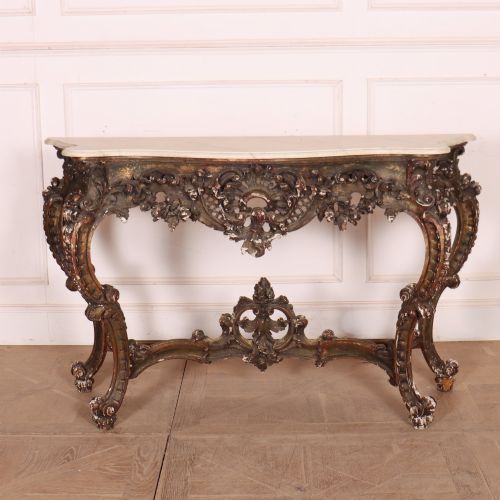
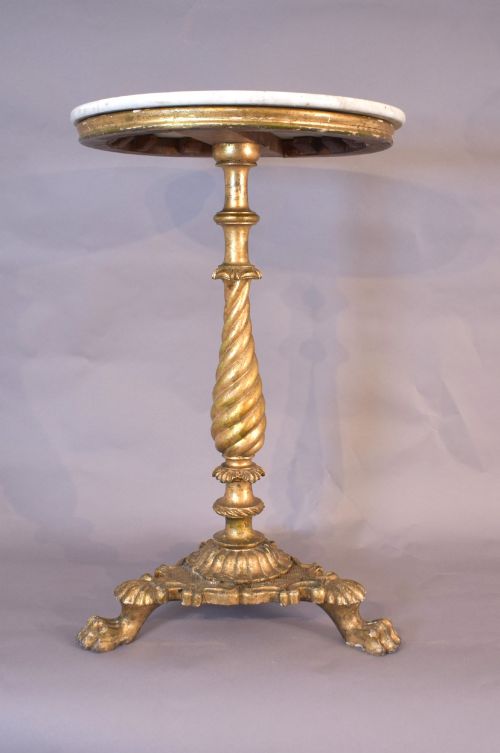
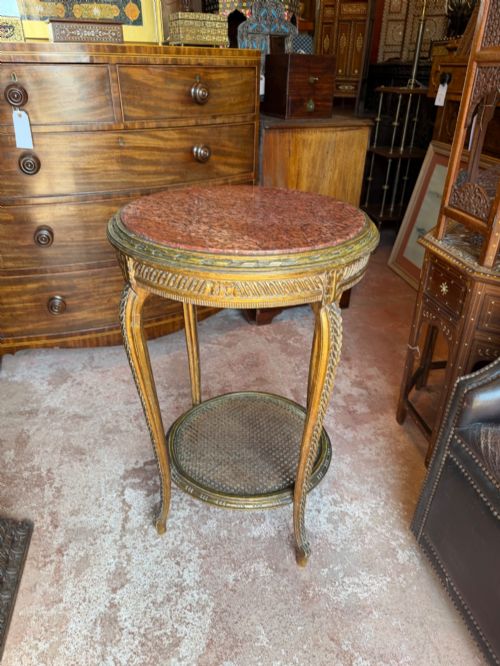
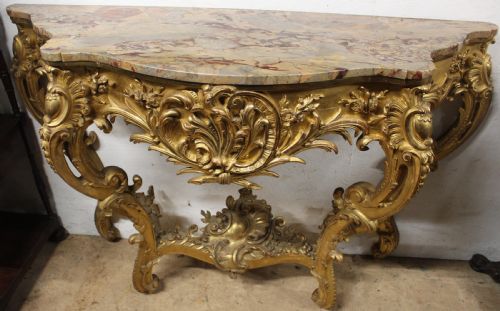
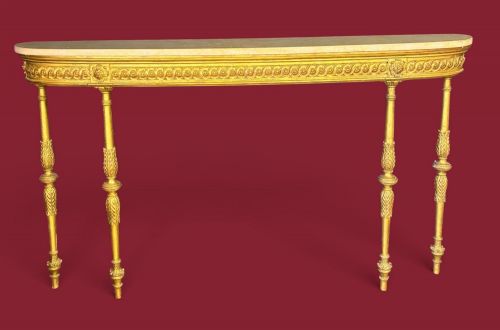
A french giltwood side table is primarily a console or pier table designed to sit against a wall, though the selection also includes circular guéridons and occasional tables. The pieces span the eighteenth, nineteenth, and early twentieth centuries, capturing periods from Louis XV and Louis XVI revivals to Rococo and Neoclassical styles.
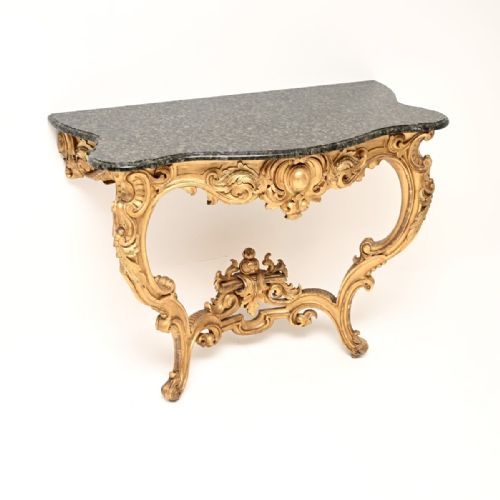
Console tables dominate the selection, frequently paired with heavy marble tops in white Carrara, green, rouge, or breche d'alep. Buyers encounter everything from small eighteenth-century examples to large nineteenth-century hall tables and console and mirror sets.
How they were made
Maker's workshops shaped these pieces from carved wood, applying gesso to build up intricate floral mouldings, scrolls, and figural details before laying down gold leaf or paint. Giltwood surfaces often catch the light differently depending on whether the underlying gesso is deeply chiselled or smoothly finished.
Heavy marble slabs, cut to serpentine, oval, demi-lune, or rectangular outlines, rest directly upon the wooden frames to provide weight and a cool, polished contrasting surface. Secondary materials such as onyx, porcelain mounts, amboyna, and red velvet appear in specific centre and wine table variants.
French Giltwood Side Table Retail Price Guide 2026
Typical asking prices for french giltwood side table among the pieces listed under this phrase on Sellingantiques today, from the lower quarter to the upper quarter. They describe what is for sale here now, not the wider market.
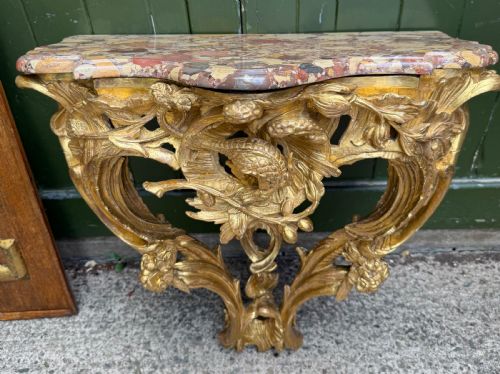
Swans and floral mouldings occasionally emerge from the gilded woodwork, quietly guarding the corners of nineteenth-century tables.
What varies in quality
The depth and crispness of the wood carving set the visual standard, distinguishing fluid, hand-chiselled acanthus leaves and floral garlands from softer, mechanically flattened mouldings. Gilt surfaces range from bright, evenly burnished gold leaf that retains its warmth to flat, repainted finishes that lack the patina of age.
The geological variety and thickness of the marble top also dictate the stature of the piece, with figured breche d'alep, rich green, and deep rouge slabs holding higher visual weight than plain white stone. Construction integrity in the joints and the crispness of the original gesso foundation separate standard production from exceptional examples.
The French Giltwood Side Table Glossary
- Giltwood
- Wood that has been coated with gesso and covered in thin sheets of gold leaf. This finish creates a luminous metallic surface that reflects light across a room.
- Console table
- A table designed to be fixed against a wall, frequently supported by two front legs and secured to the wall structure. These pieces often feature elaborate front skirts and marble tops.
- Guéridon
- A small French table, typically round and supported by a single central pillar or tripod base. They originated in the seventeenth century and serve as occasional or wine tables.
- Serpentine
- A furniture outline characterised by a wavy line with a convex centre flanked by concave curves. This shape adds movement and complexity to table fronts and marble slabs.
- Gesso
- A plaster-like mixture applied to wood surfaces as a smooth base for gilding or painting. Deeply built gesso allows carvers to achieve sharp relief details.
French Giltwood Side Table: Frequently Asked Questions
Where should I place a french giltwood side table?
These tables find a natural home in entrance halls, living rooms, or dining spaces where a narrow footprint against a wall is required. They serve well beneath mirrors or artwork to anchor a focal point in the room.
Because many feature finished marble tops, they easily accommodate lamps, decorative bowls, or small collections without risking surface damage from daily use.
How do I care for the marble top?
Marble requires gentle cleaning with a soft, damp cloth and neutral soap, avoiding acidic cleaners or harsh chemicals that can etch the polished surface. Placing felt pads under heavy objects prevents scratching.
Regular dusting keeps the stone and the surrounding giltwood frame in stable condition over decades of domestic placement.
What is the difference between a console and a centre table?
A console table stands flat against a wall and often relies on wall fixings for total stability, featuring finished carving primarily on the front and sides. Centre tables are freestanding, finished on all sides to sit comfortably in the middle of a room.
Both forms appear frequently in giltwood, though consoles lean toward architectural wall furniture while centre tables invite movement around the perimeter.
How can I tell an eighteenth-century table from a nineteenth-century revival?
Eighteenth-century originals generally display hand-wrought joinery and older tool marks beneath the gesso, alongside timber that has dried and seasoned over centuries. Revival pieces from the Victorian era or the early twentieth century often utilise machine-sawn framing while closely copying earlier Rococo or Neoclassical motifs.
Examining the weight of the gesso layer and the wear patterns on the gold leaf helps reveal the true age of the construction.