

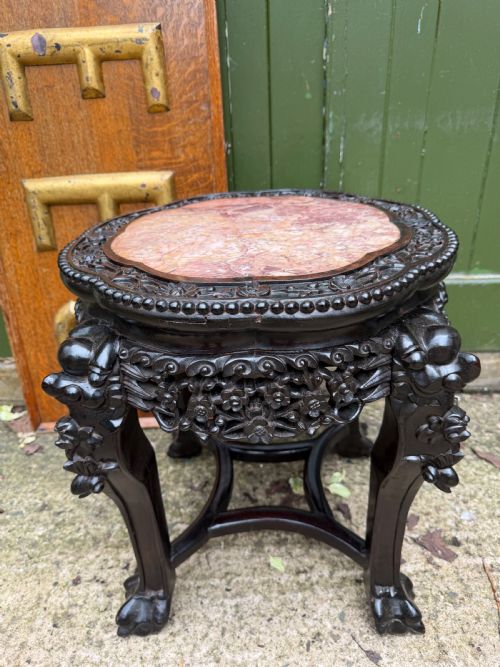


Rouge Marble Top Table
A rouge marble top table brings rich mineral colour and solid weight to a room, shifting gracefully between French formalism and Chinese carved hardwood traditions.
Rouge Marble Top Table
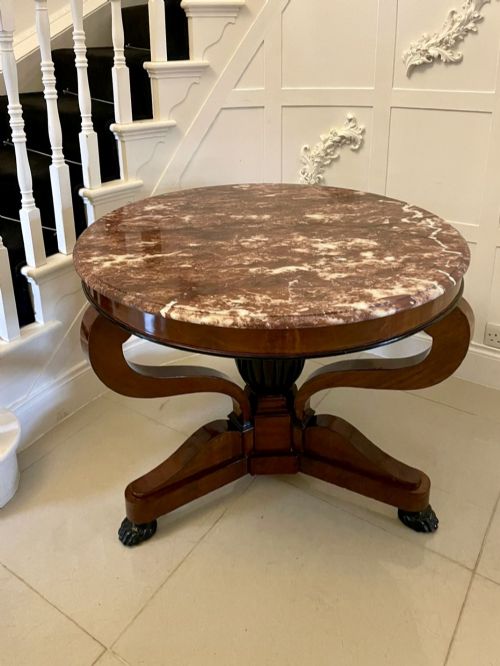
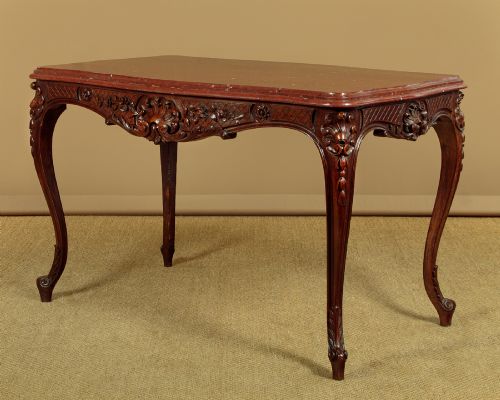
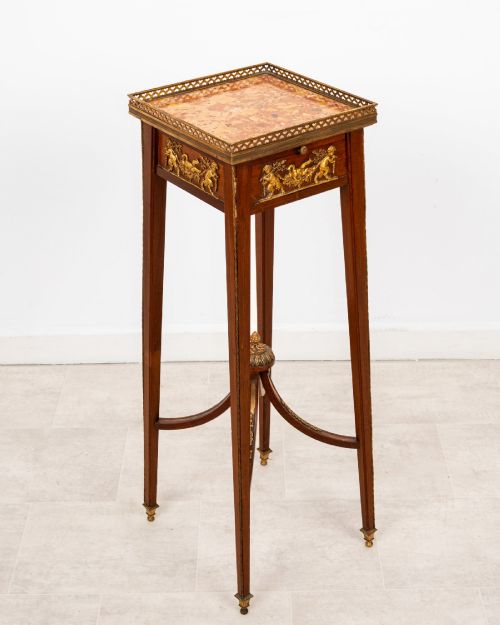
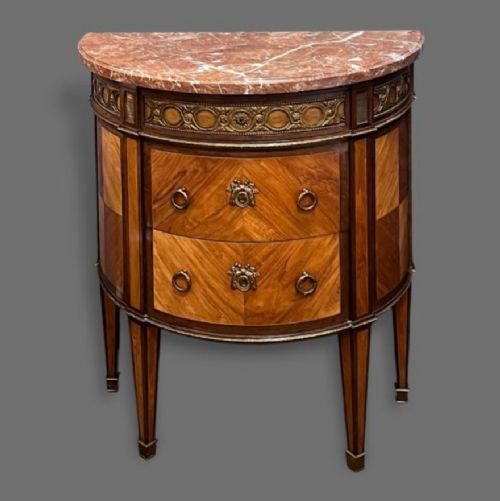
When you search for a rouge marble top table, you encounter a diverse selection of centre tables, console tables, side tables, and jardiniere stands drawn from European and Chinese workshops. The European pieces lean heavily towards French styling, particularly Louis XV, Louis XVI, and Rococo Revival designs executed in walnut, mahogany, rosewood, and giltwood.
Alongside these continental European forms appear significant numbers of Chinese export pieces from the Qing Dynasty. These incorporate inset rouge marble panels into carved hardwood, hongmu, and ebonised frames, creating low tables and urn stands built for specific domestic display.
Materials and Construction
The defining feature across the selection is the heavy stone top, paired with dense timbers such as mahogany, walnut, rosewood, and hardwood. European workshops often combined these stones with giltwood, kingwood, and applied ormolu mounts, shaping the timber bases into curved cabriole legs or console supports.
Chinese makers utilised traditional joinery techniques to frame the inset rouge marble panels within carved hardwood structures, frequently employing ebonised surfaces or rich hongmu. The stone itself provides a smooth, cool contrasting plane against the carved woodwork of both traditions.
Materials range from carved walnut and mahogany to ebonised hardwoods, paired consistently with polished rouge marble.
Craftsmanship and Material Depth
Quality rests in the depth of the timber carving and the specific character of the stone insert. Superior pieces display crisp, hand-carved detailing along the aprons and legs, whether following French scrollwork or intricate Chinese floral motifs, without soft edges or mechanical uniformity.
The stone itself demonstrates variation through the richness of its veining and the tightness of its fit within the surrounding frame. Better examples feature thick, richly figured rouge marble slabs that sit flush and secure within well-seasoned wood.
François Linke
The Rouge Marble Top Table Glossary
- Rouge marble
- A rich red limestone featuring white, grey, or darker mineral veins. It provides a striking, polished surface frequently utilised for high-end furniture tops.
- Jardiniere stand
- A small, sturdy table designed specifically to hold indoor plants or floral arrangements. These often feature inset stone tops to protect the wood from water.
- Console table
- A table designed to stand against a wall, traditionally supported by wall brackets or decorative legs. They often carry prominent marble tops and elaborate carving.
- Hongmu
- A traditional Chinese term for dense, fragrant hardwoods used in fine furniture making. It frequently forms the dark structural frames for inset marble panels.
- Giltwood
- Timber that has been coated with a thin layer of gold leaf. This technique appears widely on ornate French tables and console frames.
Rouge Marble Top Table: Frequently Asked Questions
What rooms suit a rouge marble top table?
These tables find natural placement in hallways as console surfaces or in reception rooms as centre and lamp tables. The durable stone top handles everyday use while adding a distinct focal point.
Smaller jardiniere stands fit neatly beside seating or in corners to display plants and decorative objects. Larger centre tables anchor a room when placed centrally on a rug or floorboards.
How do I clean rouge marble tops?
Wipe the stone surface using a soft cloth dampened with warm water and mild, neutral soap. Avoid acidic cleaners, vinegar, or harsh chemicals that etch the polished finish.
Dry the marble thoroughly after washing to prevent water spots. Routine dusting keeps the surface clear of grit that might scratch the polish.
How do I distinguish French and Chinese styles?
French tables typically exhibit European revival motifs such as cabriole legs, acanthus leaves, ormolu mounts, and giltwood finishes. The timber choices lean towards walnut, mahogany, and kingwood.
Chinese pieces from the Qing Dynasty utilise dense hardwoods, ebonised finishes, and distinct joinery without nails. Their carved motifs reflect Asian iconography and structural restraint.