

Rococo Wall Console Table
A rococo wall console table brings sculptural curves and marble tops to a room, offering surface space that anchors a grand interior scheme.
Rococo Wall Console Table
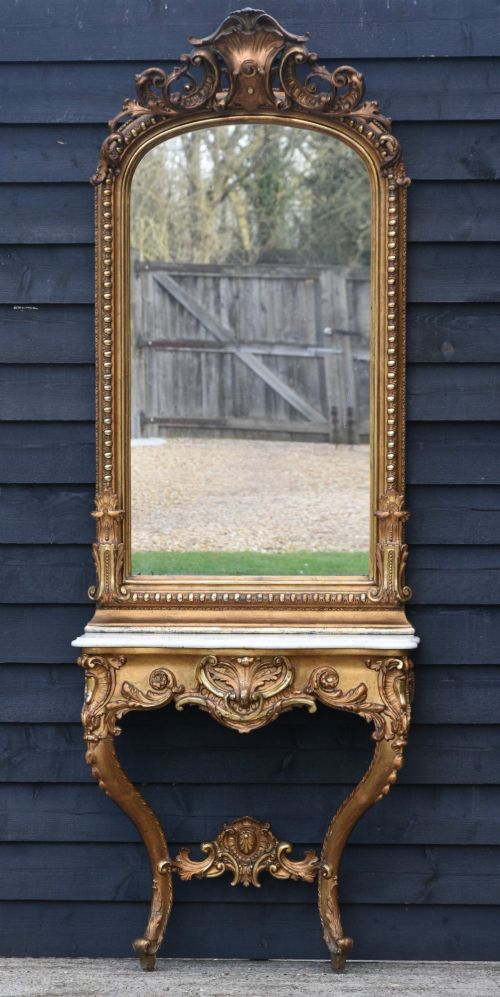
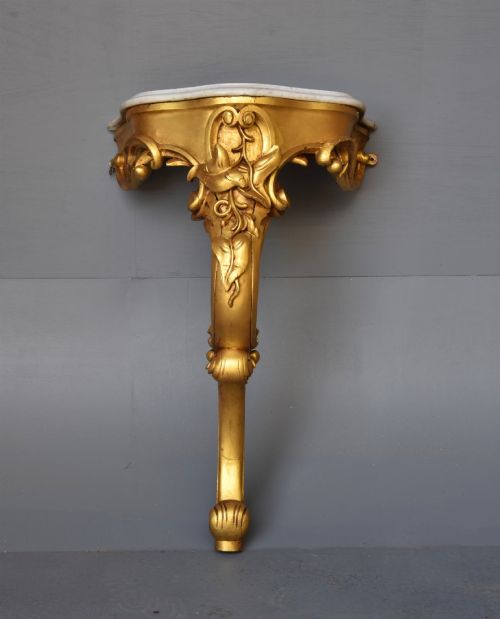
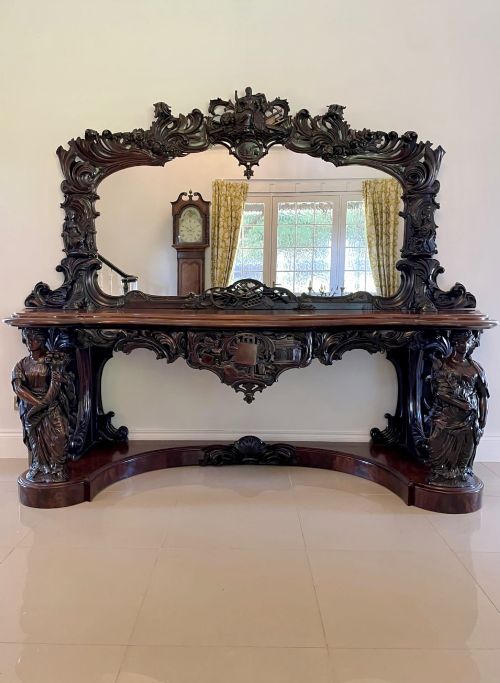
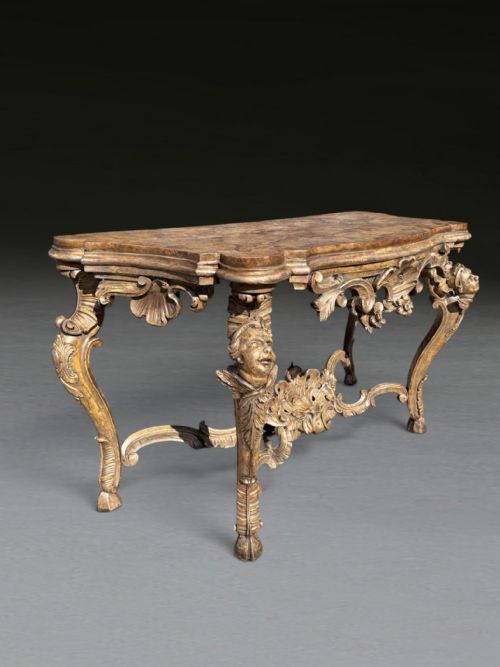
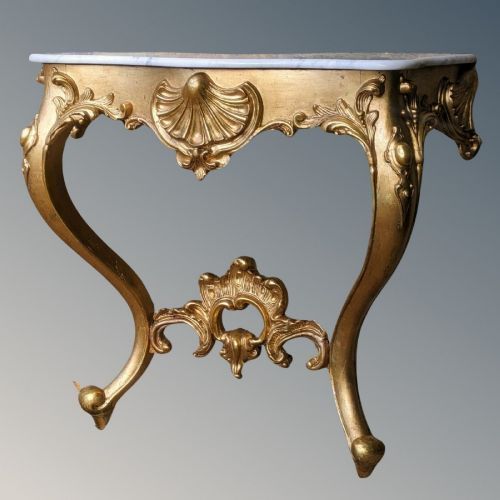
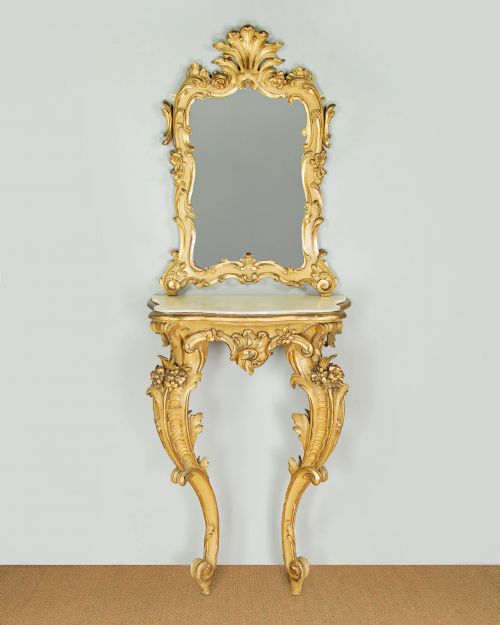
A rococo wall console table is a decorative side table designed to stand flat against a wall, frequently paired with a matching pier mirror above it. The form relies on brackets or wall fixings for stability, distinguishing it from freestanding furniture.
Examples on this page span several centuries, including eighteenth-century originals from Italy and France alongside later nineteenth-century revivals and twentieth-century interpretations. French and Italian workshops dominate the origin records.
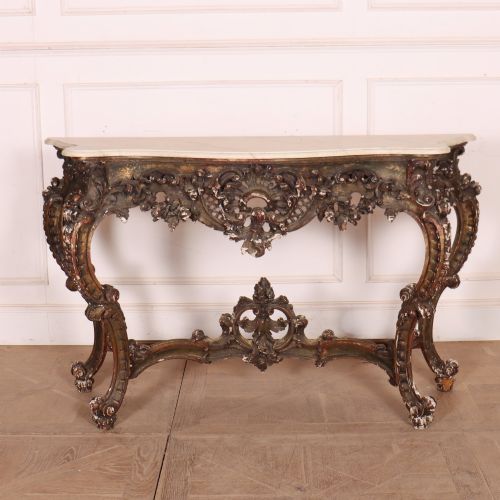
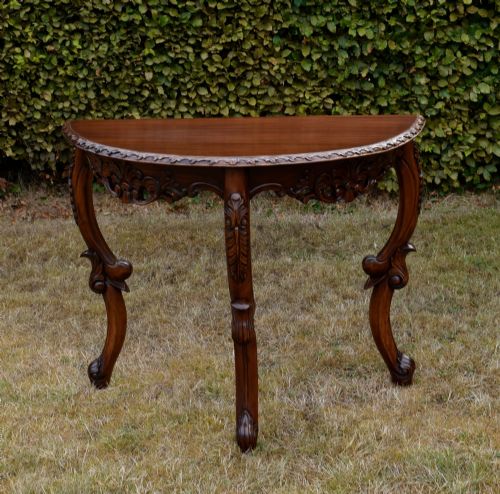
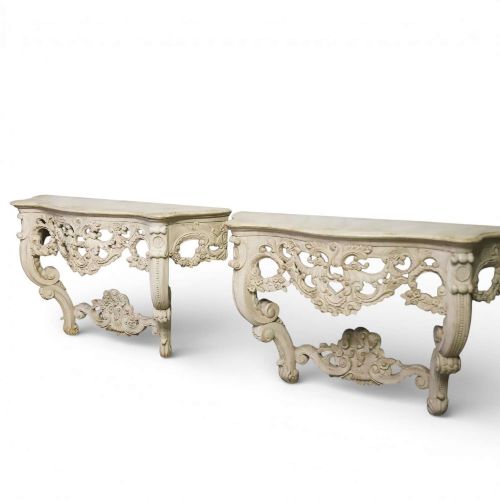
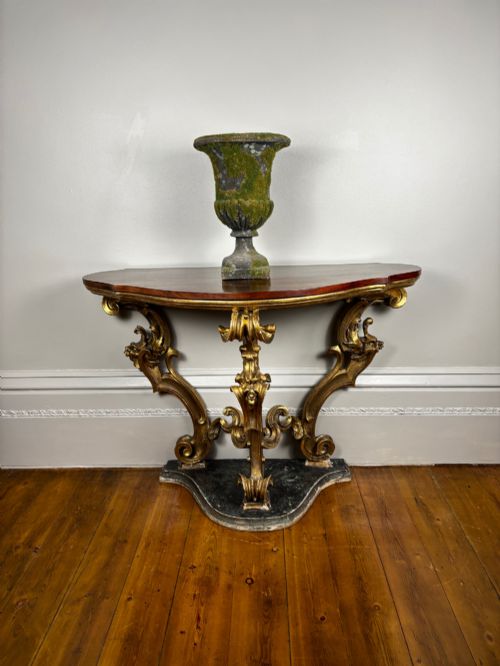
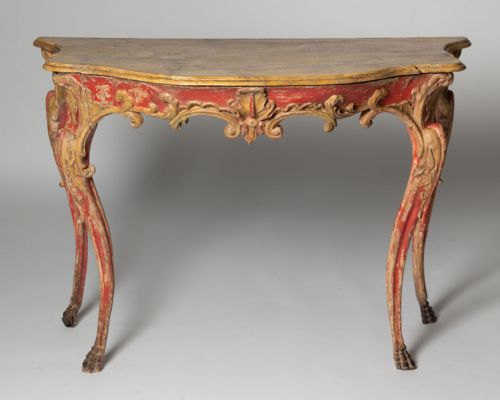
Variations in form range from small demi-lune shapes to massive exhibition pieces with carved mirror backs, serpentines fronts, and substantial marble surfaces.
Materials and construction
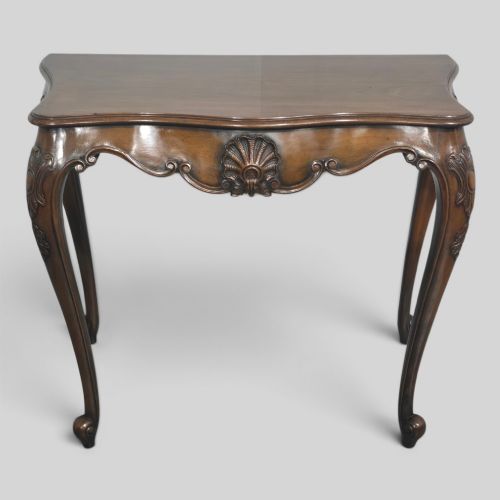
Carved wood forms the structural and decorative core of these tables, utilising walnut, mahogany, and softwoods beneath surface decoration. Craftsmen shaped deep scrolls and asymmetrical motifs directly into the timber.
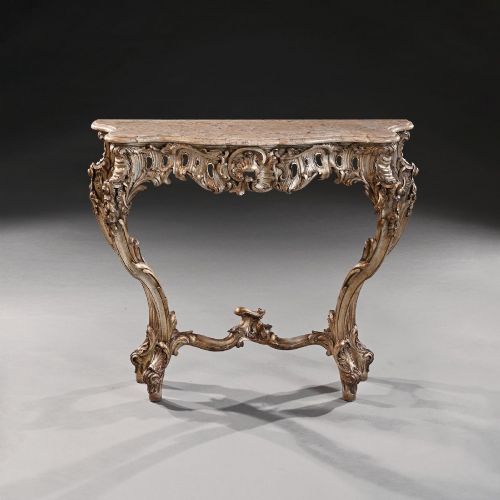
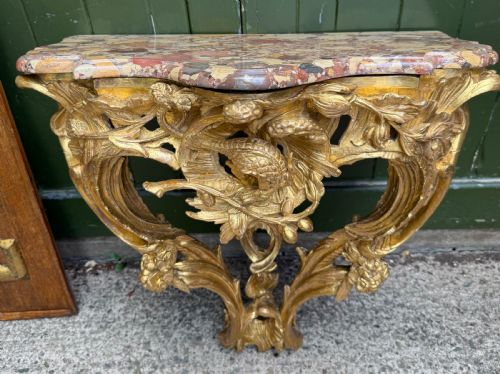
Giltwood, gesso, and gold leaf finishes provide the characteristic metallic sheen, while applied paint and antique white finishes appear on select French and Italian pieces. Layers of gesso create a smooth base for delicate gilding work.
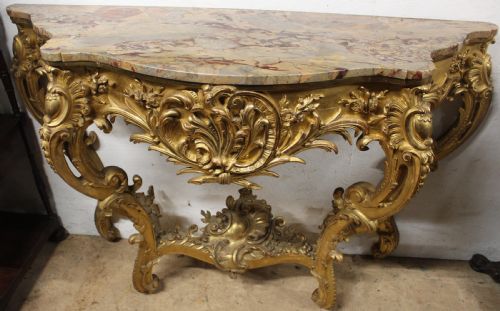
Heavy marble tops, including Carrara and figured varieties such as breche d'alep, sit unattached or pinned onto the wooden frames, providing a cool stone counterpoint to the carved woodwork below.
Listings feature walnut, mahogany, and carved wood structures paired with marble tops across the eighteenth, nineteenth, and twentieth centuries.
Judging execution and finish
Depth and crispness of the wood carving separate master carvers from routine workshops, particularly in the rendering of asymmetrical scrolls, foliage, and shell motifs.
The application of gold leaf over gesso dictates the longevity and brilliance of the surface, where hand-burnished highlights contrast against matte areas.
Quality shows in the selection and thickness of the fitted marble top, matched with solid structural joinery that supports heavy stone without sagging.
Maple and Co
The Rococo Wall Console Table Glossary
- Console table
- A table designed to be fixed against a wall, supported by front legs or wall brackets.
- Giltwood
- Timber coated with gold leaf applied over a prepared gesso ground. This finish defines many eighteenth and nineteenth-century examples.
- Demi-lune
- A half-moon shape used for table tops and frames, allowing the furniture to sit flush against a wall.
- Serpentine
- A gently undulating curved line forming the front edge of a table top or apron.
- Gesso
- A plaster mixture applied to wood surfaces as a smooth preparation layer for gilding or painting.
Rococo Wall Console Table: Frequently Asked Questions
Are rococo wall console tables stable on their own?
Many console tables require attachment to the wall for complete stability because their design relies on brackets or two front legs rather than four.
Securing the frame prevents tipping, particularly when heavy marble slabs rest on top of the wooden base.
How do I distinguish eighteenth-century pieces from later revivals?
Eighteenth-century examples show hand-carved tool marks, aged patination in the gesso and giltwood, and distinct timber construction methods beneath the surface.
Nineteenth-century revival pieces often display heavier proportions and machine-assisted preparation layers while copying the earlier styles.
Where should I place a console table and mirror set?
These sets traditionally sit in entrance halls, formal living rooms, or below large windows to reflect light around the interior.
The matching mirror creates a vertical focal point that mirrors the decorative carving of the table base.
What types of marble are common on these tables?
White Carrara and figured varieties such as breche d'alep appear frequently across French and Italian pieces.
The stone slabs are shaped to follow the serpentine or demi-lune contours of the wooden frame.