



Pink Marble Console
A pink marble console brings architectural weight and a cool stone surface to a hallway or drawing room.
Pink Marble Console
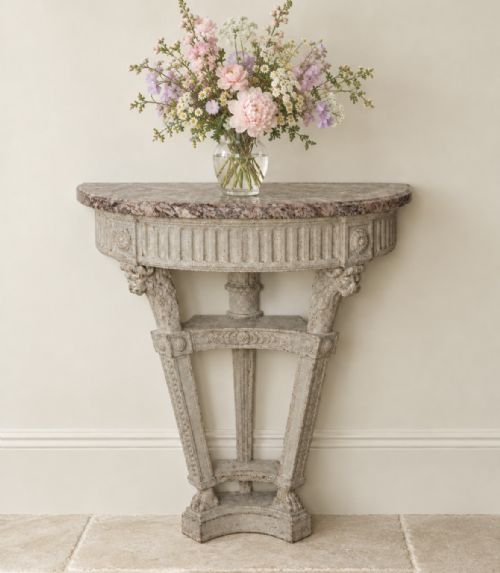
A pink marble console is a heavy wall-mounted or freestanding table featuring a slab of decorative pink stone, often found in styles ranging from Italian Baroque to French Neoclassical.
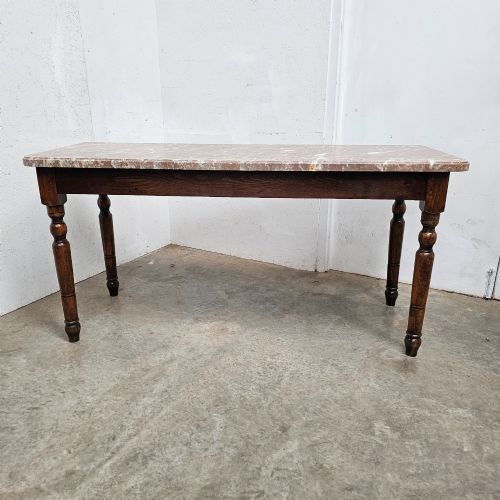
The selections on this page span the eighteenth, nineteenth, and early twentieth centuries, encompassing formats like pastry tables, patisserie displays, and formal giltwood furniture.
Buyers encounter regional variations such as carved hardwood frames from the Qing Dynasty alongside European walnut and giltwood creations.
Materials and construction
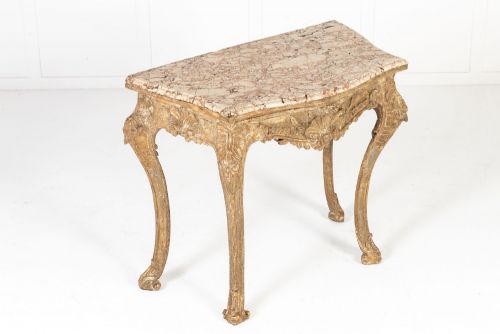
Carved wood provides the structural framework for these pieces, utilising hardwoods, European walnut, and gesso as a base for subsequent gilding or paint.
Surfaces feature applied silver leaf or parcel gilt highlights that catch the light against carved wooden details like rams and maiden heads.
The defining element is the heavy stone top, whether rouge marble, pink Salome marble, or inlaid stone set into wooden frames.
Materials documented across the collection include carved hardwood, European walnut, giltwood, and silver leaf.
Assessing quality
Quality rests in the depth and crispness of the wood carving, where hand-chiseled foliage and figural heads display superior craftsmanship compared to simpler moulded edges.
The integration of the marble slab matters greatly, with finer examples featuring thick, well-figured stone fitted precisely to the wooden apron.
Original surface treatments, such as untouched parcel gilding or historic paint, hold significantly more character than later interventions.
The Pink Marble Console Glossary
- Console table
- A table designed to stand against a wall, traditionally supported by two front legs and fixed brackets at the rear. These tables often featured grand mirrors placed directly above them.
- Giltwood
- Timber that has been coated with a thin layer of gold leaf or gold powder over a prepared gesso ground. This technique creates a luminous finish characteristic of formal period furniture.
- Rouge marble
- A deep red or pinkish ornamental limestone with white or grey veining, frequently quarried in France and Italy. It provides a dense, polished surface for furniture tops.
- Parcel gilt
- A decorative method where only specific carved details or raised ornaments are highlighted with gold leaf while the rest of the surface remains painted or stained wood.
- Baroque
- An ornate artistic style spanning the seventeenth and eighteenth centuries characterised by dramatic movement, rich carving, and theatrical proportions.
Pink Marble Console: Frequently Asked Questions
Where should I place a pink marble console?
These tables suit entrance halls, drawing rooms, or dining spaces where their decorative stone tops can be appreciated. Because many historical examples were designed to stand flat against a wall, they occupy minimal floor depth.
Pairing a console with a matching mirror creates a traditional focal point in a reception room. Ensure the wall construction can support any console that requires structural fixing for stability.
How do I care for the marble top?
Marble is a softer, porous stone that reacts to acidic liquids like wine, lemon juice, or vinegar. Wipe spills immediately with a damp cloth and mild soap rather than harsh household cleaners.
Applying a specialist stone wax helps protect the polished finish from minor scratches. Avoid placing unpadded heavy ceramic or metal objects directly onto the stone surface.
Are these tables freestanding?
While many centre tables on this page are freestanding, traditional console tables often rely on wall brackets for complete stability. The weight of the marble slab helps anchor the piece, but structural attachment prevents tipping.
Check the base construction and leg configuration of each piece to determine whether it stands independently. Centre tables offer all-round carving and finished backs for placement in the middle of a room.
How do I identify a Regency period piece?
Regency furniture dates from the early nineteenth century in Britain and often incorporates classical architectural motifs, painted finishes, and gilded highlights. These pieces lean towards clean lines influenced by Greek and Roman design.
Look for restrained use of carving alongside contrasting painted surfaces. Materials from this era frequently include specialised surface treatments like gesso and gold leaf.
What is the difference between a console and a pastry table?
Pastry tables and patisserie displays were utilitarian counters used in commercial or large domestic kitchens for rolling dough. They feature robust marble tops designed for keeping ingredients cool during preparation.
Console tables, by contrast, are decorative reception furniture intended to display ornaments or lamps in public rooms. However, kitchen furniture often shares the same sturdy wooden framework and stone top.