


Gold Leaf Decorative Mirror
A gold leaf decorative mirror brings light and reflection into a room through hand-applied metal leaf laid over carved wooden frames.
Gold Leaf Decorative Mirror
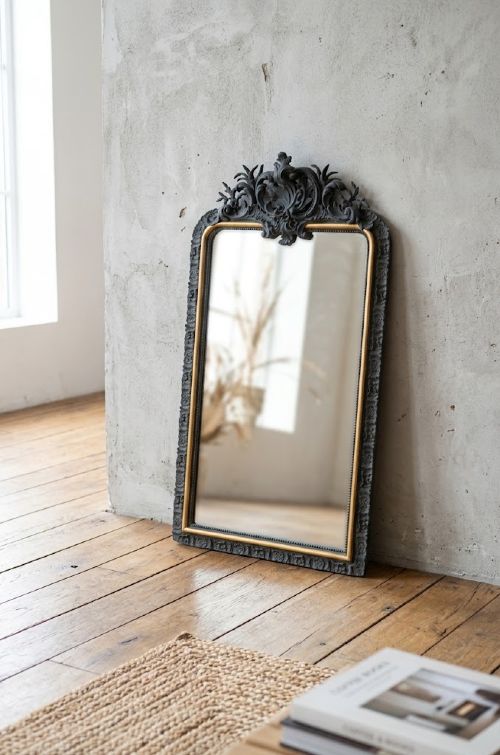
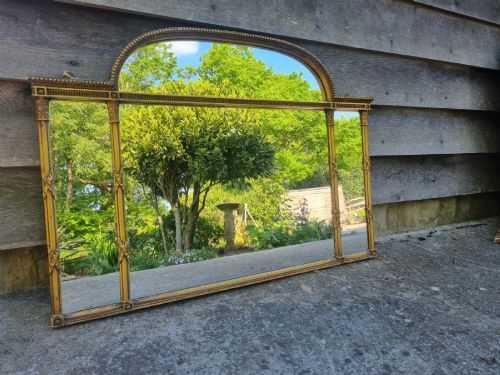
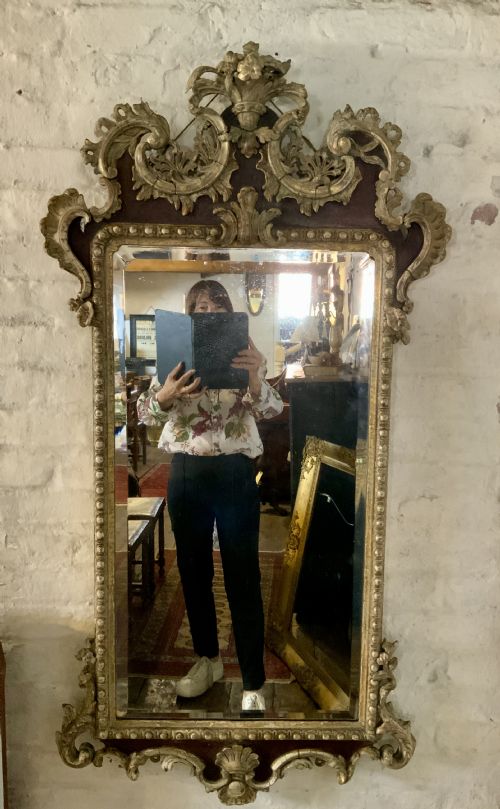
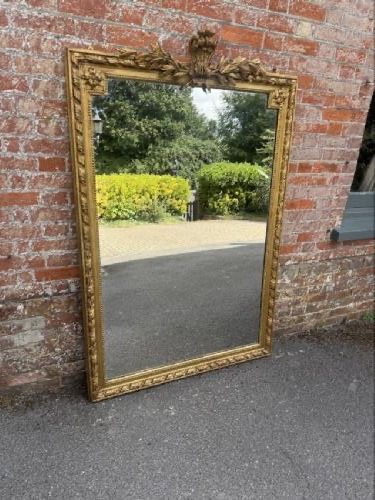
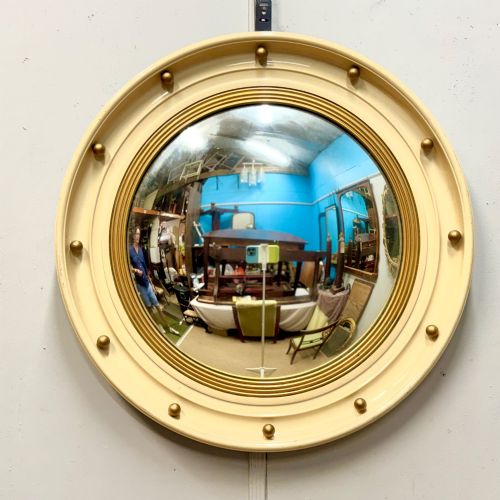
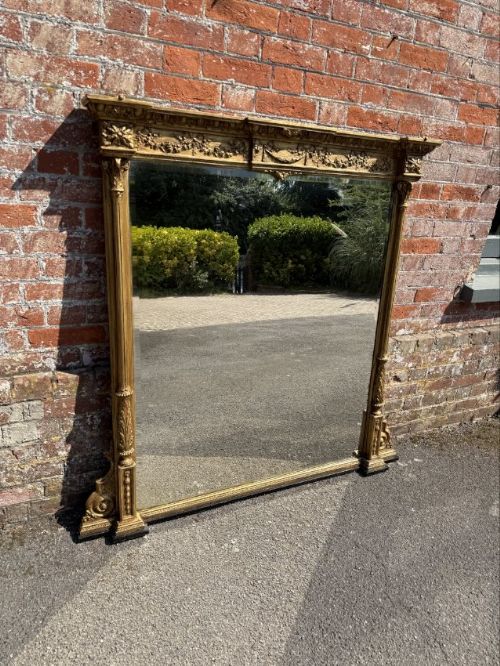
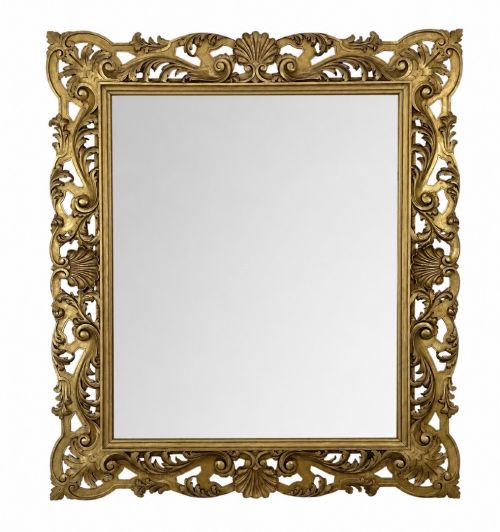
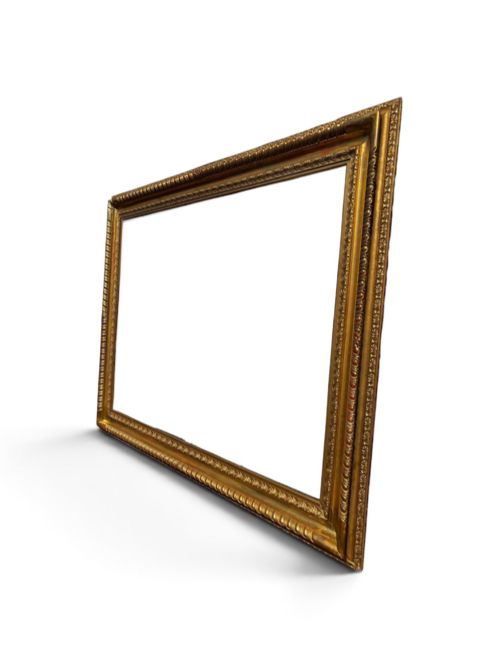
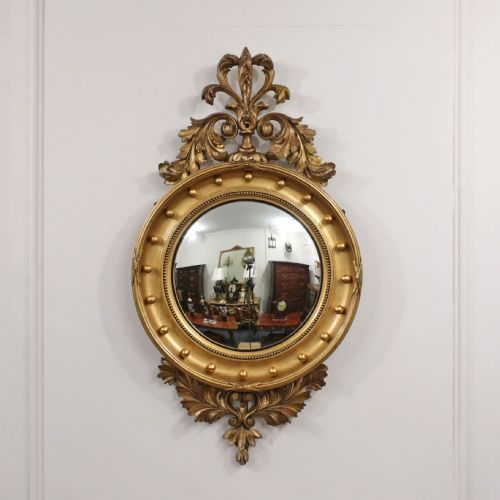
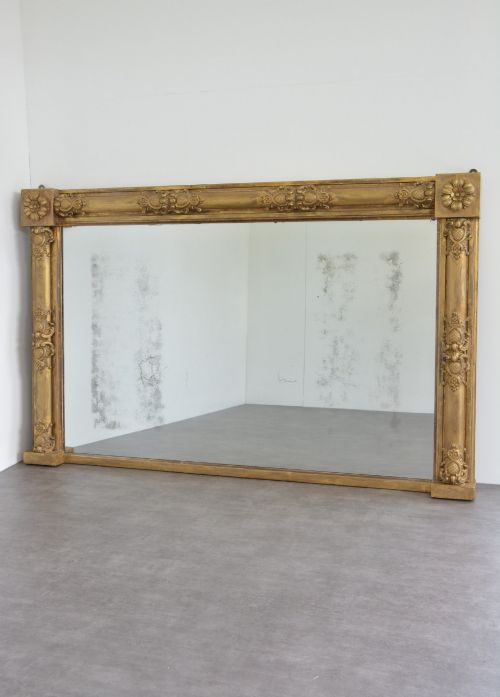
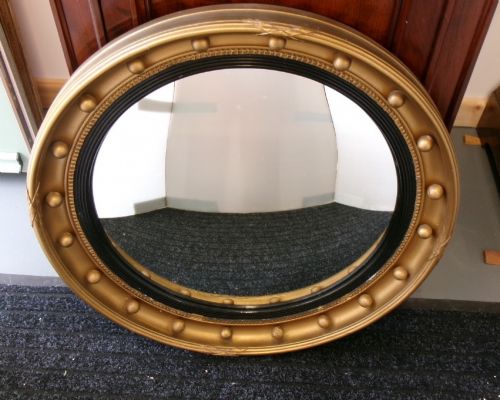
A gold leaf decorative mirror serves as a prominent wall hanging or overmantel piece, designed to bounce illumination around a space while displaying elaborate carving. The examples found here span the nineteenth century and the Edwardian era, taking forms such as overmantels, convex round frames, and tall pier mirrors. English, French, and Italian workshops predominate, alongside styles drawing on Regency, Rococo, and Empire traditions.
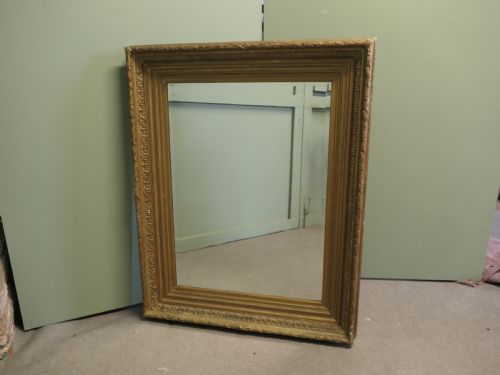
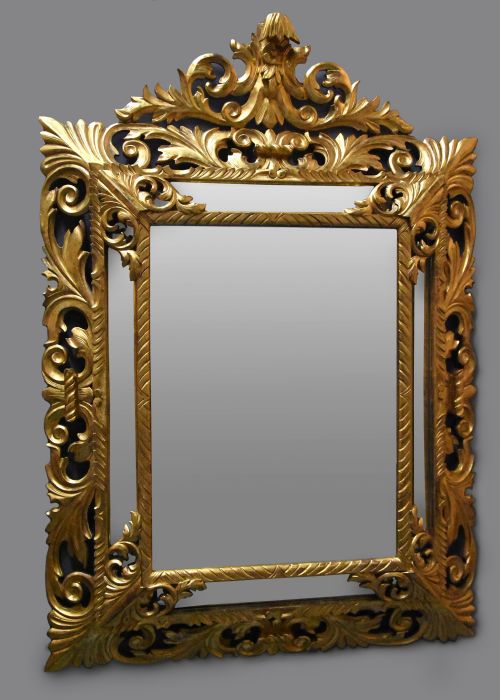
Buyers encounter substantial architectural overmantel mirrors with arched or column-framed borders, as well as smaller wall-hung pieces featuring vine leaves, rope twists, or cushion profiles. Many items display the influence of French chateau aesthetics or Italian Florentine carving. These objects function primarily as focal points above mantelpieces or within drawing rooms.
Materials and construction
Makers constructed the foundation frames from carved wood, frequently applying a layer of gesso to smooth the surface before laying down thin sheets of gold leaf. Giltwood, painted wood, and walnut provide the structural base for glass plates. Some pieces combine gold leaf with silver leaf surfaces or brass mounts to vary the reflective tones.
Mirror glass ranges from original plates showing light foxing to replaced glass offering clear reflections. Carvers executed intricate details like floral motifs, columns, and rope twists by hand into the wood and gesso. Frames then received protective finishes or painted accents to complement the metallic leaf.
Gold Leaf Decorative Mirror Retail Price Guide 2026
Typical asking prices for gold leaf decorative mirror among the pieces listed under this phrase on Sellingantiques today, from the lower quarter to the upper quarter. They describe what is for sale here now, not the wider market.
Vine leaves and rope twists curl endlessly around nineteenth-century frames, proving that past makers found straight lines terribly dull.
Judging the work
Quality rests in the crispness and depth of the hand-carved wood and gesso ornamentation, where sharper botanical details and cleanly defined mouldings distinguish finer pieces. The application of the gold leaf dictates how light catches the surface, with smoother, more even burnishing marking superior execution. The preservation of the original wooden frame structure without heavy structural compromise further separates standard items from exceptional ones.
The integration between the glass plate and the frame also indicates standard. Original mirror glass with natural foxing adds character, whereas poorly fitted replacement glass alters the balance of the piece. Proportion, scale, and the retention of the original gilt surface without excessive overpainting define the upper tier of these objects.
The Gold Leaf Decorative Mirror Glossary
- Giltwood
- Wood covered with a thin layer of gold leaf. This surface treatment provides a warm metallic sheen to carved frames.
- Gesso
- A plaster mixture applied to wood frames to create a smooth surface for gilding. Carvers cut fine details directly into this layer.
- Convex glass
- Curved mirror glass that bulges outward to capture a wide-angle reflection of the room. These are often set in round frames.
- Overmantel mirror
- A large mirror designed to hang directly above a fireplace mantel. They often feature horizontal or arched formats to fill wall space.
- Foxing
- Age-related spots and discoloration within the silver backing of mirror glass. This chemical change produces dark specks across the reflection.
Gold Leaf Decorative Mirror: Frequently Asked Questions
How do I hang a heavy overmantel mirror?
These large framed pieces require secure wall anchors fixed directly into masonry or heavy wooden studs to support the weight safely. Professional installation is often recommended due to the substantial size and mass of nineteenth-century frames.
Ensure the hanging wire or brackets match the weight capacity of the hardware used. Position the mirror at a height that balances the fireplace mantel and the surrounding wall space.
Should I clean original mirror glass?
Original glass plates with foxing or age spots require gentle treatment using a soft cloth and minimal moisture. Avoid harsh chemical cleaners that might seep behind the plate and damage the silvering or the gesso frame.
Regular dusting with a dry microfiber cloth keeps the surface clear without risking the delicate edges. Preserve the natural patina wherever possible rather than attempting to restore an immaculate finish.
How do I identify Regency style mirrors?
Regency pieces often incorporate classical architectural motifs, convex circular formats, and restrained ornamentation compared to later Victorian designs. Look for reeded columns, ball-stud frames, and ebonised details within the giltwood structure.
These mirrors date from the early nineteenth century and reflect a distinct neoclassical influence. Their proportions suit smaller wall spaces and formal interior settings.
What is a marriage mirror?
Marriage mirrors are traditional French decorative pieces traditionally commissioned or gifted to mark a wedding union. They frequently feature symbolic carvings such as floral garlands, doves, or ribbons integrated into the giltwood frame.
These objects combine functional reflection with sentimental iconography typical of late nineteenth and early twentieth-century French craftsmanship. They serve as distinctive focal points in bedrooms or living areas.