





Gold Leaf Ceramic Urns
Gold leaf ceramic urns bring together polished metallic lustre and fired clay across various periods from Georgian to Edwardian times.
Gold Leaf Ceramic Urns
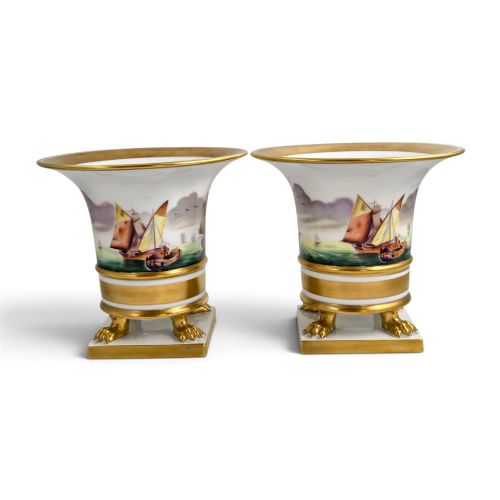
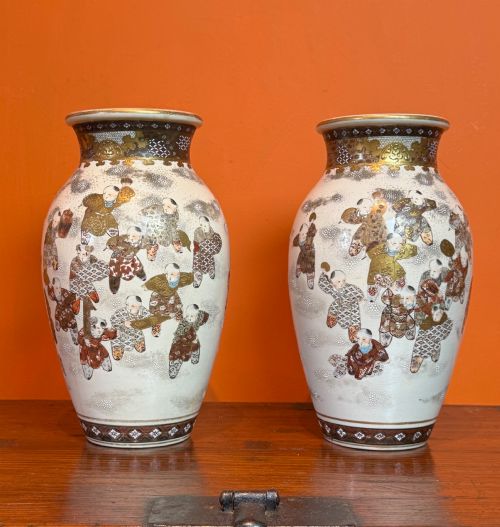
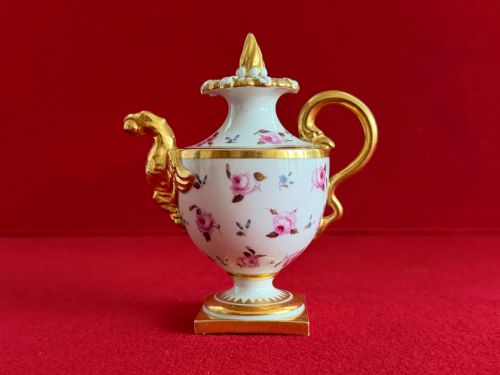
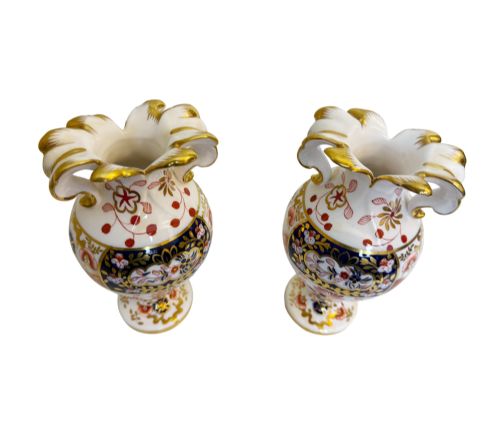
When you search for gold leaf ceramic urns, you encounter a range of decorative vessels including vases, jardinieres, ice pails, and pot pourri jars. These pieces hail from multiple eras such as the Georgian, Victorian, and Edwardian periods, alongside Japanese Meiji and Edo traditions.
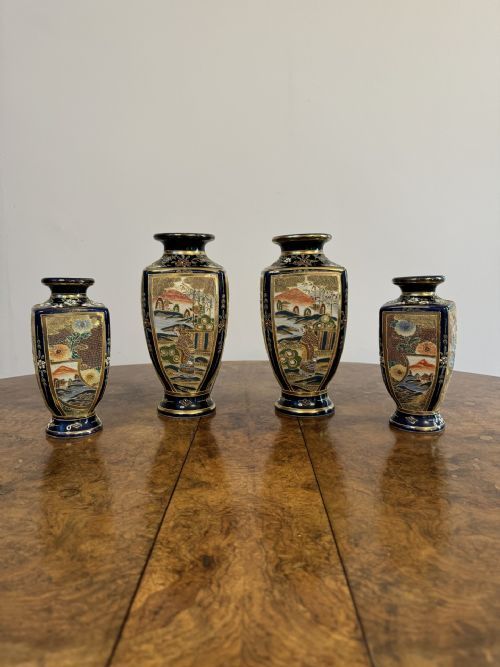
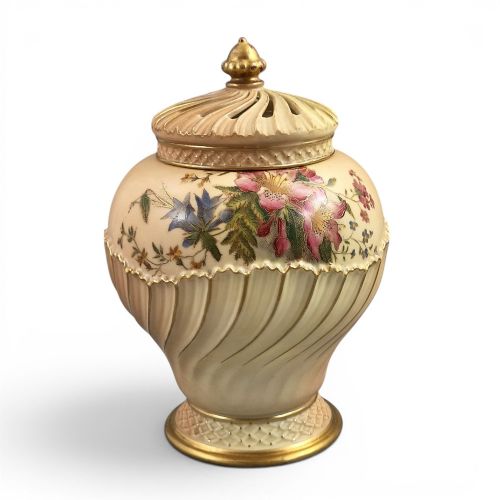
The objects take forms from classical Medici shapes to Japanese satsuma garnitures and English porcelain vessels. On this page, you are most likely to meet British porcelain works from factories like Royal Worcester and Worcester alongside Japanese earthenware creations.
These vessels served as ornamental centrepieces in period drawing rooms and formal spaces. Their enduring appeal lies in the contrast between painted ceramic surfaces and rich metallic detailing.
Materials and Construction
Potters shaped these vessels from ceramic bodies such as porcelain and earthenware before firing them in kilns. Artisans then applied glazes, enamels, and hand-painted motifs featuring botanical scenes, figures, or birds.
Makers embellished the fired surfaces using gold leaf, gilt, and raised moriage gilding techniques. This metallic application highlights rims, handles, and intricate surface patterns to catch the light.
Gold Leaf Ceramic Urns Retail Price Guide 2026
Typical asking prices for gold leaf ceramic urns among the pieces listed under this phrase on Sellingantiques today, from the lower quarter to the upper quarter. They describe what is for sale here now, not the wider market.
Listings feature works from the Georgian, Regency, Victorian, Edwardian, and Meiji periods, utilising porcelain and earthenware.
Assessing Quality and Execution
The distinction between standard production and fine workmanship rests in the execution of the hand-painted details and the crispness of the gilding. Master painters created naturalistic fruit, birds, and figural scenes that display far greater nuance than factory-standard repetition.
The weight, potting precision, and preservation of the delicate gold leaf or moriage decoration dictate the standing of each piece. Superior examples retain their original gilding without excessive rubbing, reflecting the skill of the original factory or ceramic artist.
Flight Barr And Barr·Royal Worcester·Kinkozan·Doulton·Spode
The Gold Leaf Ceramic Urns Glossary
- Gilt
- A thin layer of gold applied to the surface of ceramic or porcelain. This technique adds metallic brilliance to handles, rims, and painted panels.
- Moriage
- A Japanese decorative technique using slip to build up raised designs beneath the glaze and gilding. This creates a tactile, textured surface on earthenware vases.
- Garniture
- A set of matching vases or jars designed to be displayed together on a mantelpiece or sideboard. These sets typically comprise three or more graduated pieces.
- Pot Pourri
- A vessel featuring a pierced cover designed to hold dried scented plant material. These jars allow fragrance to diffuse while displaying painted and gilded surfaces.
- Jardiniere
- A large ornamental pot or stand intended to hold living plants or flowers. They often feature twin handles and substantial ceramic bodies.
Gold Leaf Ceramic Urns: Frequently Asked Questions
How were these vessels used historically?
Owners placed these objects on mantelpieces, pedestals, and side tables as focal points in drawing rooms and reception spaces. Covered jars held scented dried petals, while jardinieres accommodated indoor plants.
Many formed part of matched sets called garnitures, arranged symmetrically to display wealth and taste.
How do I care for gold leaf ceramics?
Dust these pieces gently with a soft, dry brush to protect the delicate metallic leaf and painted enamel surfaces. Avoid liquid cleaners and harsh chemicals, which can strip the historic gilding.
Keep them away from direct sunlight and damp environments to preserve the integrity of the ceramic body and the gold decoration.
How can I tell English and Japanese pieces apart?
English examples typically utilise refined porcelain bodies with classical forms like Medici shapes, paired with hand-painted botanical or avian scenes by named artists. Japanese pieces from the Meiji period often employ earthenware with dense cobalt blue glaze, intricate moriage, and rich gilt figural work.
Maker marks on the base usually clarify the origin, whether an English factory stamp or a Japanese studio signature.
What periods do these ceramics come from?
The selection spans from the late eighteenth century through the nineteenth and early twentieth centuries. You will find Georgian porcelain, Victorian earthenware, and Meiji period Japanese works.
Each era brought distinct stylistic influences, moving from classical Regency shapes to Aesthetic Movement and Art Nouveau tastes.