



Gold Giltwood Sofa
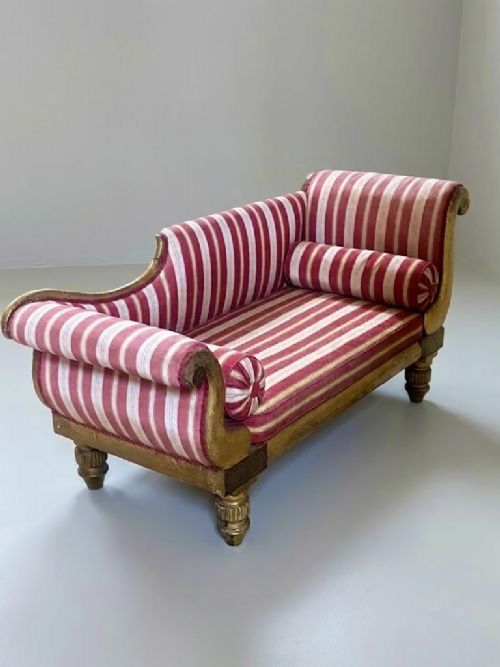
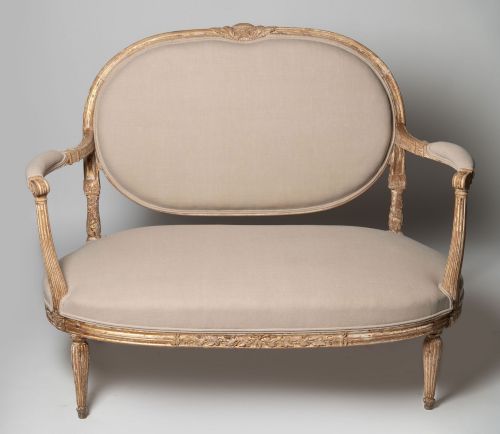
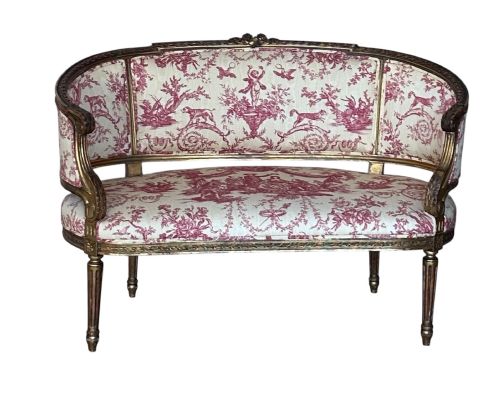
A gold giltwood sofa brings monumental carved timber and bright leaf to a room, offering the grand presence of French and English reception rooms.
Gold Giltwood Sofa
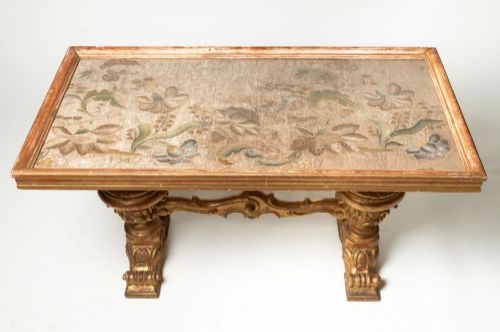
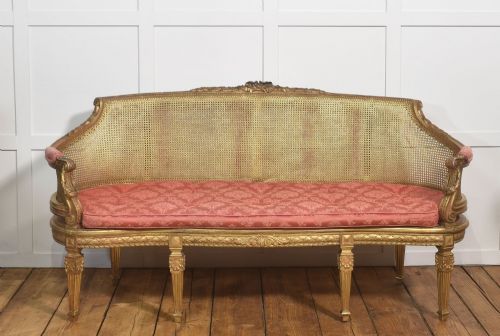
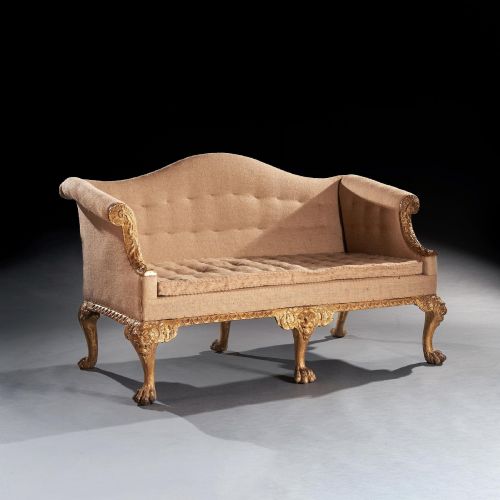
When you search for a gold giltwood sofa, you are looking at substantial seating carved from timber and finished with reflective metallic layers. These pieces span the eighteenth, nineteenth, and early twentieth centuries, drawing heavily on French monarchical design.
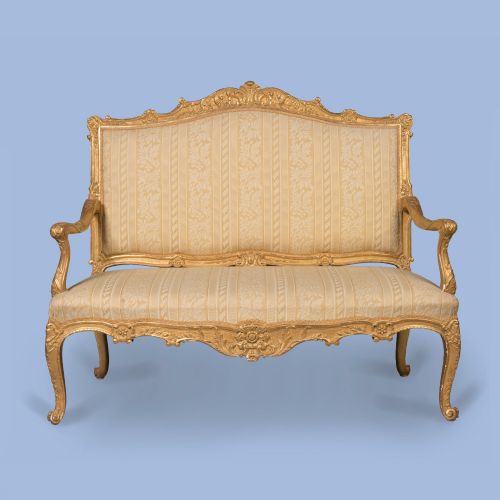
You are most likely to meet French forms styled in the manner of Louis XV or Louis XVI, alongside English Regency and Victorian revival examples. The selection frequently includes smaller two-seater settees and canapés alongside larger country house proportions.
Makers shaped these frames for formal salons, boudoirs, and reception rooms, pairing carved woodwork with contemporary textiles. Many survive as part of larger salon suites rather than isolated items.
How they were made
Carpenters carved structural frames from hardwoods such as beech and general timber before applying thin sheets of gold leaf to the prepared surfaces. This metallic leaf adhered to a preparatory ground layer upon the carved wood.
Upholsters layered textiles including silk, tapestry, and striped fabrics over internal stuffing, often securing the edges with decorative gimp or nails. Caned panels also appeared within specific lighter frameworks.
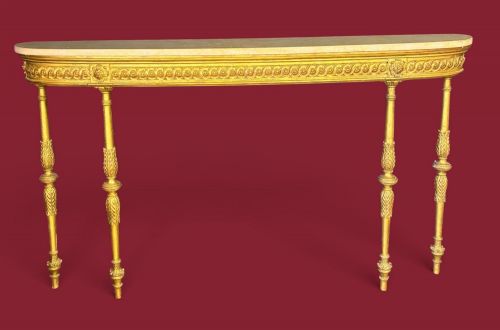
Listings feature beech and other woods beneath gold leaf, paired with silk, cane, and marble surfaces.
What varies in quality
The crispness and depth of hand carving dictate the primary tier of craftsmanship in these frames. Skilled carvers rendered acanthus leaves, scrollwork, and floral motifs with sharp undercutting and clean definition.
The application of the gold leaf and the integrity of the underlying gesso surface determine the visual richness of the finish. Better examples retain coherent metallic brilliance and harmonious patination across complex moulded contours.
Giles Grendey·Holland and Son
The Gold Giltwood Sofa Glossary
- Giltwood
- Wood that has been decorated with gold leaf applied over a prepared ground. This technique gives the carved frame a continuous metallic lustre.
- Canapé
- A traditional French term for a decorative sofa or settee, usually featuring an exposed carved wooden frame and upholstered seat.
- Louis XVI Style
- A neoclassical design vocabulary characterised by straight tapered legs, geometric symmetry, and classical carved motifs.
- Louis XV Style
- An asymmetrical rococo design aesthetic defined by sweeping cabriole legs, C-scrolls, and organic floral carving.
- Salon Suite
- A matching set of seating furniture, typically comprising a settee and several armchairs designed for a formal drawing room.
Gold Giltwood Sofa: Frequently Asked Questions
What is a gold giltwood sofa?
A gold giltwood sofa is a formal seat featuring a carved wooden frame covered in thin gold leaf. These pieces date primarily from the eighteenth century through to the early twentieth century.
They reflect historical design periods such as the Regency and French revivals. The form ranges from compact two-seat settees to grand salon pieces.
Where were these sofas used?
Historically, these seating pieces occupied the principal reception rooms, salons, and boudoirs of substantial residences. They served both as functional seating and as symbols of social status.
Today, they function as focal points in large drawing rooms or period interiors. Their reflective surfaces complement traditional architectural details.
How do I identify the style?
Style identification relies on examining the leg shapes, carving motifs, and overall silhouette. Rococo examples feature curved cabriole legs and organic scrollwork.
Neoclassical designs show straight fluted legs and geometric symmetry. French and English pieces each display distinct regional interpretations of these motifs.
Are these sofas comfortable?
Comfort depends upon the internal upholstery construction and the depth of the seat. Many period pieces were designed for formal posture rather than lounging.
Upholstered versions use traditional padding materials beneath silk or tapestry fabrics. Modern placement often balances historical authenticity with everyday usability.