
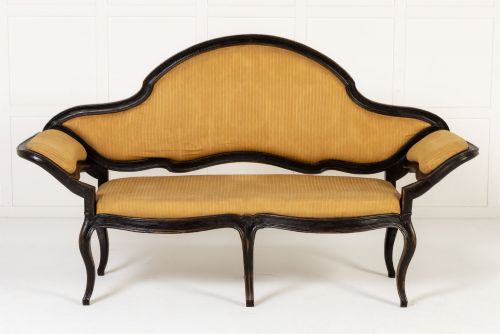


Antique Gold Frame Couch
An antique gold frame couch brings theatrical scale and carved presence into a room, offering deep seating wrapped in historic gilt finishes.
Antique Gold Frame Couch
When you search for an antique gold frame couch, you are looking at large seating forms designed to dominate a formal interior through gilded timber and sweeping upholstery. These pieces take various guises across the listings, appearing as English country house settees, French revival canapes, and carved day beds.
The versions you are most likely to meet on this page span the eighteenth and nineteenth centuries, taking shape through Regency scroll ends, Italian rococo flourishes, and Louis styles. Alongside standard multi-seater sofas, the selection stretches to include carved walnut frames and related textiles mounted within similar decorative traditions.
Makers and workshops across Britain and continental Europe shaped these settees to serve as both functional seating and monumental furniture art. Their proportions range from intimate double scroll-ended forms up to large three-seater frames built for grand reception rooms.
How they were made
Makers built these frames using dense timbers such as mahogany, walnut, and structural hardwoods, carving the wood directly before applying the decorative surface. Artisans then gilded the timber using thin leaf metal or applied gold paint to achieve the luminous finish characteristic of the style.
Upholstery techniques relied on traditional textile mounting, securing fabrics like velvet, patterned textiles, and embroidered panels directly to the sprung or webbed internal frame. Structural brass elements occasionally reinforced joints and stress points on the heavier nineteenth-century settees.
A gold-embroidered Kurdish jacket sits quietly among the heavy timber settees, proving that history folds up.
What varies in quality
Quality in these couches rests primarily on the depth and crispness of the timber carving, where deep, hand-chiselled foliage outperforms shallow or cast decoration. The articulation of scrolled ends and the harmonious proportions of the overall frame separate ambitious commissions from simpler workshop output.
The integrity of the original gilded surface dictates much of the visual success, with untouched leaf holding greater historic merit than heavy modern repainting. Heavier timber frames, such as solid walnut or substantial giltwood country house pieces, demonstrate superior foundational stability.
The Antique Gold Frame Couch Glossary
- Giltwood
- Timber that has been coated with gold leaf or powder over a prepared gesso ground. This finish provides the characteristic metallic sheen seen on high-status nineteenth-century frames.
- Canape
- A French decorative sofa featuring an exposed wooden frame and upholstered back and seat. These forms often display elaborate carving along the top rail and arm supports.
- Scroll-ended
- A furniture profile where the armrests curve outward and downward in a tight spiral. This configuration appears frequently on Regency period seating.
- Ebonised wood
- Timber treated with chemical stains or dark finishes to imitate costly ebony. It creates a stark, dark contrast against gilded details.
Antique Gold Frame Couch: Frequently Asked Questions
How do I date a gold frame couch?
Dating relies on observing the structural silhouette, the carving style, and the underlying timber. Regency pieces often show clean architectural lines and scroll ends, while revival pieces lean into ornate French rococo curves.
Examining the construction methods within the frame helps separate eighteenth-century joinery from nineteenth-century workshop production.
Where should I place an antique sofa?
These large settees function best as primary focal points in spacious rooms where their carved gilt frames and textiles can be viewed from multiple angles. Placing them away from direct sunlight protects both the delicate leaf finish and historic fabrics.
Ensure the surrounding floor space accommodates the generous proportions typical of these grand nineteenth-century seating forms.
What is the difference between a settee and a couch?
Historically, terms like settee, couch, sofa, and canape were used interchangeably by makers and buyers to describe upholstered seating for multiple people. Regional preferences often dictated whether a piece was called a settee or a couch.
On this page, the terms cover everything from formal Regency three-seaters to carved day beds and French-influenced frames.
How do I care for antique giltwood?
Giltwood surfaces require gentle dusting with a soft, dry cloth to prevent abrasion of the delicate gold leaf. Avoid liquid cleaners and modern polishes, which can strip the historic gesso and metallic layers.
Maintaining stable room humidity protects both the carved timber substrate and the ancient glues beneath the gilded surface.