




Neoclassical Gilt Sofa
A neoclassical gilt sofa brings architectural grandeur and gilded elegance to a room, offering a seat rooted in classical revival design.
Neoclassical Gilt Sofa
A neoclassical gilt sofa embodies the formal symmetry and classical ornamentation characteristic of eighteenth and nineteenth century European furniture design. These seating pieces draw heavily upon French, Italian, and Swedish interpretations of classical antiquity, often reflecting Louis XVI or Empire styling.
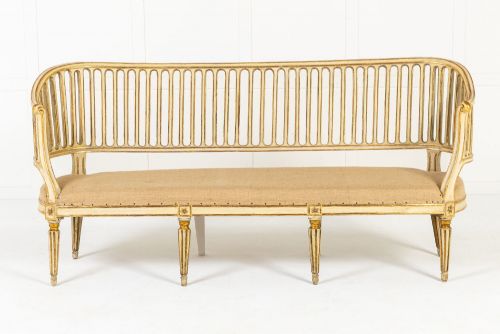
The versions most commonly met on this page include settees, two-seat sofas, and painted canework couches dating from the nineteenth and early twentieth centuries. Makers applied giltwood, gold leaf, and painted finishes to frames constructed from woods such as beech and mahogany, sometimes pairing them with cane work or fabric upholstery.
Object forms range from small painted couches and hall seats to larger settee designs featuring gilt frames. Regional variations span French, Italian, and Swedish workshops, each applying distinct decorative idioms to the core neoclassical vocabulary.
How they were made
Cabinetmakers shaped structural frames from hardwoods like beech and mahogany, carving architectural details and classical motifs directly into the wood. Frames were then finished with gold leaf or giltwood, alongside painted surfaces to achieve the desired metallic lustre.
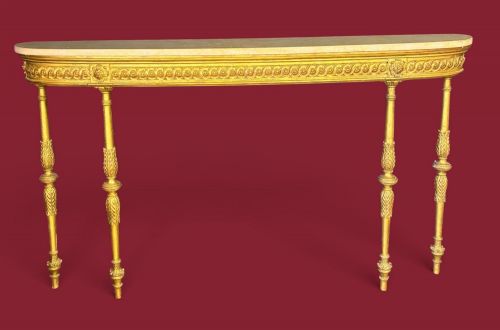
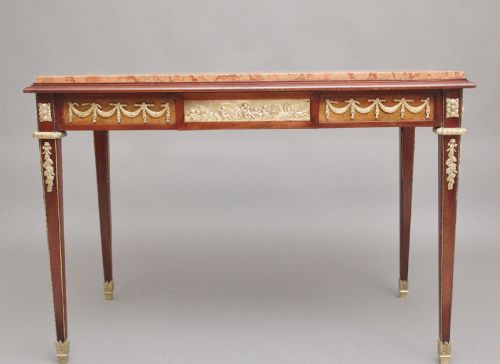
Seating portions utilised traditional techniques such as cane work or fabric upholstery to provide support. Materials like marble frequently topped associated console or centre tables accompanying these seating suites, while frames relied on precise joinery to maintain structural integrity.
Even a small painted canework couch from nineteen-ten still insists on looking as though it belongs in a minor European palace.
What varies in quality
The distinction between standard and superior pieces rests upon the crispness of the wood carving and the refinement of the giltwood or painted finish. Master carvers executed deep, sharp architectural details, whereas lesser examples display softened ornament and simpler joinery.
Proportion and structural balance further separate pieces, as finer settees maintain harmonious classical lines and well-integrated frames. The original application of gold leaf versus later repainting alters the visual depth and historical integrity of the surface.
The Neoclassical Gilt Sofa Glossary
- Giltwood
- Wood that has been coated with thin sheets of gold leaf or powder over a prepared gesso ground. This technique creates a luminous, reflective surface characteristic of formal period seating.
- Canework
- Woven rattan or cane material used for seat panels or backs, providing a lightweight and decorative alternative to solid upholstery. It appears frequently on lighter revival couches and settees.
- Neoclassical
- A style spanning the eighteenth and nineteenth centuries that revived the motifs, symmetry, and proportions of ancient Greek and Roman art. It forms the primary design language for these sofas and settees.
- Settee
- A small upholstered or caned bench with a back and arms, designed to seat two or more people. The term is often used interchangeably with sofa in historical listings.
- Empire
- A decorative style from the early nineteenth century favouring military motifs, heavy classical forms, and rich gilding. Swedish and continental variations of this period frequently appear in gilt furniture.
Neoclassical Gilt Sofa: Frequently Asked Questions
Where should I place a neoclassical gilt sofa?
These sofas work well in formal drawing rooms, entrance halls, or bedrooms where their architectural lines can act as a focal point. They pair effectively with period consoles or centre tables.
Because of their gilded frames, positioning them away from heavy direct sunlight preserves the gold leaf and painted finishes over time.
How do I care for giltwood frames?
Dust the carved surfaces gently with a soft, dry cloth to prevent the accumulation of dirt without disturbing the fragile gold leaf. Avoid liquid cleaners and modern polishes, which can strip or damage historical finishes.
Maintain a stable room humidity to protect the underlying wood and gesso layers from cracking or movement.
What is the difference between a settee and a sofa?
Historically, settees tended to be lighter, narrower seating forms often featuring caned panels or exposed wooden frames. Sofas generally offered larger proportions and more substantial upholstery.
In antique terminology, makers and dealers often used the terms interchangeably for similar multi-seat furniture.
How do I identify a revival piece?
Revival pieces, such as those from the Edwardian era, often reproduce earlier Louis XVI or neoclassical styles using slightly later manufacturing methods and secondary woods. Examining the joinery, wear patterns, and preparation layers helps distinguish nineteenth-century revivals from original eighteenth-century items.
Stylistic cues alone can be misleading, as cabinetmakers revived classical forms across multiple decades.