
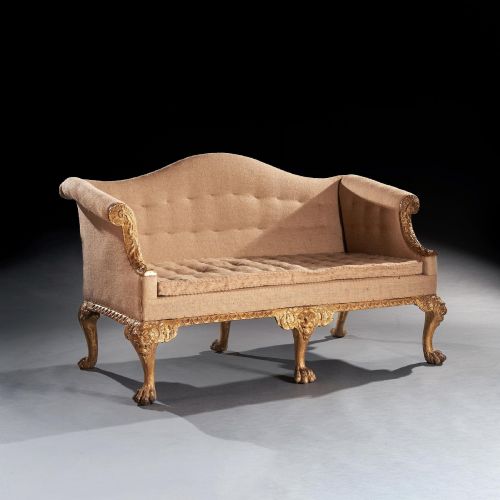


Gold Gilt Settee
A gold gilt settee brings formal presence to a room, offering gilded timber frames and upholstered seats designed for grand interiors.
Gold Gilt Settee
When searching for a gold gilt settee, buyers encounter grand seating forms originating from eighteenth, nineteenth, and early twentieth century workshops. These pieces span English country house furniture, Regency designs, and French Louis XV or Louis XVI style pieces.
The most frequent version met on this page is the nineteenth century French giltwood sofa or canape, often featuring carved wooden frames with painted or gilded surfaces. Alongside these sit English pieces from the eighteenth and nineteenth centuries, displaying carved details such as lion mask hairy paw feet.
Forms range from compact window seats and boudoir love seats to larger salon suites and three seater couches. Many examples retain period textiles, silk damask, or cane seating panels, reflecting their original placement in formal drawing rooms and reception spaces.
Materials and Construction
The foundation of these settees relies on timber frames, with beech and general wood used to shape structural supports, armrests, and cabriole legs. Craftsmen carved intricate ornamental details directly into the wood before applying a layer of gold leaf or gilt paint.
Upholstery techniques involved traditional stuffing methods finished with textiles such as silk damask, fabric, and woven cane panels. Frames combined joinery with applied decorative mouldings to achieve the curves associated with Rococo Revival and Neoclassical designs.
Some nineteenth century boudoir settees arrived with matching love seats designed expressly for whispered conversations in heavily draped Victorian drawing rooms.
Assessing Craftsmanship and Condition
Quality in these gilt seating pieces rests on the crispness of the wood carving and the depth of the original gilding. Finer examples display hand carved ornament with sharp relief, whereas simpler versions rely on painted finishes or cast composition decoration.
The integrity of the underlying timber frame and the survival of period upholstery or cane work also separate standard examples from exceptional ones. Pieces that retain their original gilt surfaces without excessive re-touching hold greater visual clarity.
Giles Grendey
The Gold Gilt Settee Glossary
- Giltwood
- Timber that has been decorated with gold leaf applied over a prepared gesso ground. This technique creates the reflective metallic finish seen on many period frames.
- Canape
- A French term for an upholstered sofa or settee, commonly associated with eighteenth and nineteenth century salon seating. These pieces often feature exposed wooden frames with gilded decoration.
- Louis XVI Style
- A neoclassical design aesthetic characterised by straight tapered legs, geometric symmetry, and classical architectural motifs. Furniture from this group emerged during revival periods in the nineteenth century.
- Salon Suite
- A matched group of seating furniture, typically comprising a settee and matching armchairs designed for formal entertaining. These suites share consistent carving, wood finishes, and upholstery fabrics.
Gold Gilt Settee: Frequently Asked Questions
How do I identify a Louis XV style settee?
A Louis XV style settee is identified by its curved lines, asymmetric cartouche backs, and cabriole legs. These pieces draw inspiration from the French Rococo period.
They frequently feature carved floral motifs and scrolling woodwork finished in gold leaf or gilt paint.
Where should I place a gilt settee?
A gilt settee works effectively in formal reception rooms, large bedrooms, or hallways where its decorative frame can be viewed from multiple angles.
Because of the reflective gold surface, placing the piece away from direct, harsh sunlight helps protect the underlying gilding and textile upholstery.
Can I use an antique settee every day?
Many nineteenth century settees remain structurally sound for everyday seating, provided the frame joints and internal webbing are stable. Lighter frames, particularly smaller window seats or delicate boudoir pieces, suit gentle use rather than heavy family lounging.
Checking the stability of the beech or timber frame with a dealer ensures the piece matches your intended use.
What is the difference between a settee and a sofa?
Historically, the terms have been used interchangeably to describe upholstered seating for two or more people. In antique terminology, a settee often refers to an earlier or more decorative form with an exposed wooden frame.
Sofas in nineteenth century contexts frequently lean toward heavier upholstery and larger proportions designed for formal parlours.