


Gilt Frame Settee
A gilt frame settee brings immediate warmth and historical weight to a room, offering a seating option that doubles as grand decorative art.
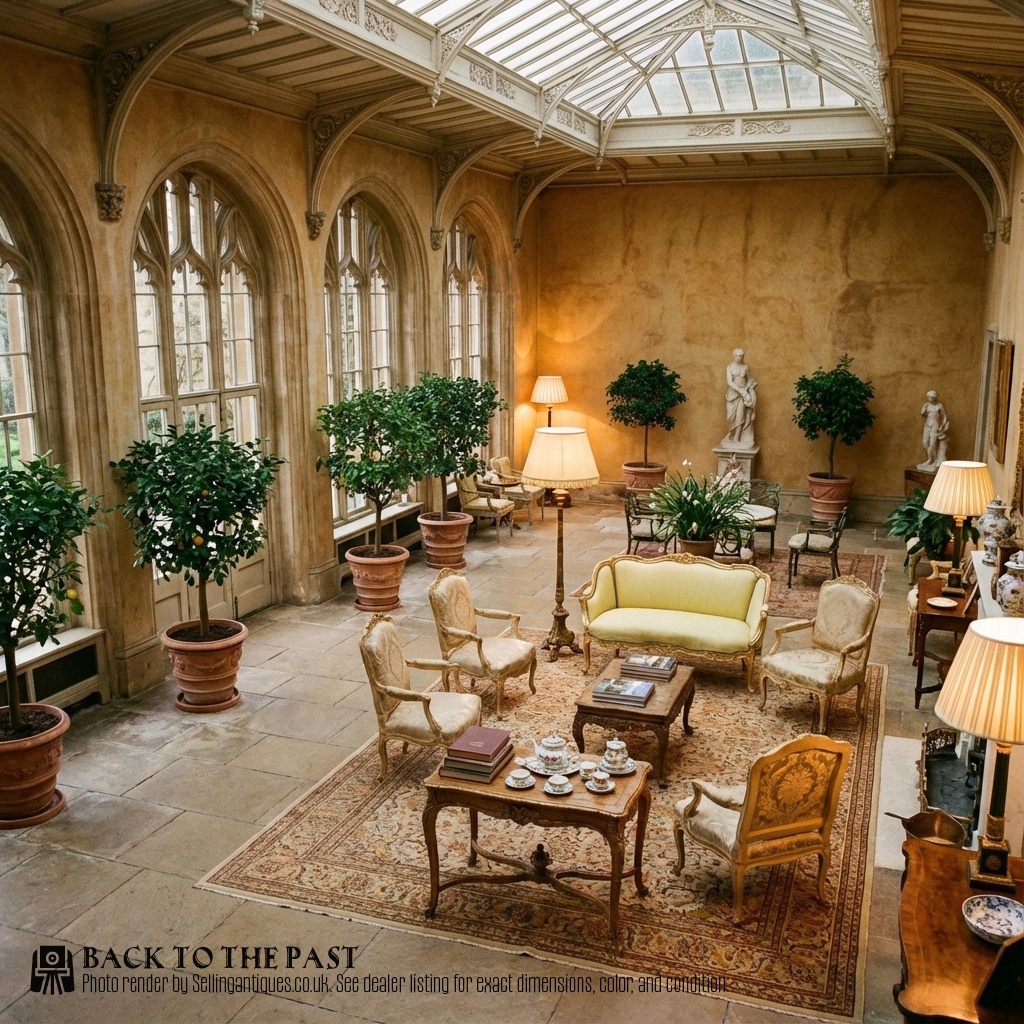
Gilt Frame Settee
A gilt frame settee is a formal seating piece defined by its gilded wooden structure, appearing across nineteenth-century English and French designs. These pieces range from compact two-seat sofas to larger salon settees suited for reception rooms.
Buyers browsing this selection most frequently encounter nineteenth-century pieces, including Regency models, Louis XV style revivals, and Victorian interpretations. Forms vary from curvilinear canapés to substantial country house sofas with upholstered backs and seats.
Origins span English workshops and French ateliers, bringing together classical revival styles and decorative movements like the Aesthetic style. The overarching characteristic remains the prominent use of giltwood or painted gold finishes shaping the timber frame.
How they were made
Makers shaped the structural framework primarily from solid timber such as beech and general wood, applying carved details to the crest rails and cabriole legs. Artisans then applied thin sheets of metal leaf or gold paint over a prepared ground to achieve the characteristic gilt surface.
Upholstery techniques involved traditional stuffing methods secured within wooden frames, finished with textile coverings including damask and general decorative fabrics. Brass details occasionally reinforced structural joints or decorated the exterior framework.
One recorded piece arrived bearing sunflowers, proving that nineteenth-century makers were entirely willing to bring botanical cheer to formal gilt seating.
What varies in quality
The standard of a gilt frame settee rests on the crispness of the original wood carving and the depth of the gilding application. Superior pieces display hand-carved ornamentation directly into the timber rather than relying on applied moulded composition.
Construction integrity distinguishes workshop output, seen in the rigidity of the joined frame and the retention of period upholstery foundations. Pieces featuring untouched original gilt surfaces retain higher historical integrity compared to later re-gilt examples.
The Gilt Frame Settee Glossary
- Giltwood
- Timber coated with gold leaf or thin metal powder over a prepared gesso base. This finish provides the characteristic metallic sheen seen on nineteenth-century frames.
- Canapé
- A traditional French decorative sofa featuring an exposed wooden frame. These pieces typically display carved rails and open arms.
- Damask
- A reversible figured fabric traditionally woven on a jacquard loom with patterns forming through contrasting warp and weft threads. It frequently appears as the primary upholstery material on formal salon seating.
- Showframe
- A wooden furniture frame left fully exposed around the upholstered elements to display the carved and gilded craftsmanship. This construction method defines French revival and Regency seating designs.
- Regency
- An English design period spanning the early nineteenth century characterised by classical revival motifs and refined proportions. Settees from this era often feature restrained gilding and architectural lines.
Gilt Frame Settee: Frequently Asked Questions
How do I clean a gilt frame?
Dust the gilded wooden surfaces gently using a soft, dry ostrich feather duster or a clean microfibre cloth. Avoid all liquid cleaners, polishes, and abrasive cloths, which can strip the delicate gold leaf finish.
Take care near the upholstered sections so that cleaning products do not come into contact with the antique timber framework. Professional conservation is advisable if the gilding shows active flaking.
Where should I place a gilt settee?
Position the settee away from direct sunlight and strong heat sources to protect both the fragile gilded finish and the vintage textiles. Drawing rooms, large hallways, and formal reception spaces provide suitable environments for these decorative pieces.
Ensure the placement allows adequate clearance around the carved frame to prevent accidental knocks from foot traffic.
Can I reupholster a gilt settee?
Upholstery can be updated using traditional methods that respect the structural limitations of the antique wooden frame. Selecting period-appropriate textiles like damask helps maintain the visual harmony of the piece.
Consult an experienced upholsterer familiar with nineteenth-century furniture construction to preserve the integrity of the internal webbing and padding.
How do I identify a French style settee?
French style settees typically exhibit characteristic design elements such as cabriole legs, asymmetrical floral carvings, and pronounced serpentine rails. The influence of Louis XV or Louis XVI aesthetics often guides the overall silhouette.
Examine the frame for exposed giltwood construction and curved showframe profiles that distinguish continental salon seating from stricter English designs.