
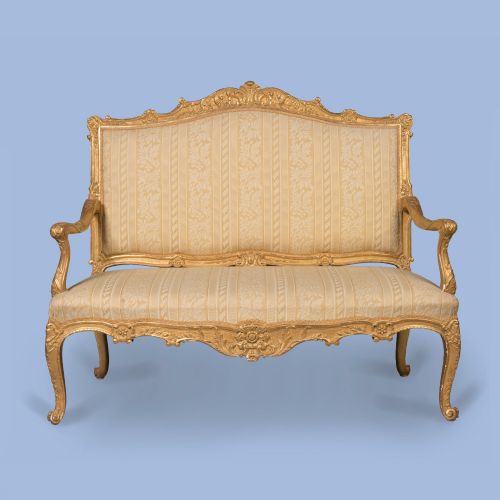


Gold Carved Settee
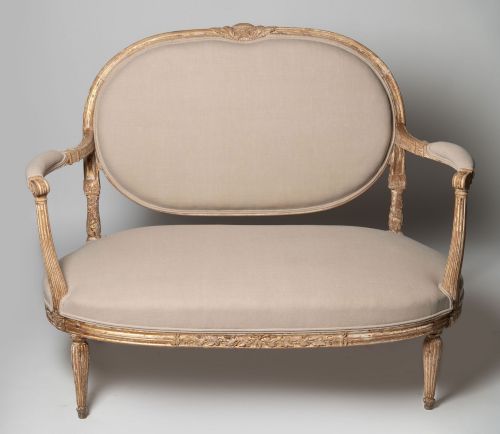
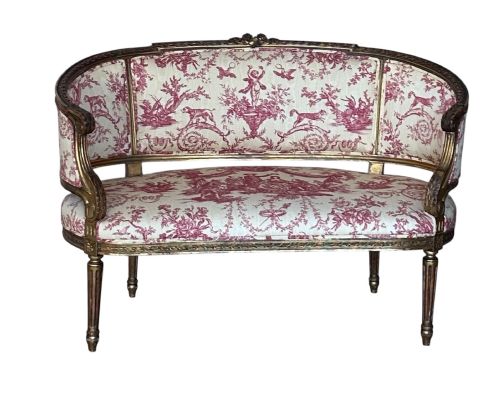
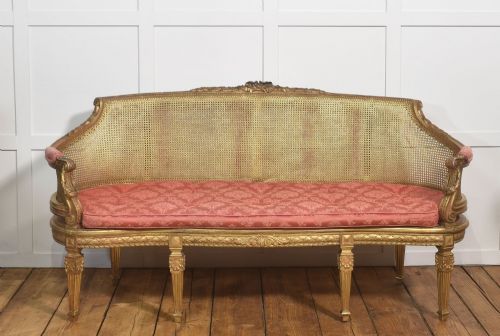
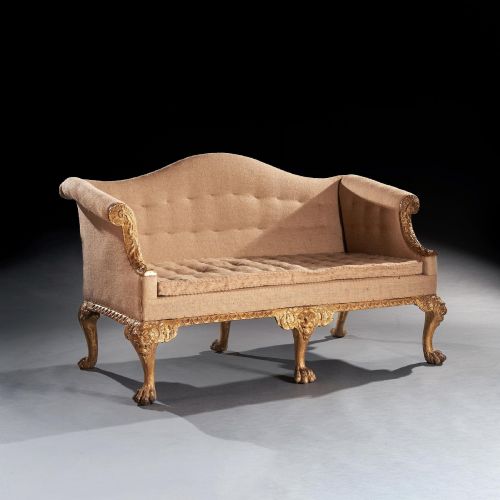
A gold carved settee brings together giltwood frames and upholstered seats, offering a decorative seat for a salon or drawing room.
Gold Carved Settee
A gold carved settee is a double or multi-seat sofa featuring a gilded wooden frame, appearing frequently in French and English periods ranging from the eighteenth century through to the early twentieth century. When searching this phrase, buyers encounter various seating forms including canapés, window sofas, and loveseats produced in styles such as Louis XV, Louis XVI, and Regency.
The pieces on this page span the eighteenth, nineteenth, and early twentieth centuries, capturing the enduring popularity of gilt-framed seating. French designs dominate the selection, often displaying carved walnut, beech, or giltwood structures alongside traditional upholstery.
Makers and craftsmen utilised distinct regional aesthetics, moving from English mahogany frames with carved details to lighter French salon suites finished in gold paint or leaf. These seating pieces served formal reception rooms and boudoirs alike, functioning as both decorative centrepieces and functional furniture.
Materials and Construction
Frames are constructed from hardwoods such as mahogany, walnut, beech, and fruitwood, which provide the structural stability needed for intricate carving. Craftsmen then applied gold leaf or paint to the carved wood surfaces to achieve the characteristic gilded finish.
Upholstery incorporates traditional textiles including velvet, damask, silk, and plain fabrics, sometimes complemented by cane panels inserted into the backrests or seat frames. These materials are secured over padded foundations to create durable and comfortable seating.
Listings include nineteenth-century French salon suites alongside eighteenth-century George II giltwood sofas.
Distinctions in Quality
Quality reveals itself in the crispness and depth of the wood carving along the crest rail and cabriole legs, where hand-chiseled details distinguish superior work from simpler moulded decoration. The choice of primary timber and the execution of the gilt finish also signal the workshop's standard.
Proportion and structural integrity separate standard production from exceptional examples, as balanced frames and tight joinery ensure the settee remains robust. The retention of original gilding and appropriate period textiles further elevates an example within the range.
Giles Grendey
The Gold Carved Settee Glossary
- Giltwood
- Wood that has been coated with gold leaf or gold powder. This surface treatment creates a bright, reflective finish typical of formal period seating.
- Canapé
- A French term for an upholstered sofa or settee. These pieces typically feature exposed wooden frames and open arms designed for salon use.
- Cabriole leg
- A furniture leg that curves outward and then tapers inward. This form appears frequently on eighteenth-century and revival seating styles.
- Damask
- A reversible figured fabric woven on a jacquard loom. It provides a patterned textile surface commonly used for upholstery on period sofas.
- Scroll end
- A rolled or curved arm termination found on nineteenth-century sofas. This detail adds visual movement to the ends of the seating frame.
Gold Carved Settee: Frequently Asked Questions
What is a gold carved settee used for?
A gold carved settee provides decorative seating for formal rooms, parlours, and bedrooms. Historically, these pieces furnished salons and reception spaces where visual display matched comfort.
Today, they function as statement pieces in living areas or hallways, offering practical seating while introducing period character to an interior.
How do you distinguish between French and English styles?
French styles like Louis XV and Louis XVI often feature lighter carved beech or walnut frames with curved cabriole legs, giltwood finishes, and open arms. English examples frequently utilise mahogany with architectural lines, lion mask details, or scroll-ended upholstery.
Examining the wood species and carved motifs helps identify the regional origin and design influence of each settee.
What periods do these settees come from?
The pieces span from the eighteenth century through the Victorian era and into the early twentieth century. Eighteenth-century examples include George II and Chippendale designs, while nineteenth-century pieces often revive earlier French aesthetics.
Turn-of-the-century workshops also produced revival pieces, creating nineteenth and early twentieth-century interpretations of classic Louis styles.
How should I care for a giltwood frame?
Giltwood frames require gentle dusting with a soft, dry cloth to prevent the accumulation of dirt without disturbing the gold leaf. Avoid using liquid cleaners, polishes, or abrasive materials that can strip or damage the delicate gilded surface.
Keeping the settee away from direct sunlight and damp environments helps preserve both the wooden structure and the original finish.