
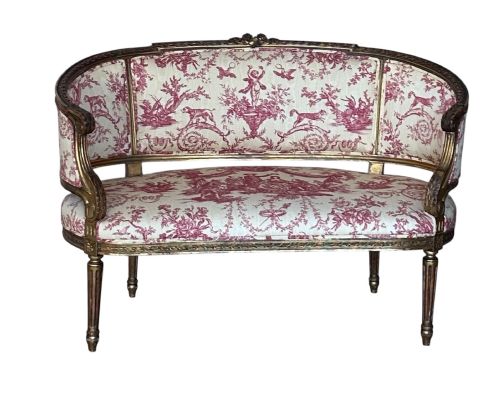
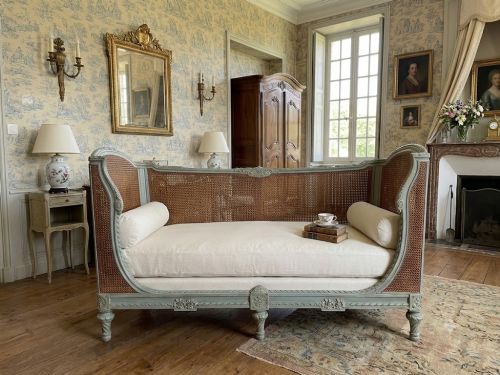
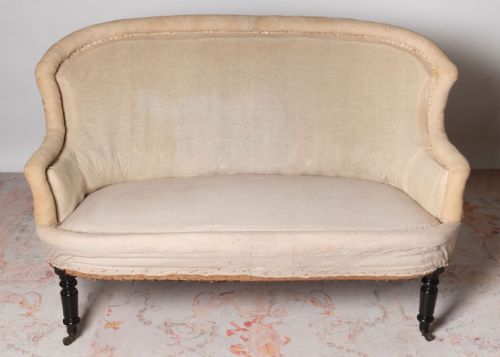


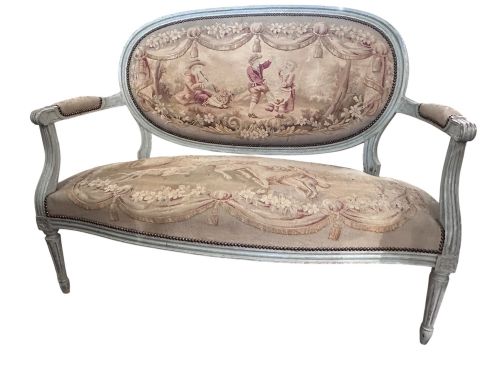

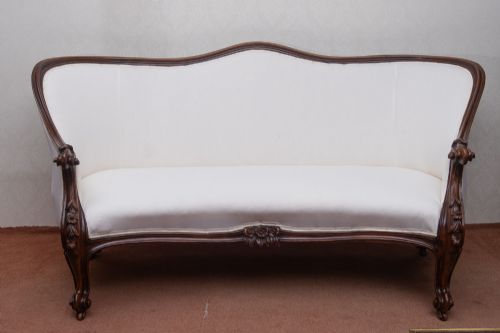


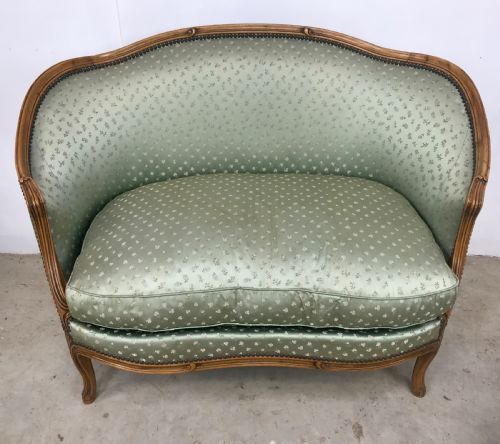

Curved Back French Sofa
A curved back french sofa brings fluid nineteenth-century elegance and generous seating to a room.
Curved Back French Sofa
When you search for a curved back french sofa, you are looking at nineteenth-century seating that draws on Louis XV and Louis XVI styles, alongside Victorian interpretations and Regency forms.
The pieces appearing on this page span daybeds, settees, and canapés featuring distinctive rounded wooden frames and upholstered or caned backs.
You are most likely to meet nineteenth-century examples and revival pieces finished in giltwood, beech, walnut, or painted timber.
Materials and construction
Workshops utilised solid timbers such as beech, walnut, and mahogany to shape the structural frames of these settees and sofas.
Fine surface treatments included giltwood application and painted finishes, while woven cane formed supportive backs and seats on lighter revival models.
Some nineteenth-century makers evidently believed three people could share a single settee quite happily.
Judgements of quality
Quality rests upon the crispness of the carved wooden ornament and the fluent sweep of the timber frame.
Higher grade pieces display refined proportion in the turned or fluted legs and superior integration of cane or textile upholstery.
The Curved Back French Sofa Glossary
- Canapé
- An ornamental settee or sofa originating in France. These pieces typically feature exposed wooden frames and upholstered backs.
- Caned
- Woven rattan material used to form light, patterned panels for chair and settee backs. It provides both flexibility and decorative detail.
- Giltwood
- Timber coated with gold leaf or metallic paint. This finish creates a luminous surface suited to formal nineteenth-century interiors.
- Fluted
- Decorative vertical grooves carved into wooden furniture legs. The technique derives from classical architecture and lightens the appearance of supports.
- Louis XVI Style
- A neoclassical design vocabulary characterised by straight lines, symmetry, and rectangular or oval forms. It contrasts with the earlier sweeping curves of the Louis XV aesthetic.
Curved Back French Sofa: Frequently Asked Questions
What is a canapé?
A canapé is a traditional French term for a settee or sofa designed for multiple occupants. These seating pieces typically feature an exposed decorative wooden frame.
They emerged in formal French interiors and offer a lighter visual profile than standard upholstered couches.
How do I identify a revival piece?
Revival furniture borrows stylistic elements from earlier royal French periods, such as the reigns of Louis XV and Louis XVI. Makers in the nineteenth and early twentieth centuries reproduced these classic silhouettes.
Examination of the timber, joinery, and wear patterns helps distinguish nineteenth-century revival work from eighteenth-century originals.
Where should I place a settee?
These sofas work well in living rooms, large bedrooms, or drawing rooms where their decorative backs can be appreciated. Their curved profiles allow them to soften corners or anchor open seating arrangements.
Consider the scale of the room to ensure the settee maintains comfortable walking paths around it.
What maintenance do cane panels need?
Caned seating requires occasional cleaning with a damp cloth to remove dust from the woven interstices. Keeping the cane slightly hydrated prevents it from becoming brittle over time.
Avoid placing these pieces near direct heat sources that might dry out the natural rattan.