


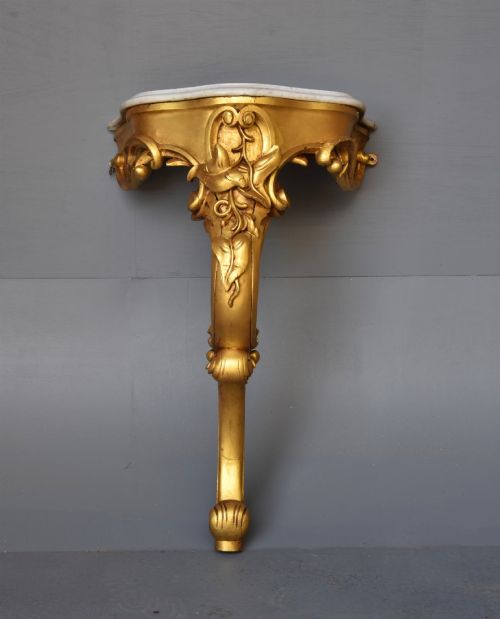

Gold Gilt Table
A gold gilt table brings a reflective warmth to a room, catching the light across carved wood and cast bronze.
Gold Gilt Table
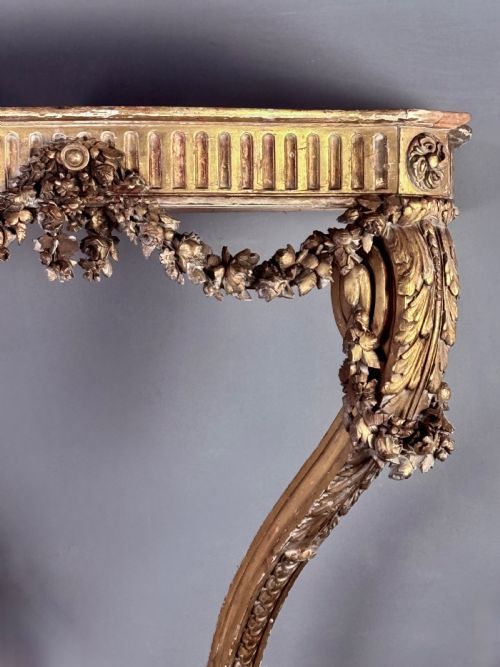
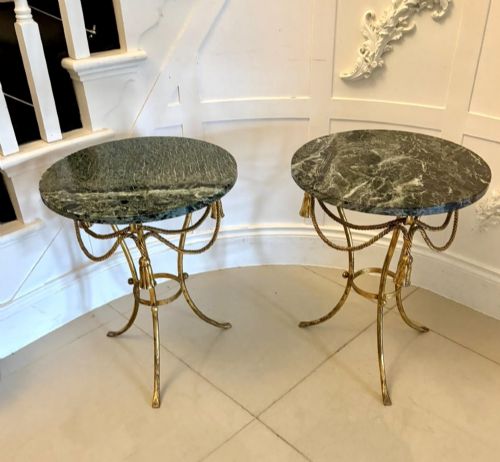
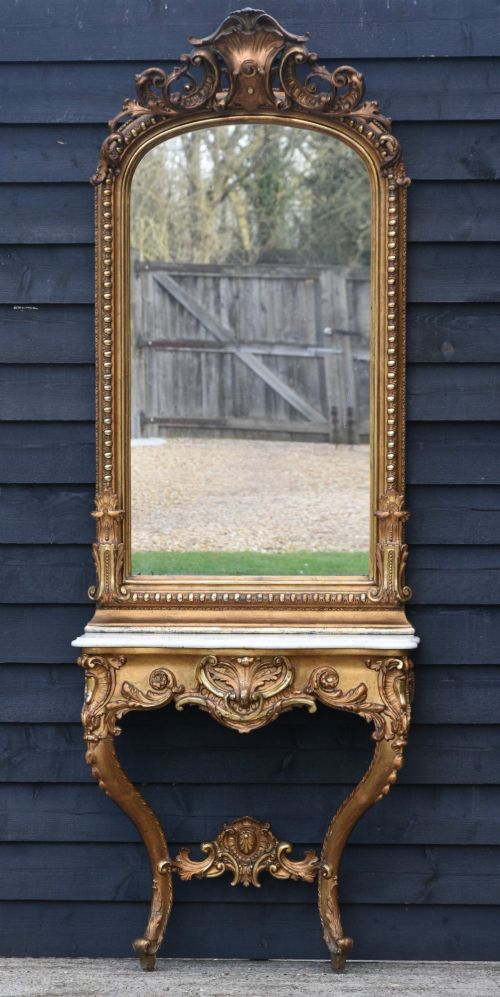
A gold gilt table search yields console tables, coffee tables, and occasional stands originating from eighteenth-century and nineteenth-century European workshops. Console tables often appear paired with pier mirrors, designed to sit flush against a wall beneath a window or in a hallway.
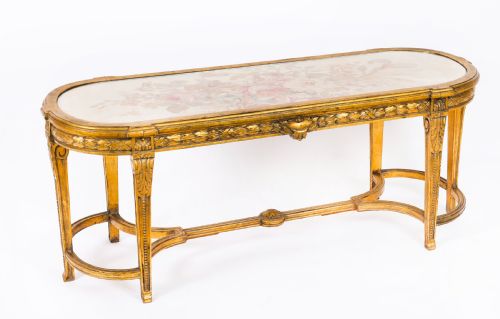
The materials span carved pine, giltwood, mahogany with parcel gilt details, and heavy marble tops. French Rococo Revival, Louis XVI, and Italian styles predominate among the larger decorative furniture pieces.
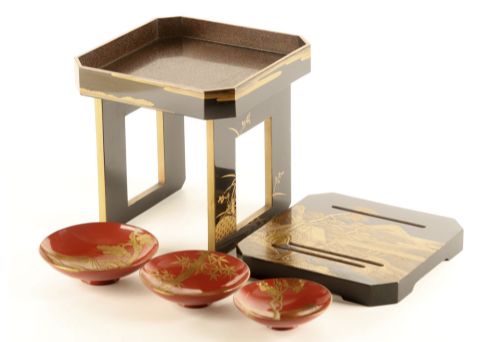
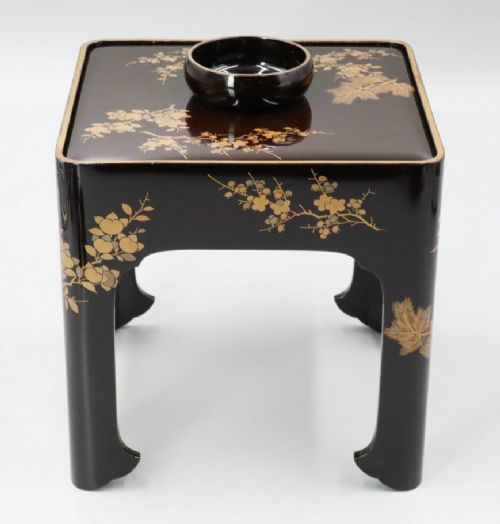
Smaller variants include low coffee tables and Japanese lacquered items, though the substantial giltwood and marble console table remains the central form.
Materials and Techniques
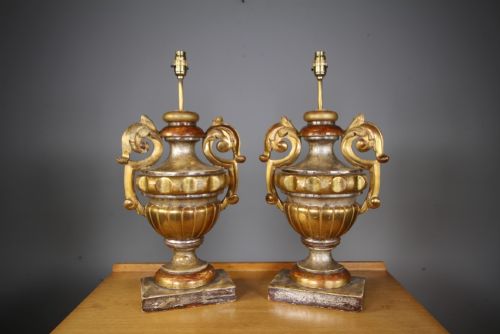
Giltwood pieces rely on skilled hand-carving in woods like pine or walnut, upon which thin sheets of gold leaf are applied over a prepared gesso and bole ground. This traditional method requires patience and precision to ensure the metallic finish adheres smoothly to intricate acanthus leaves and scrollwork.
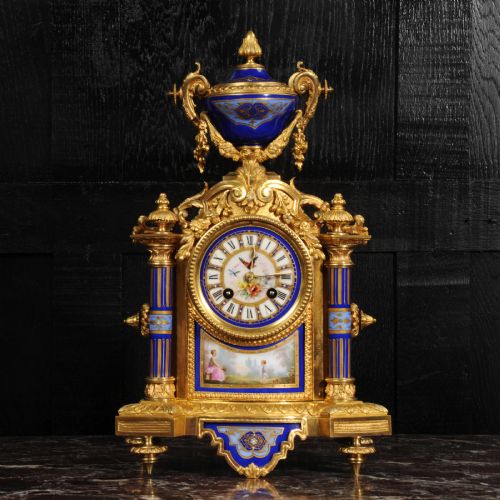
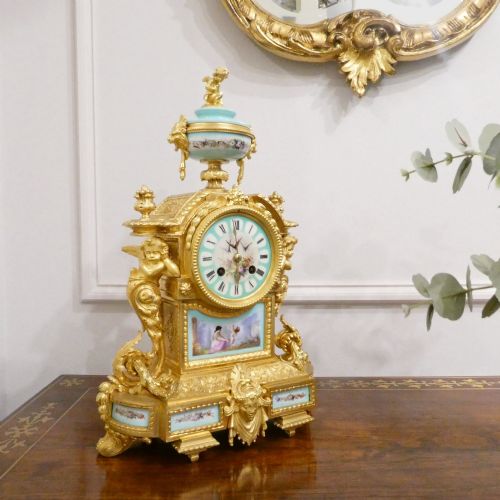
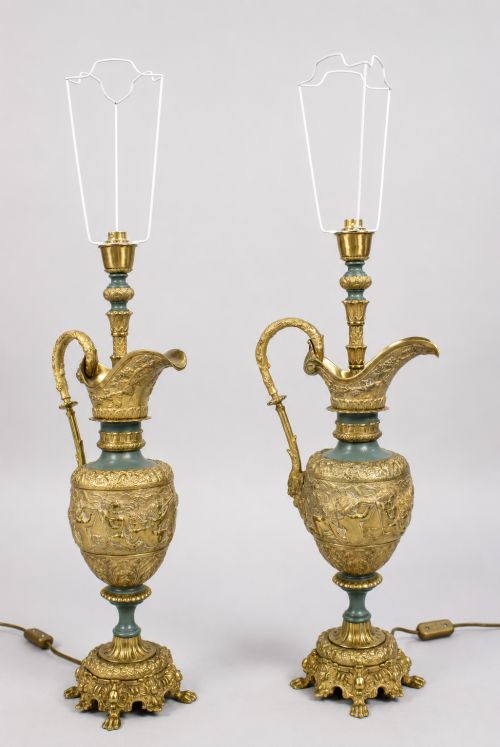
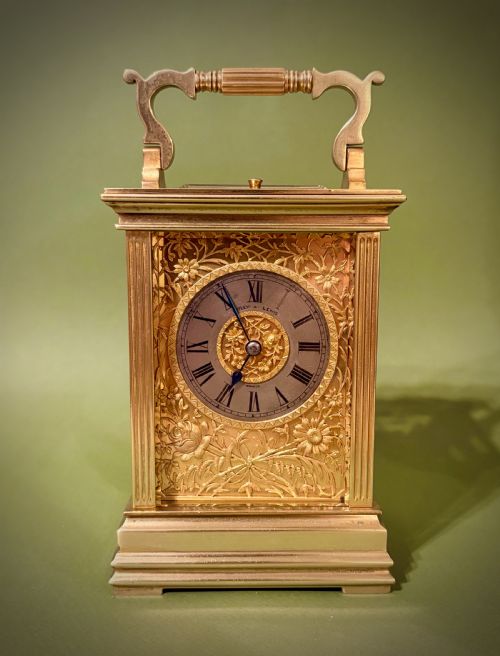
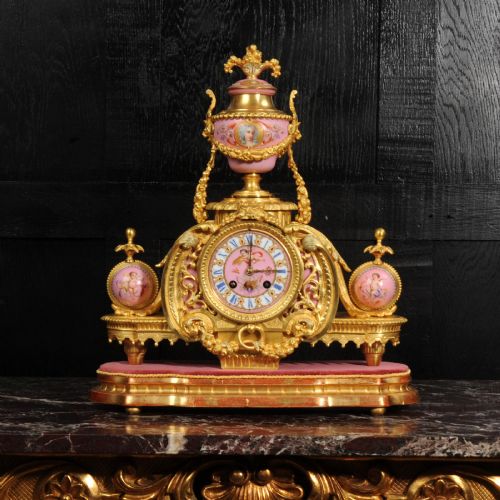
Ormolu and gilt bronze elements involve metal casting followed by mercury gilding or electroplating, yielding a durable, luminous finish on mounts, candelabra, and clock components. Marble slabs, frequently fitted to the tops of console tables, are shaped and polished to contrast with the gilded frames beneath.
Several items include miniature sake cups and lacquer tables alongside grand European console tables.
Assessing Craftsmanship
Depth and crispness in the wood carving separate superior tables from simpler production pieces, as master carvers undercut the foliage to create genuine relief rather than shallow surface decoration. The purity of the gilding and the weight of the underlying bronze or timber also dictate the character of the object.
In marble-topped examples, the thickness of the stone and the complexity of its edge moulding reflect the original commissioner's budget and the maker's skill.
Achille Brocot·Henry Marc·Japy Freres·Samuel Marti·Felix-Alfred Ternisien·E Rousseau
The Gold Gilt Table Glossary
- Giltwood
- Wood that has been coated with gold leaf or gold paint. This technique was widely used on eighteenth and nineteenth-century frames and console tables.
- Ormolu
- Gilded bronze, typically produced in France and used for decorative mounts and hardware. The term derives from the French for ground gold.
- Console table
- A table designed to be fixed against a wall, frequently supported by ornamental brackets or legs rather than four independent vertical posts.
- Parcel gilt
- A decorative treatment where only specific portions of an object are gilded while the underlying wood grain remains visible elsewhere.
- Gesso
- A plaster-like mixture applied to wood as a smooth base before the application of gold leaf.
Gold Gilt Table: Frequently Asked Questions
What is a gold gilt table?
A gold gilt table is a decorative surface finished with a thin layer of gold leaf or powder, encompassing console tables, coffee tables, and side tables.
These pieces typically date from the eighteenth to the early twentieth centuries, reflecting classical revival styles such as Louis XVI and Rococo.
How were these tables used historically?
Console tables were placed against drawing room walls beneath mirrors to reflect light and display decorative objects.
Coffee tables and smaller stands served occasional functions in formal sitting rooms and parlours.
How do I style a gold gilt table?
Allow the reflective surface to anchor a reception room by pairing it with neutral walls and balanced lighting.
Avoid overcrowding the top so the carved details and marble inserts remain visible.
How can I tell the period?
Examine the timber species, joinery methods, and the application style of the gesso and gold leaf.
Earlier eighteenth-century examples display hand-carved depth, whereas later revival pieces often incorporate machine tooling or different casting alloys.