

Gold Gilt Table Lamps
Gold gilt table lamps bring heavy metal presence and bright reflective surfaces to a room, spanning styles from French Empire to ornate Victorian revivals.
Gold Gilt Table Lamps
Gold gilt table lamps encompass heavy cast metal and carved wooden bases designed to illuminate interior spaces. Buyers seek out these items for their rich metallic sheen and historical decorative schemes.
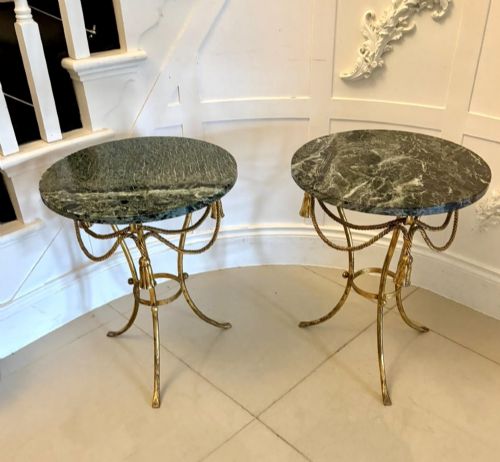
Continental European workshops dominate the origin points, with French and Italian makers producing elaborate figurative, floral, and architectural columns. Alongside these stands, incidental lamp bases appear alongside occasional tables and nests that share the same gilded vocabulary.
Materials and Construction
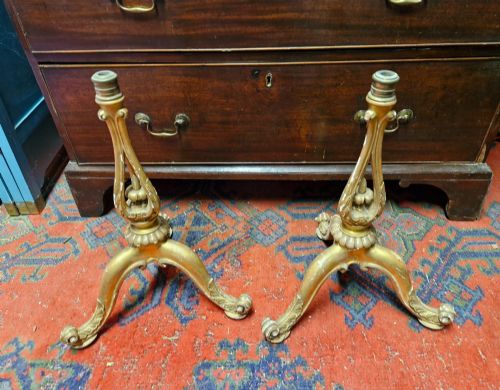
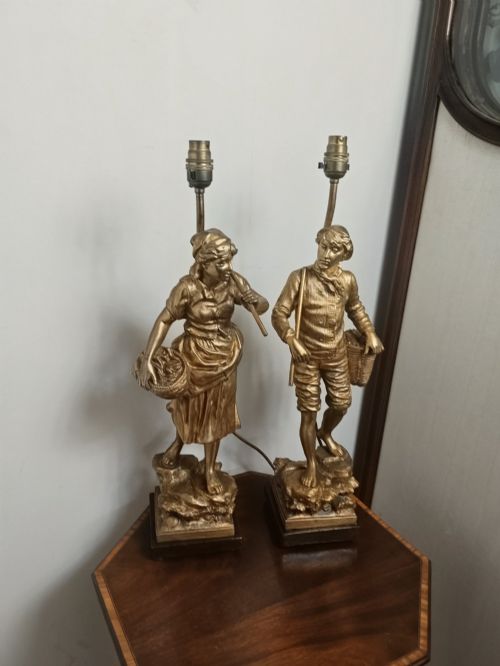
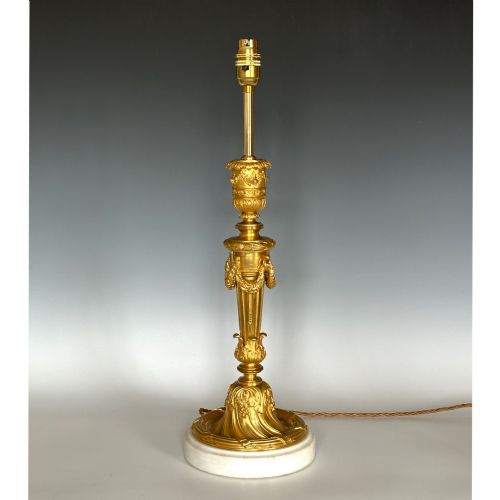
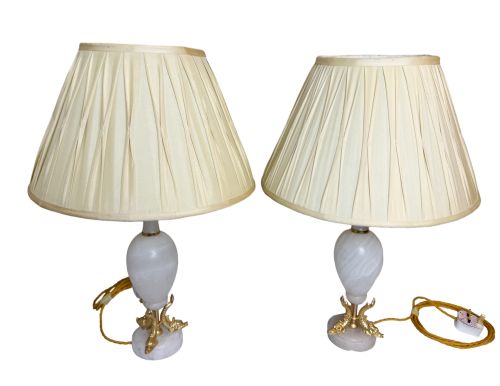
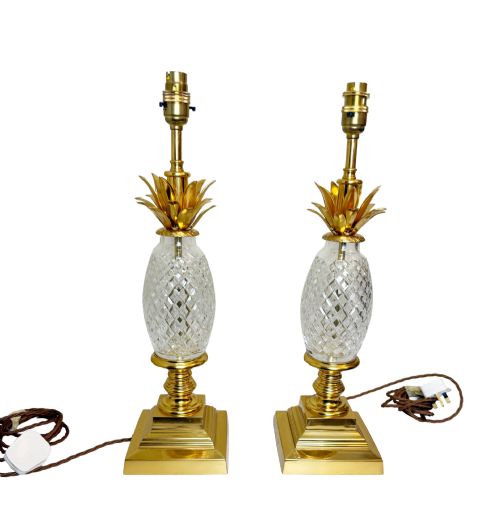
Makers rely heavily on cast brass, bronze, and ormolu, applying gold leaf or mercury gilding to achieve a deep, enduring lustre. Metal components are frequently combined with natural elements like marble, onyx, alabaster, and crystal to add weight and textural contrast.
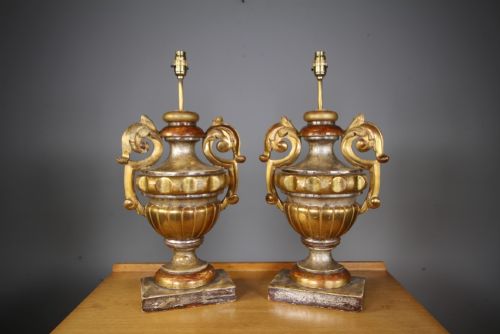
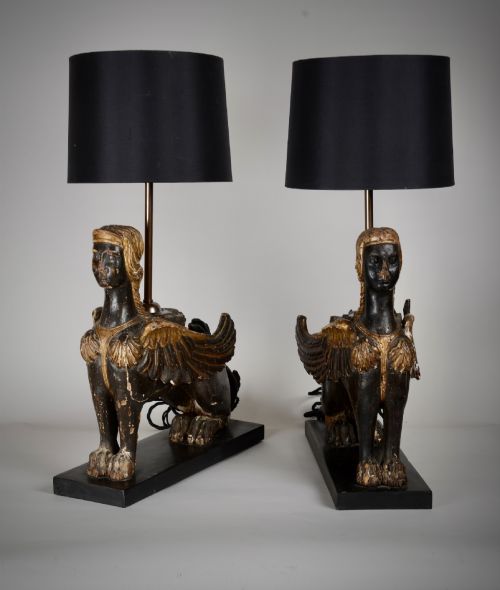
Wooden alternatives employ carved pine and giltwood, showing intricate hand-chiselled details finished with applied gold leaf. Fabric elements, crystal drops, and painted lacquer details complete the complex assemblies recorded across the periods.
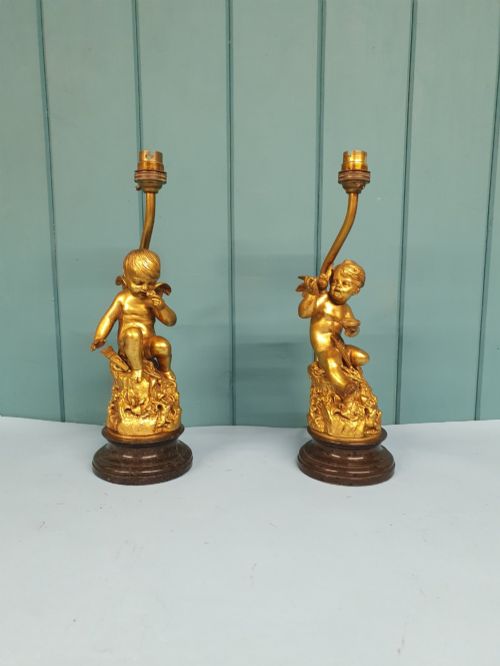
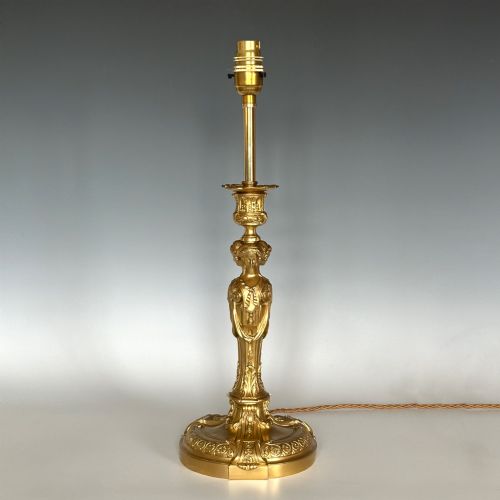
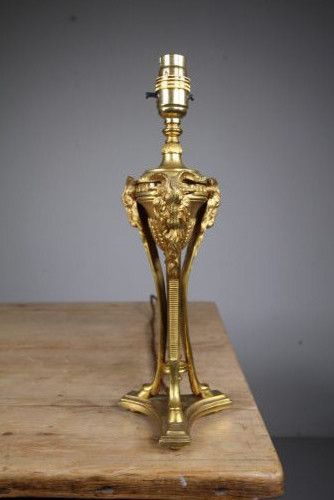
Illuminated sphinxes, cherubs, and rams' heads keep watch from the table edge, turning simple reading light into an archaeological pageant.
Craftsmanship and Detail
Quality rests in the crispness of the chasing on bronze and ormolu elements, where sharp leaf motifs and deep relief outshine soft, blurred casting. The depth and warmth of the original gilding dictate the visual impact of the piece under room lighting.
Carved wooden examples depend on the precision of the hand-carving beneath the gold leaf, separating mechanical factory work from bespoke artisan production. Integrated stones such as genuine marble or onyx add structural integrity and material luxury.
E Rousseau·Dugourc
The Gold Gilt Table Lamps Glossary
- Ormolu
- Gilded bronze, typically produced by applying a mercury and gold amalgam to a cast bronze base and heating it until the mercury evaporates. This technique creates a distinctive, deep golden finish seen on French lighting.
- Giltwood
- Timber, usually pine, prepared with layers of gesso and bole before application of fine gold leaf. It forms the foundation of ornate carved frames and lamp bases.
- Ewer
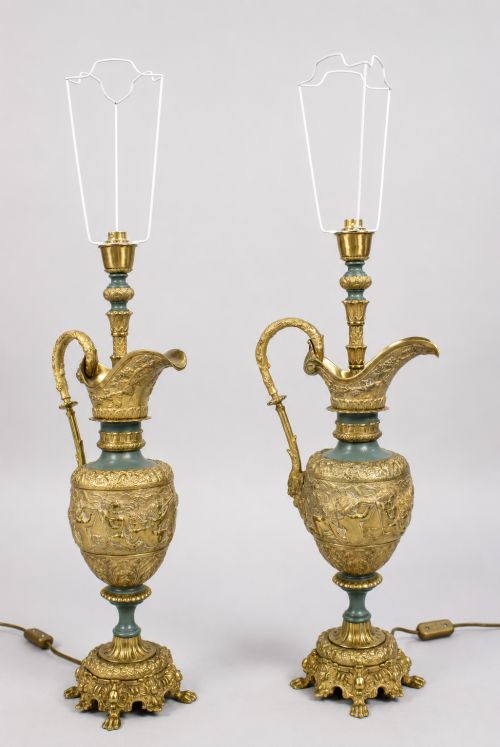
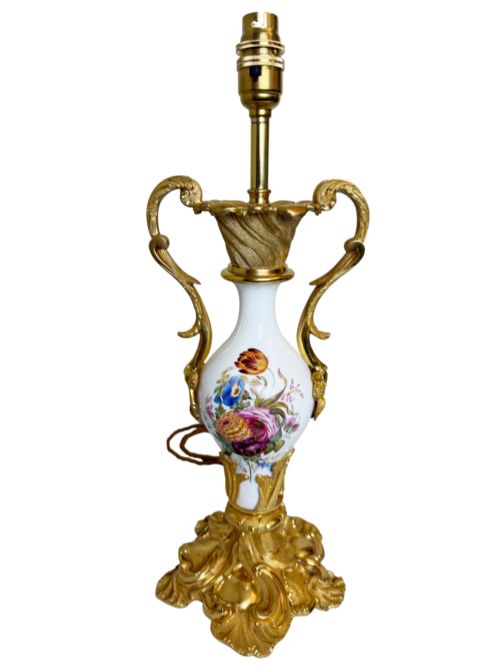
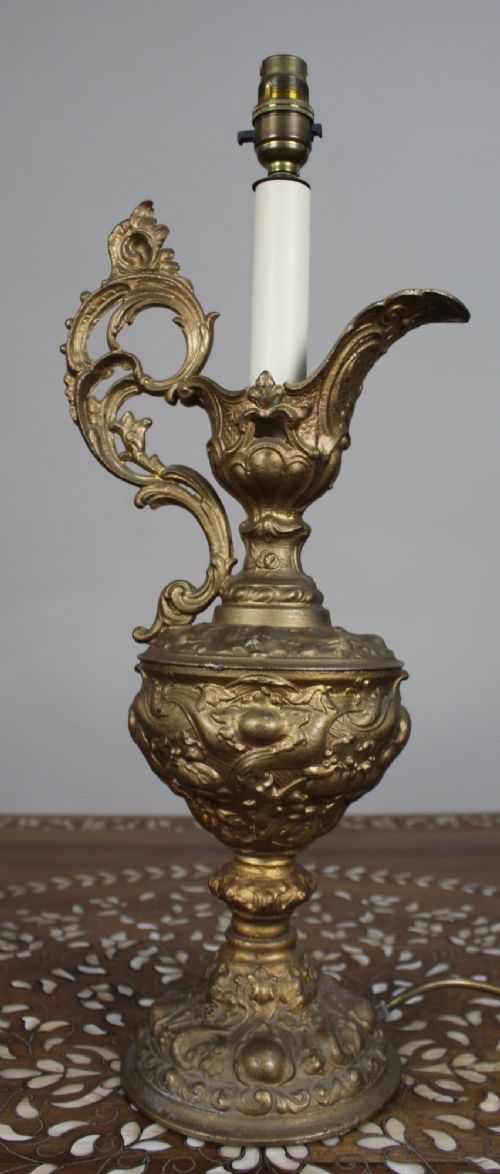
- A large jug with a wide spout, historically used for pouring water but frequently adapted as a decorative vessel for lamp bases in the nineteenth century.
- Neoclassical
- A revival style drawing inspiration from classical Greek and Roman art, characterised by symmetry, columns, urns, and restrained floral motifs.
- Chinoiserie
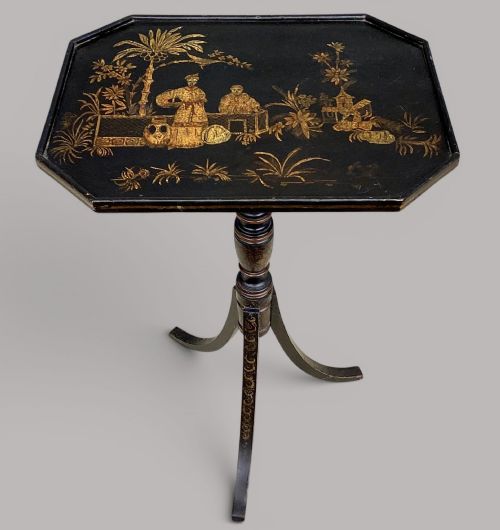
- European decorative style inspired by Chinese artistic traditions, featuring lacquered surfaces, painted motifs, and exotic figures.
Gold Gilt Table Lamps: Frequently Asked Questions
What periods do these lamps cover?
The available selection spans from the eighteenth century through the Victorian era and into the early twentieth century. Pieces reflect prevailing revivals of French court styles alongside later adaptations.
Dates cluster heavily around the nineteenth century and the decades leading up to nineteen twenty. Each era brings distinct casting techniques and decorative flourishes to the gilded surface.
Are these lamps converted from older objects?
Many examples originate as utilitarian or decorative items such as candelabra, ewers, urns, or candlesticks. Artisans later adapted these stable objects to house electrical components.
This practice preserves antique metalwork and ceramics for modern interiors. Such conversions retain their original sculptural form while serving a contemporary lighting function.
How do I care for gilt metal surfaces?
Gilded metal requires gentle dusting with a soft, dry cloth to prevent the accumulation of grit. Avoid chemical polishes, as abrasive rubbing can strip the delicate gold leaf or mercury gilding.
Preserving the original surface sheen depends on minimal intervention and stable indoor humidity. Careful handling protects both the metal substrate and any integrated marble or crystal elements.
How do I distinguish ormolu from gilt brass?
Ormolu consists of cast bronze finished with a mercury gilding process, yielding a rich, saturated golden hue with substantial heft. Gilt brass typically employs a brighter, thinner gold application over a lighter alloy.
Close inspection of the surface texture and the sharpness of the underlying metalwork reveals the method of manufacture. High-grade ormolu exhibits deep chasing work that softer brass castings lack.