


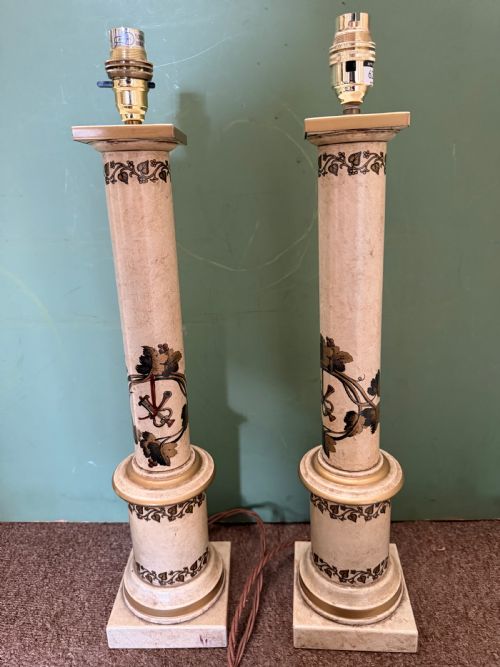


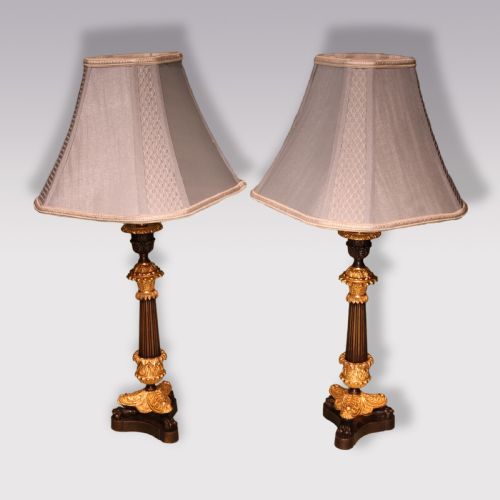
Antique Gilt Buffet Lamps
Antique gilt buffet lamps bring warmth and metallic theatre to a sideboard, combining the golden shimmer of ormolu with the practical height of a slender table light.
Antique Gilt Buffet Lamps
These antique gilt buffet lamps are tall, decorative table lights designed to stand on sideboards, buffets, or console tables. When you search for antique gilt buffet lamps, you are looking at items that often began life as candlesticks, chateau lights, church altar pieces, or decorative vases before being converted to electricity.
The pieces appearing here span from the eighteenth century through to the early decades of the twentieth century. French regional designs and continental interpretations dominate the selection, bringing considerable decorative presence to an interior.
Forms range from slender column lamps and classical urn shapes to converted ormolu candlesticks and ceramic bodies mounted in metal mounts. Pairs recur frequently, offering symmetrical lighting solutions for larger pieces of furniture.
How they were made
Construction relies heavily on cast bronze, brass, and carved wood finished with gold leaf or mercury gilding. Ormolu, which is finely chased and gilt bronze, provides crisp architectural detail and deep surface lustre.
Many examples incorporate contrasting materials such as white or dark marble bases, hand-painted porcelain panels including bleu celeste Sevres styles, and dark toleware or black metal bodies. Joinery and mounting methods typically involve threaded rods and bolted collars concealed within the central column.
Antique Gilt Buffet Lamps Retail Price Guide 2026
Typical asking prices for gilt buffet lamps among the pieces listed under this phrase on Sellingantiques today, from the lower quarter to the upper quarter. They describe what is for sale here now, not the wider market.
Listings feature items spanning the 18th, 19th, and early 20th centuries, executed in materials including ormolu, marble, giltwood, and bronze.
What varies in quality
The sharpness of the chasing in ormolu and bronze elements dictates the visual clarity of the ornament. Higher grade pieces display crisp acanthus leaves, distinct beading, and finely textured backgrounds rather than soft, rounded casting edges.
The integrity of the original gilding or gold leaf surface separates standard examples from superior ones. Pieces retaining their original mercurial gilt or deep burnished gold leaf show richer tonal depth than later, flat metallic paints.
Jean-Démosthène Dugourc
The Antique Gilt Buffet Lamps Glossary
- Ormolu
- Finely cast and chased bronze that has been gilded with gold amalgam. This technique gives the metal a rich, warm surface appearance that resists tarnishing over long periods.
- Toleware
- Lacquered or painted metalware, usually iron or tin, used for decorative lamp bodies and shades. It often appears in dark or black finishes contrasted against gilt metal mounts.
- Bleu Celeste
- A bright sky blue ceramic glaze developed at the Sevres porcelain factory in France. It frequently forms the colourful ground for decorative lamps with gilt mounts.
- Giltwood
- Timber, often carved pine or gesso-coated wood, covered with gold leaf. It provides a lighter architectural form for tall candlestick lamps.
- Chasing
- The manual tooling of cast metal surfaces using hammers and punches to sharpen details and create texture. Superior chasing distinguishes high-grade ormolu from simpler brass castings.
Antique Gilt Buffet Lamps: Frequently Asked Questions
What is a buffet lamp?
A buffet lamp is a tall, slender table lamp designed specifically for placement on a sideboard, buffet, or console table. Their elevated height allows light to cast down over serving dishes or decorative objects without cluttering surface space.
These pieces often utilise converted candlesticks or slender column designs to achieve their proportions. The selection here reflects various continental traditions of height and decorative presence.
Were these always electric lamps?
Almost none of these pieces started life as electric lamps. The majority were originally oil lamps, church candlesticks, chateau lighting, or decorative vases before receiving electrical wiring later in their existence.
This conversion process preserves the antique metalwork and ceramic bodies while adapting them for modern interior lighting. Collectors often value the marriage of period form with contemporary electrical fittings.
How do I style them on a sideboard?
Pair them at either end of a long sideboard or console to create symmetrical framing for a mirror or a large painting. Their height allows them to illuminate dark corners without blocking eye level across a room.
Consider pairing them with complementary fabrics and shades that echo the tones of the marble, ormolu, or painted porcelain in the base.
How can I tell the period?
Dating relies on stylistic clues such as the symmetry of Louis XV designs, the classical rigour of French Empire bronzes, or the simpler proportions of early twentieth-century interpretations. Materials like carved giltwood point towards eighteenth or nineteenth-century workshops.
Examining the construction methods, such as hand-cut threads and patination on the bronze or brass, helps confirm the age of the metalwork.