



Pair Giltwood Candlesticks
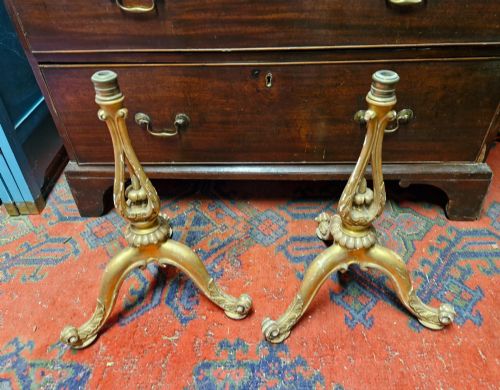
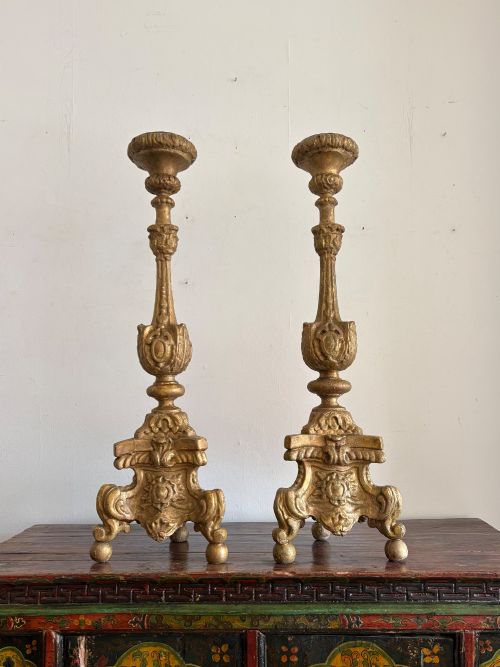
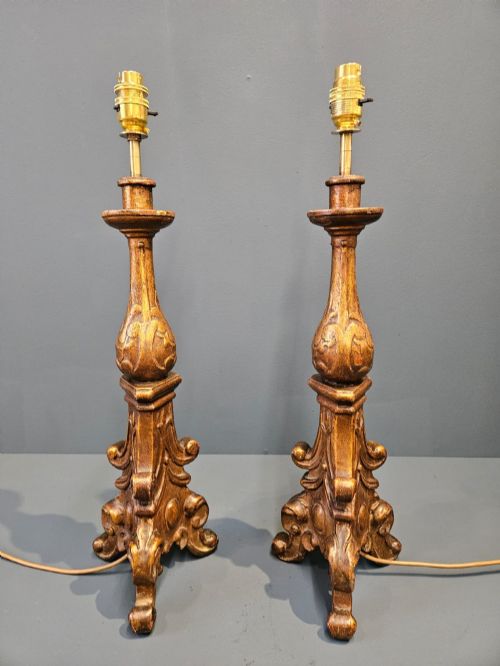
These pair giltwood candlesticks bring carved timber, gold leaf and centuries of European craft straight to the drawing room.
Pair Giltwood Candlesticks
When you search for pair giltwood candlesticks, you encounter objects spanning the eighteenth and nineteenth centuries, alongside later revivals. The forms range from altar candlesticks and pricket models to converted lamps and grand standard lights.
Italian Baroque and French Rococo influences dominate the selection, bringing substantial proportions and ornate carved details to the domestic interior. Many pieces trace their origins to Italian and French workshops, utilising traditional timber forms.
Materials and construction
Carved wood and timber provide the structural foundation for these objects, shaped by hand before receiving decorative treatments. Gesso is often applied beneath the surface to smooth the grain and prepare the material for gilding.
Gold leaf and gilt finishes create the characteristic metallic sheen, sometimes accompanied by silvered mecca techniques or marbleised details. Brass components also appear in specific fittings, while certain examples incorporate carved figurative elements.
Pair Giltwood Candlesticks Retail Price Guide 2026
Typical asking prices for pair giltwood candlesticks among the pieces listed under this phrase on Sellingantiques today, from the lower quarter to the upper quarter. They describe what is for sale here now, not the wider market.
Carved Blackamoor figures double as elaborate candelabras in the collection, holding the light aloft with theatrical flair.
Assessing craftsmanship
The finesse of the initial timber carving dictates the overall sculptural success of the piece, separating skilled handiwork from simpler production. Crisp execution in the acanthus leaves and scrollwork indicates a higher grade of workshop origin.
The application and survival of the gold leaf layer determine visual depth over time. Superior surfaces retain their warmth and texture, reflecting the underlying gesso and wood without heavy modern intervention.
The Pair Giltwood Candlesticks Glossary
- Giltwood
- Timber that has been coated with gold leaf or a gold-coloured finish. This technique creates a rich decorative surface typical of formal European interiors.
- Gesso
- A plaster-like mixture applied to a wooden base to create a smooth surface for gilding. It allows carvers to achieve sharp details before applying gold leaf.
- Pricket
- A sharp metal spike on a candlestick designed to hold a candle in place. This form is frequently found on altar candlesticks from the eighteenth century.
- Baroque
- An ornate artistic style originating in the seventeenth century and continuing into the eighteenth. It is characterised by dramatic movement, deep carving and grand proportions.
- Mecca
- A transparent golden varnish applied over a silver or tin base to imitate true gold leaf. It creates a distinctive warm metallic tone seen on specific Italian pieces.
Pair Giltwood Candlesticks: Frequently Asked Questions
How are these candlesticks used today?
Many pairs function safely as decorative side table lamps or floor standards following professional wiring conversions.
Others remain in their original candle-holding format to display on mantelpieces and sideboards.
Were these pieces originally for churches?
Several larger examples originate from ecclesiastical settings as altar candlesticks designed for ceremonial use.
Domestic variants were simultaneously produced for grand European salons and chateaux.
How do I distinguish eighteenth-century pieces?
Eighteenth-century examples typically display deeper hand-carved wooden forms and authentic period gilding wear.
Stylistic markers like French Rococo curves or Italian Baroque proportions also point toward this era.
Why do some have marbleised finishes?
Certain nineteenth-century makers applied faux marble effects alongside gilding to match contemporary interior decoration schemes.
This technique added visual contrast and weight to standard lamps and larger candlestick bases.