

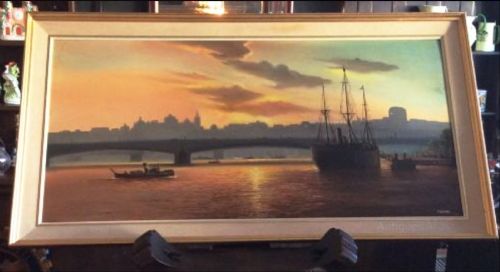
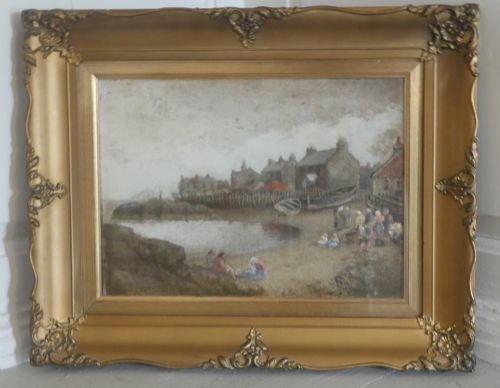

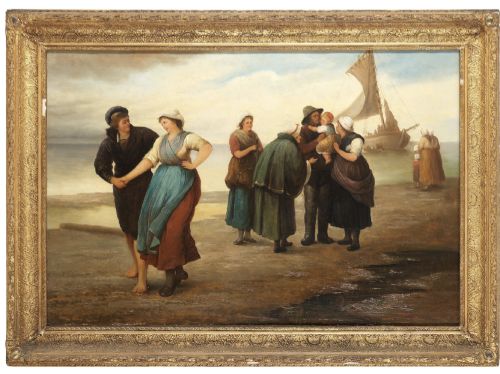
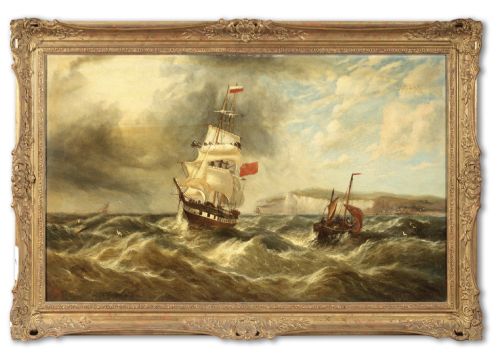
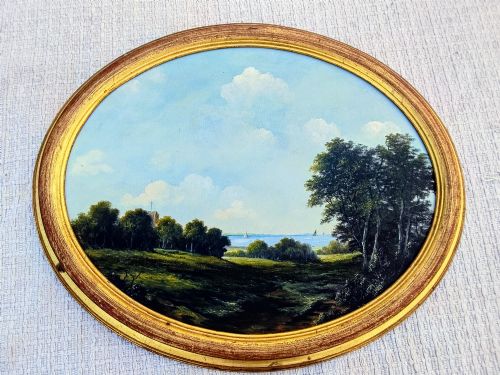
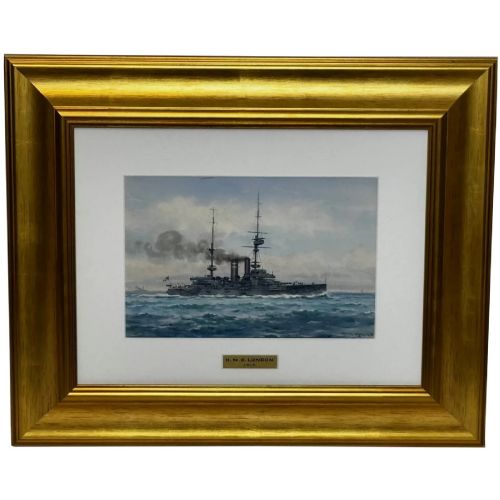
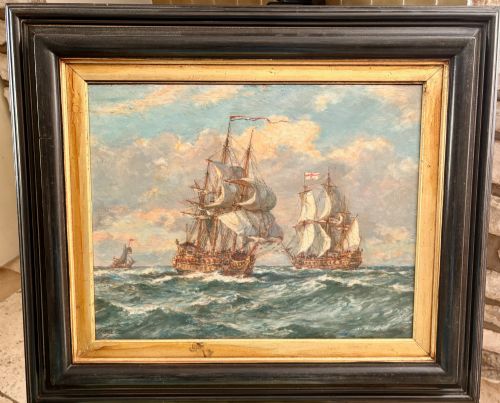
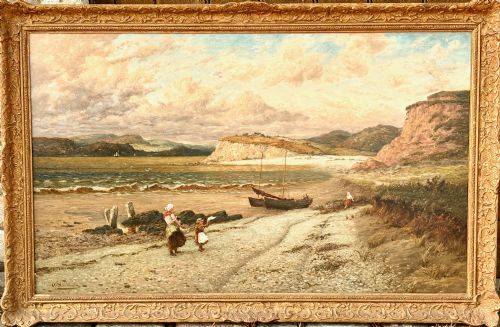
Gold Framed Marine Painting
When you search for a gold framed marine painting, you are looking at coastal vessels, dramatic gales, and busy harbours captured across the Victorian and Edwardian eras.
Gold Framed Marine Painting
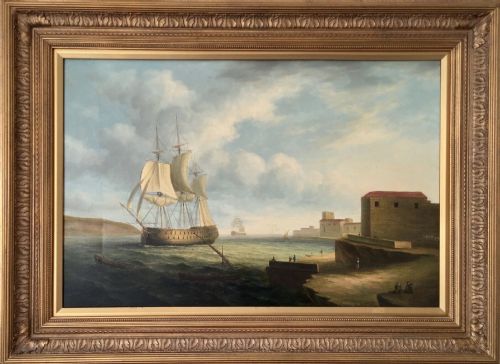
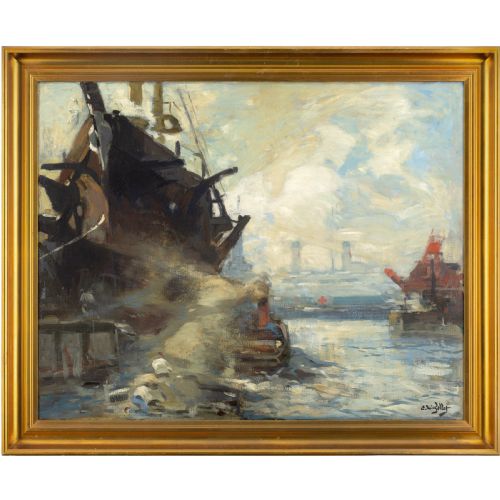
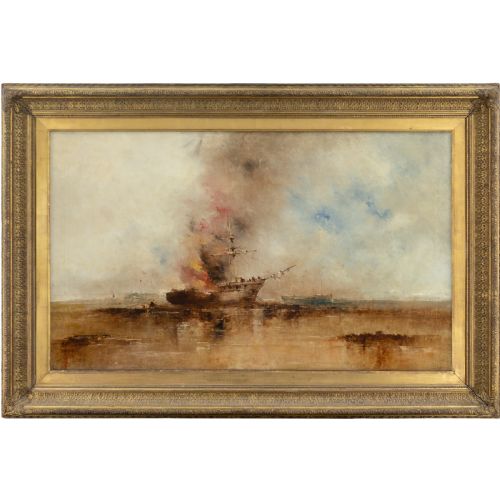
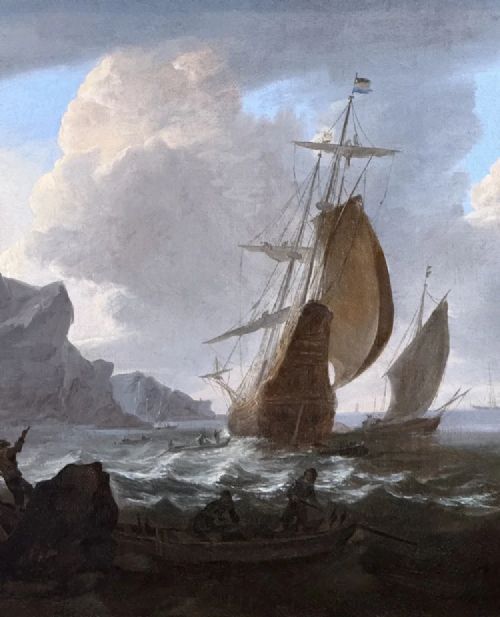
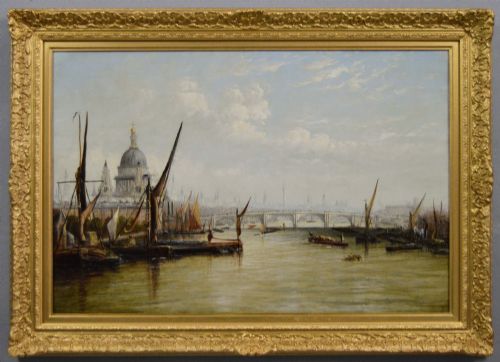
A gold framed marine painting brings historical maritime scenes into domestic interiors, depicting everything from towering war-ships to quiet fishing boats off rocky coasts. These works record naval history, bustling river views along the Thames, and stormy seas under expansive skies.
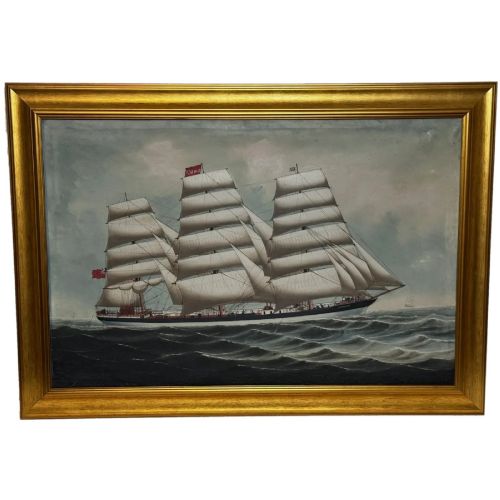
You will most frequently meet 19th century and Edwardian interpretations on this page, executed in oil paint or watercolour and housed within decorative giltwood surrounds. These pieces range from intimate coastal watercolours to large-scale oils of shipping vessels battling heavy gales.
How They Were Made
Artists painted primarily with oil on canvas, panel, or board, while others utilised watercolour on paper to capture the shifting light of the sea. These mediums allowed painters to render translucent waves, rolling clouds, and the detailed rigging of three-masted schooners.
The finished works were enclosed in wooden frames finished with gilt or giltwood moulding, providing a bright border that enhanced the depth and luminance of the maritime scene.
Several artists braved actual gale-force winds at sea just to ensure the spray on their canvases looked entirely authentic.
What Varies in Quality
Quality rests upon the artist's command of maritime architecture, atmospheric perspective, and the turbulent movement of water. A superior work distinguishes itself through accurate vessel rigging, convincing light reflection on the sea, and balanced composition.
The craftsmanship of the accompanying giltwood frame also dictates overall standard, with hand-carved ornamentation and original gilding setting finer examples apart from later replacements.
Eugène-Louis Gillot·William McAlpine·Reginald Arthur Borstel·Edward Mills·William Banks Fortescue·John Rose Miles·Frank Watson Wood·Bernard Gribble·Bonaventura Peeters·Francis Moltino·Bernard Benedict Hemy·Willem Bos·Charles Euphraisie Kuasseg·John Wilson Carmichael·Joseph Farquharson·Nicholas Condy·William Henry Williamson·John Holland·George Stanfield Walters·Abraham Hulk I·John Moxon·Charles William Wyllie·John Bedloe Goddard·William Edward Webb
The Gold Framed Marine Painting Glossary
- Giltwood
- Wood carved and coated with gold leaf or gold paint. This finish creates the characteristic bright border seen on period frames.
- Marine painting
- Artwork depicting ships, sea views, harbours, and coastal scenes. This genre encompasses both calm coastal watercolours and dramatic shipwrecks.
- Watercolour
- Pigments ground in water-soluble binders and applied to paper. It offers a transparent medium well suited for capturing delicate marine light.
- Oil on canvas
- Pigment mixed with drying oil applied to a stretched fabric support. It remains the primary medium for substantial 19th-century maritime works.
Gold Framed Marine Painting: Frequently Asked Questions
What subjects appear in these paintings?
The works depict war-ships, merchant vessels, fishing boats, and naval battles alongside tranquil river views and rugged coastal cliffs.
Scenes frequently capture specific locations such as Valletta Harbour, St Ives, the River Thames, and various European coastal ports during changing weather conditions.
How do I date a marine painting?
Dating relies on the ship types, clothing styles of figures, and the construction methods of the canvas or wooden panel.
Signatures, framing styles, and biographical details of the artist also provide a reliable timeframe for when the artwork was produced.
Are these works original period pieces?
The listings comprise authentic 19th century and Edwardian works created by listed artists and regional schools of painting.
Each piece utilises period materials such as oil paint on canvas or board, often retained within their original giltwood frames.
How should I display a gilt framed marine painting?
These works suit traditional living spaces, studies, or hallways where natural light can illuminate the brushwork and the reflective qualities of the gold frame.
Positioning the artwork away from direct sunlight and damp environments preserves both the painted surface and the delicate giltwood.