

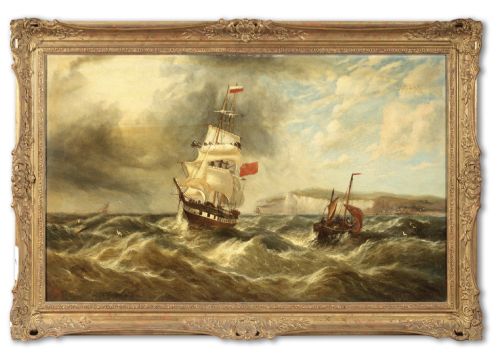
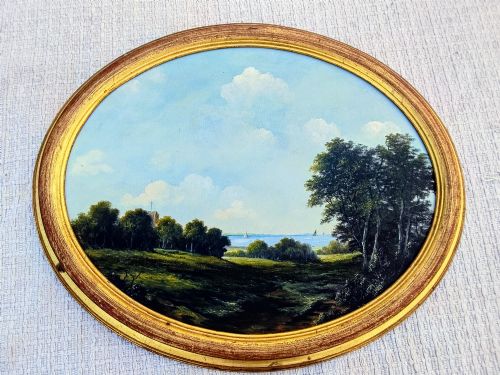
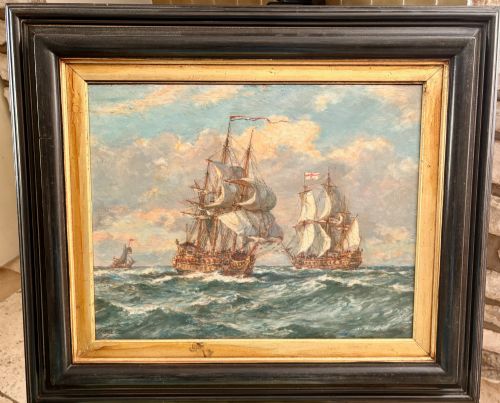
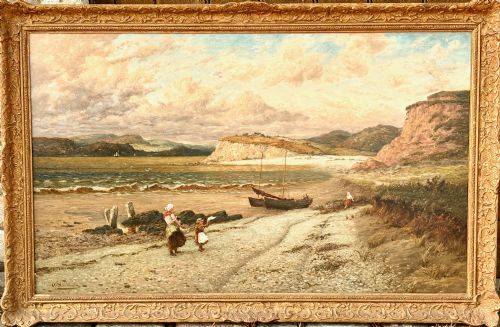

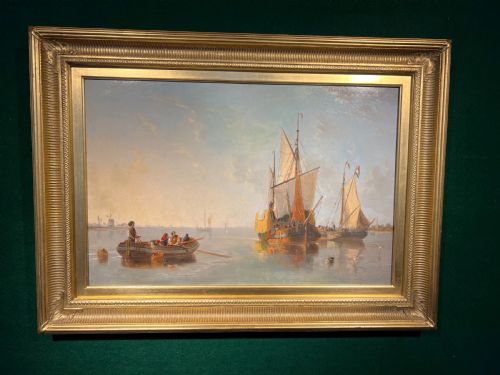
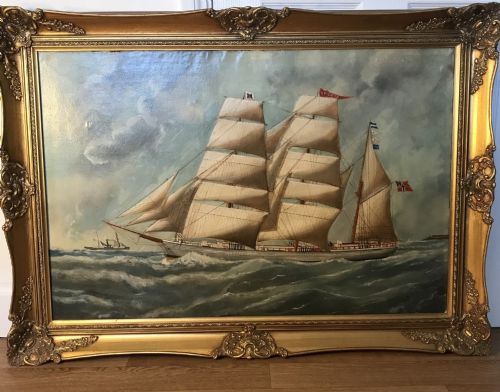
Gold Framed Marine Canvas
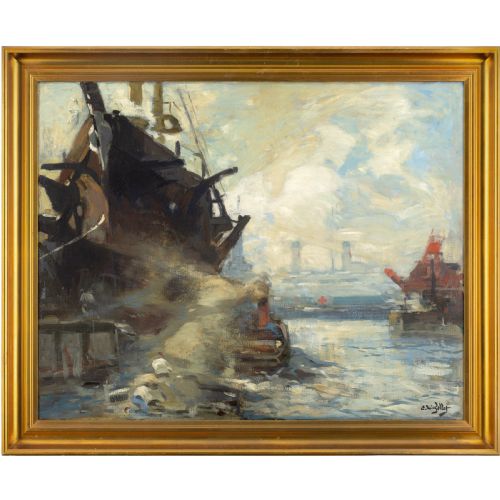
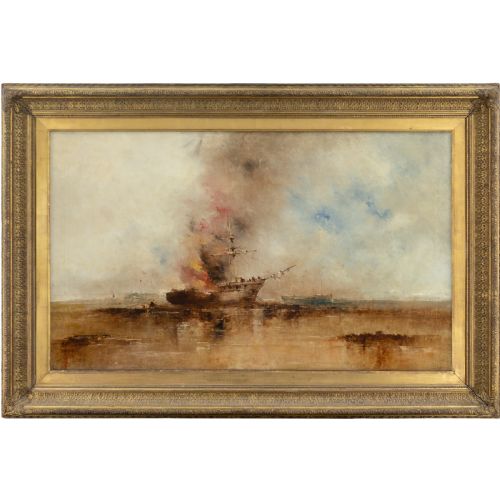
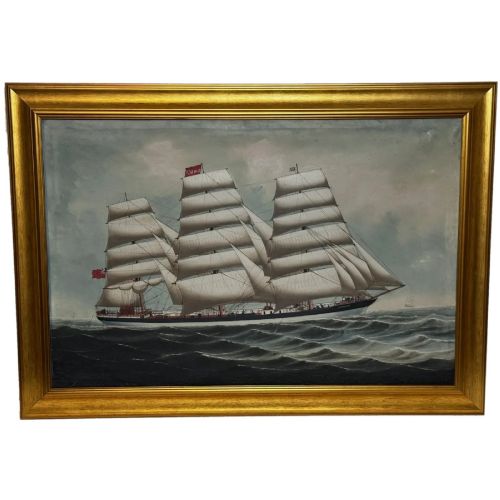
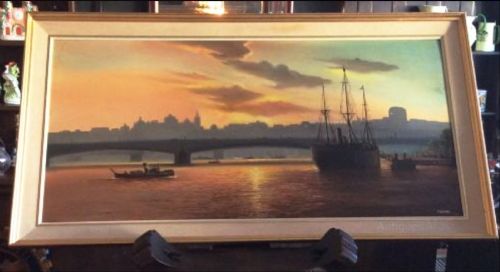
A gold framed marine canvas brings the movement and atmosphere of historical waterways directly onto the wall.
Gold Framed Marine Canvas
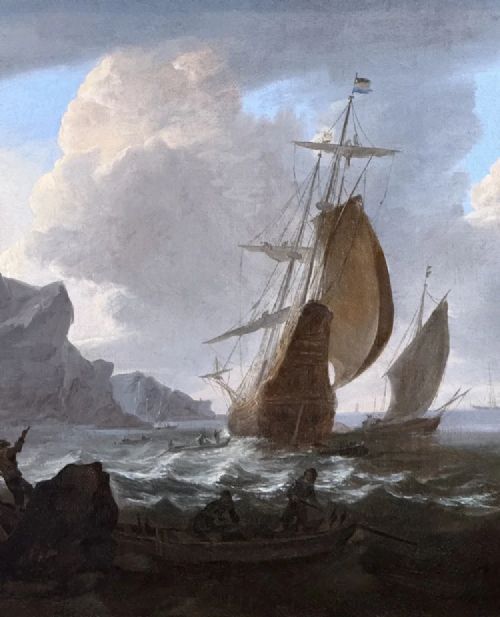
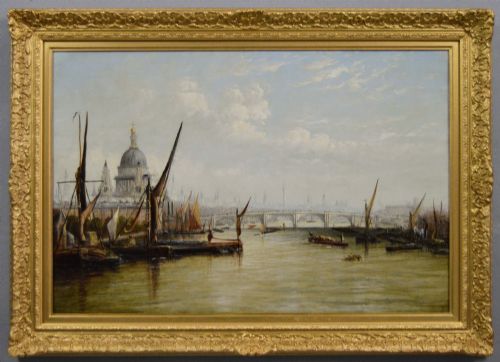
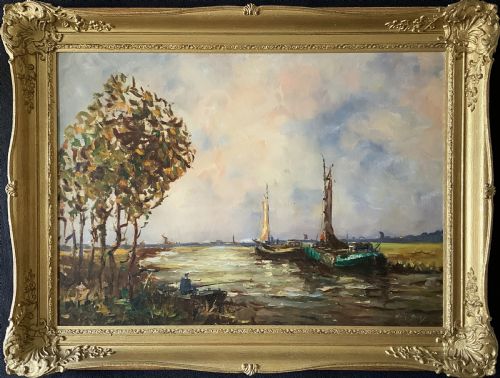
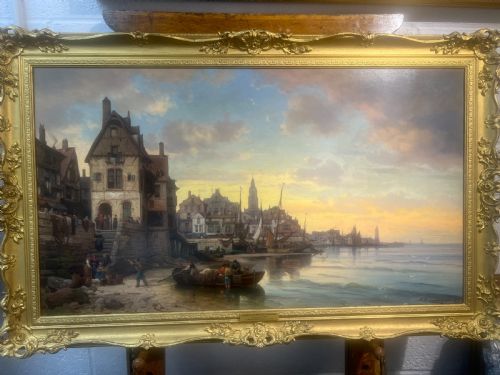
A gold framed marine canvas captures maritime subjects, ranging from bustling river scenes and crashing coastal waves to detailed depictions of tall ships and harbour views. These artworks span multiple centuries, with Victorian and nineteenth-century examples forming a significant part of what is available.
The works take several forms, including expansive panoramic seascapes, intimate oval canvas views, and large-scale historical portrayals of ships navigating heavy seas or calm ports. Buyers encounter both signed works by known artists and pieces originating from regional British or European schools.
Subjects often focus on specific geographic locations, such as the River Thames in London, Cornish coastal towns, and various international harbours. Each piece preserves a distinct era of maritime history through oil paint applied to stretched canvas.
Materials and construction
Painters utilised oil on canvas to build rich layers of pigment, capturing the translucent quality of water and the dense texture of billowing sails and stormy skies. The canvas itself is stretched over a wooden frame to maintain stability and tension over time.
The surrounding frame is constructed from wood and finished with gilt, giltwood, or gilded wood to complement the maritime subject matter. These ornate wooden surrounds often feature decorative mouldings that enhance the visual weight of the painting.
Several canvases include loyal Newfoundland dogs keeping watch alongside nineteenth-century sailors.
Distinctions in quality
Quality rests upon the artist's ability to render light, shadow, and movement convincingly across the water and sky. Superior examples demonstrate a precise understanding of maritime architecture, rigging, and atmospheric perspective rather than relying on formulaic compositions.
The craftsmanship of the wooden and gilt frame contributes significantly to the overall integrity of the piece. Frames that retain their original gilding and structural stability without excessive later restoration elevate the historical value of the canvas within.
Eugène-Louis Gillot·William McAlpine·Reginald Arthur Borstel·John Rose Miles·Bernard Gribble·Bonaventura Peeters·Francis Moltino·Bernard Benedict Hemy·Charles Euphraisie Kuasseg·John Wilson Carmichael·William Henry Williamson·John Holland·Abraham Hulk I·Charles William Wyllie·William Edward Webb·Charles Napier Hemy·Gustave Vidal·Gustave De Bréanski·Daniel Sherrin·Stanley Leader
The Gold Framed Marine Canvas Glossary
- Giltwood
- Wood carved and covered with a thin layer of gold leaf or gold paint. This material is standard for period frames accompanying nineteenth-century paintings.
- Seascape
- A work of art depicting the sea, ships, coastal views, or maritime activities. These subjects form the core of marine painting.
- Canvas
- Heavy woven fabric stretched tightly across a wooden stretcher bar to serve as a stable support for oil paint. It remains the primary substrate for traditional paintings.
- Maritime realism
- An artistic approach focused on the accurate and detailed depiction of ships, water, and weather conditions without romantic idealisation.
Gold Framed Marine Canvas: Frequently Asked Questions
What periods do these paintings come from?
The available works primarily date from the nineteenth century, including the Victorian and Edwardian eras, alongside pieces from the seventeenth, eighteenth, and mid-twentieth centuries.
Creators ranged from school-affiliated painters to established maritime artists working across Britain and continental Europe.
How were marine canvases originally displayed?
These artworks were traditionally hung in domestic parlours, maritime offices, and shipping company headquarters to celebrate naval power and trade.
The heavy gilt frames were designed to project authority and draw the eye toward the atmospheric coastal scenes.
How do I identify the subject of a painting?
Titles often reference specific ports, rivers, or historical events, such as the River Thames, the Isle of Man, or voyages near Gibraltar.
Details like the rigging of three-masted schooners or the uniforms of naval shipping help contextualise the geographic and temporal setting.
Are these works original oil paintings?
Every listed piece is an original oil painting executed on canvas using traditional brushwork techniques.
Artists applied layered oil paint to capture the varied textures of stormy seas, cloudy skies, and wooden vessel hulls.