
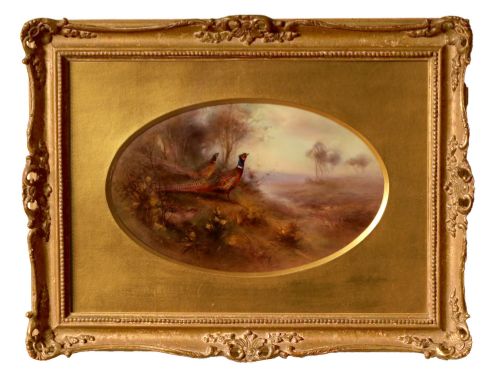


Gold Framed Ceramic Plaque
A gold framed ceramic plaque brings together painted porcelain and gilt woodwork to create a decorative focal point for any wall.
Gold Framed Ceramic Plaque
When you search for a gold framed ceramic plaque, you encounter hand-painted porcelain panels set inside ornate wooden, gilt, or ormolu surrounds. These decorative pieces function primarily as wall art, bringing miniature portraiture and classical scenes into domestic interiors.
The versions most commonly found here date from the Victorian period through to the early twentieth century. They range from Continental factory work, such as KPM and Sevres style pieces, to British output by makers associated with Royal Worcester and Minton.
The forms vary from rectangular panels and oval shapes to mounted tiles and sculptural portraits. Most incorporate framing elements of carved wood, velvet backing, and glass protection to preserve the delicate painted surfaces within.
How they were made
The manufacture of these objects combines ceramic firing with fine painting and woodworking techniques. Artisans painted detailed subjects onto porcelain or enamel panels using mineral pigments that required multiple kiln firings to achieve permanence.
Specialised techniques such as pate sur pate build up raised white porcelain relief against a contrasting coloured slip background. The resulting ceramic panels are then secured within frames finished in gold leaf, gilt, or ormolu mounts.
Prussian royalty and Shakespearean characters share wall space here.
What varies in quality
The standard of these works depends largely on the skill of the artist and the prestige of the porcelain manufacturer. Hand-painted examples signed by known painters demonstrate superior brushwork and finer detail than generic factory output.
The quality of the housing also distinguishes the pieces, with deeply carved giltwood and ormolu frames showing greater craftsmanship than simple wooden surrounds. The preservation of the enamel surface and the crispness of the gilt leaf further separate the finer examples from standard decorative items.
James Stinton·KPM·William Rayworth·Minton·H. Desprez
The Gold Framed Ceramic Plaque Glossary
- Porcelain
- A white, vitrified ceramic material fired at high temperatures to create a hard, non-porous body suitable for detailed painting. It serves as the primary canvas for these decorative plaques.
- Giltwood
- Timber that has been carved and coated with a thin layer of gold leaf or gilt paint. This material provides the ornate framing typical of nineteenth-century wall art.
- Pate sur pate
- A ceramic technique where successive layers of liquid white porcelain slip are applied to a dark body to build up a cameo-like relief design. It requires immense skill from the decorator.
- Ormolu
- Gilded bronze furniture mounts and decorative hardware used to accent frames and stands. The technique involves applying a mercury and gold amalgam to cast brass or bronze.
- Enamel
- A glassy substance fused to a metal or ceramic surface through firing to provide colour and protection. It forms a smooth, glossy coating on fine plaques.
Gold Framed Ceramic Plaque: Frequently Asked Questions
How do I hang a heavy framed plaque safely?
These pieces often carry significant weight due to the dense ceramic panel and timber frame construction. Secure fixings driven directly into wall studs provide the necessary support.
Ensure the hanging wire or mounting brackets on the back of the frame match the weight distribution of the piece. Professional picture hooks suited to plaster or masonry prevent accidental slips.
Are these porcelain plaques fragile?
The ceramic panels themselves are brittle and vulnerable to impact damage if removed from their protective surrounds. The glass and wooden frames help shield the painted surfaces from daily wear.
Displaying them away from high-traffic zones minimises the risk of accidental knocks. Gentle handling during cleaning protects both the porcelain and the gilt surfaces.
How do I clean a gilt frame and porcelain panel?
Dust the painted surface gently with a dry, soft brush to remove particle build-up without scratching the glaze. Avoid liquid cleaners on the porcelain unless applied by a professional conservator.
Dust the giltwood frame with a feather duster or dry microfibre cloth. Moisture can damage old gold leaf and flaking gesso beneath.
How can I tell a nineteenth-century plaque from a later copy?
Examine the back of the ceramic panel for factory marks, impressed ciphers, and handwritten titles characteristic of period production. The ageing of the wooden backing boards and the composition of the gilt also offer clues to the date.
Hand-painted details under magnification show individual brush strokes rather than the uniform dot pattern of modern printing. Comparing known factory signatures helps verify authenticity.