




French Style Porcelain Plaque
These french style porcelain plaque pieces combine glazed ceramics with gilt metal mounts, offering interior decoration rooted in nineteenth-century taste.
French Style Porcelain Plaque
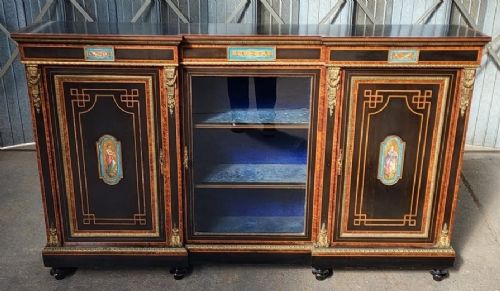
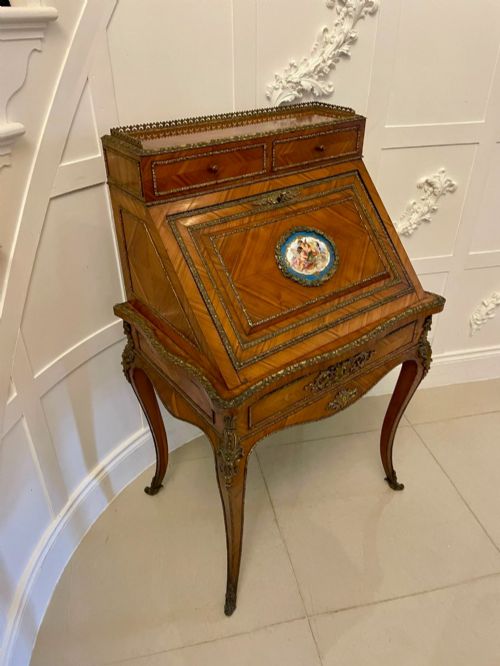
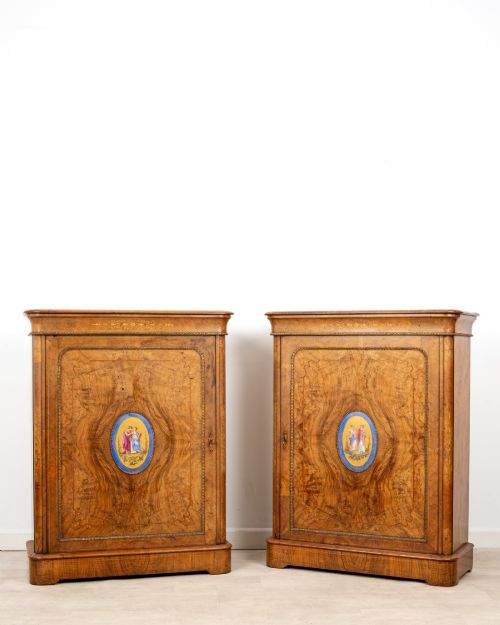
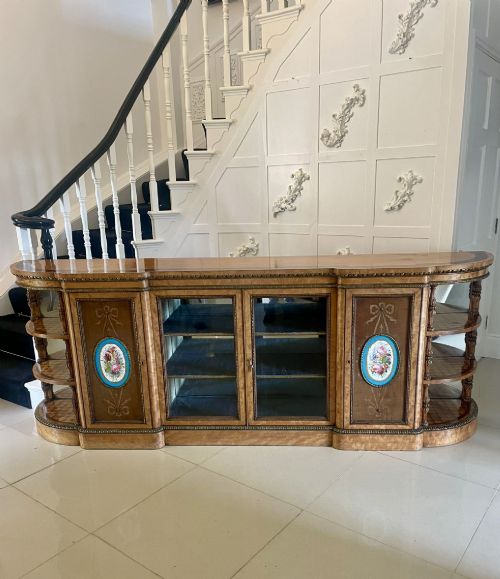
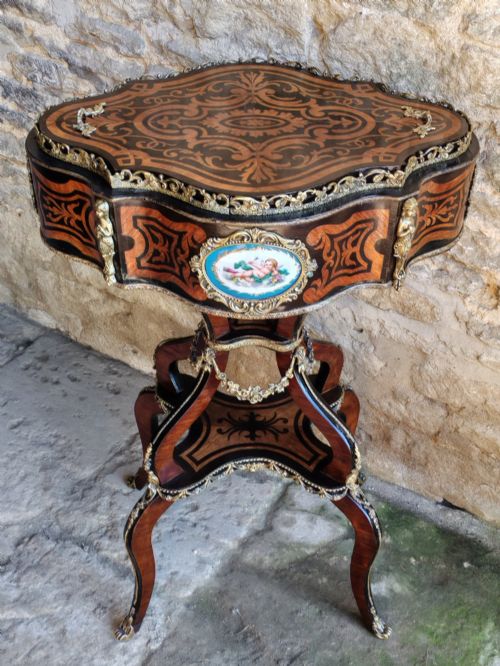
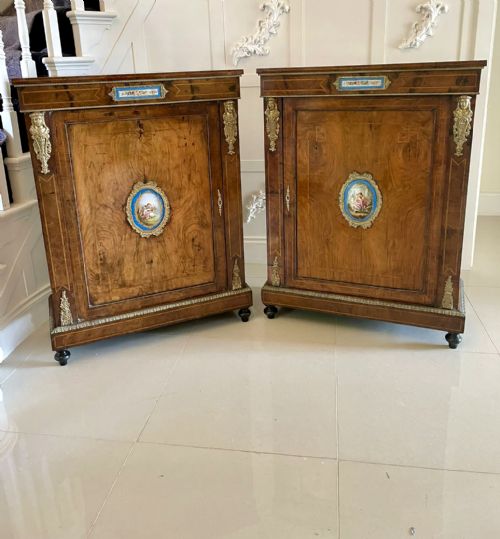
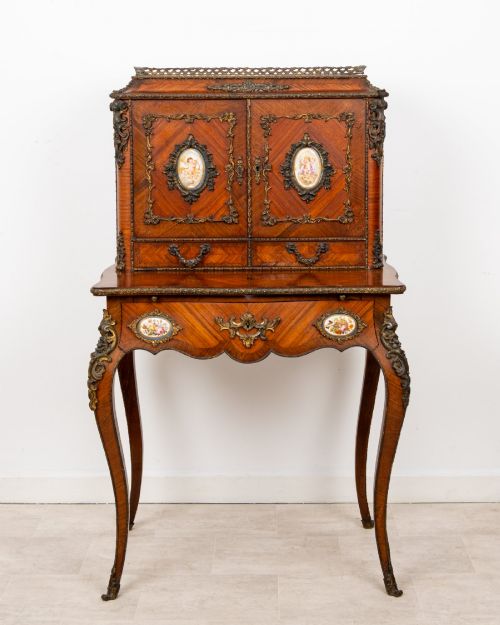
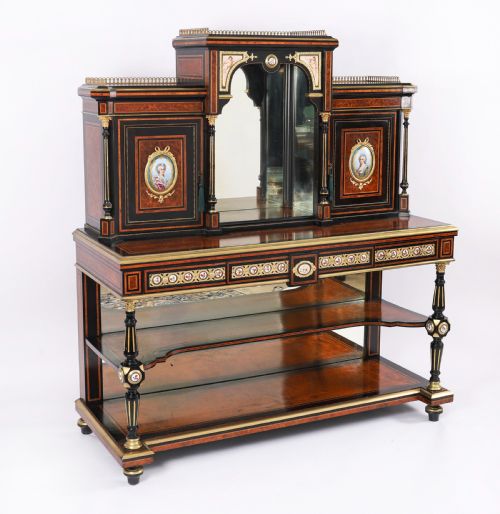
When you search for a french style porcelain plaque, you encounter decorative ceramics inset into nineteenth-century furniture such as pier cabinets, credenzas, and writing desks. These painted panels often feature floral or figurative subjects set within gilt bronze frames on veneered carcasses.
The version you most frequently meet on this page is the nineteenth-century Victorian or Louis-style cabinet or bureau, where glazed ceramic plaques accent burr walnut, kingwood, or ebonised surfaces. Alongside these mounted items, standalone painted plaques appear within carved frames.
Originating largely from nineteenth-century workshops producing revival furniture, these items borrow heavily from Louis XV, Louis XVI, and Napoleon III aesthetics. The ceramic elements themselves reference earlier eighteenth-century traditions through painted decoration and soft-paste styles.
How they were made
Maker construction combines cabinetmaking with ceramic art, utilising timber veneers like kingwood, satinwood, and burr walnut laid over solid foundational woods. Ormolu mounts are cast, chased, and gilded before being fixed around the porcelain inserts.
Porcelain plaques are hand-painted with mineral pigments and fired to achieve lasting gloss, frequently incorporating Sevres-style motifs or pate-sur-pate layering. These ceramic panels are then fitted snugly into furniture recesses or mounted independently in carved wooden frames.
The site records porcelain plaques mounted onto ormolu frames, occasional tables, and credenzas spanning the Victorian and Edwardian eras.
What varies in quality
Quality separates through the crispness of the ormolu casting and the depth of hand-painting on the porcelain plaques. Finer examples display meticulous chiselling on the bronze mounts and delicate brushwork on the ceramic surface rather than transfer-printed details.
The choice of cabinet timbers and marquetry precision also dictate standard, with figured veneers like kingwood and amboyna signalling superior execution. Construction joinery within the carcase and the integration of the plaque mounts determine structural integrity.
Minton·H. Desprez
The French Style Porcelain Plaque Glossary
- Ormolu
- Gilt bronze mounts used for decorative trimming on furniture and clock cases. This technique involves applying a gold amalgam to cast brass or bronze before heating.
- Bonheur du jour
- A small, light lady's writing desk featuring a tiered superstructure with drawers or shelves above the main writing surface. These desks frequently incorporate inset porcelain plaques.
- Credenza
- A grand display cabinet or sideboard typically fitted with glazed doors and substantial ormolu mounts. It serves as a principal piece for formal reception rooms.
- Pier cabinet
- A tall, narrow cabinet designed to fit the wall space between windows. These items often showcase mounted porcelain plaques on the central door panel.
- Pate-sur-pate
- A ceramic decoration method where liquid white clay is built up in successive layers on a coloured body to create a low relief cameo effect. This meticulous process requires immense skill from the ceramic artist.
French Style Porcelain Plaque: Frequently Asked Questions
What is a french style porcelain plaque piece?
These items consist of nineteenth-century furniture or standalone frames incorporating painted ceramic plaques. They originate predominantly from Victorian and revivalist European workshops.
Cabinetmakers integrated glazed porcelain panels into surfaces like writing desks, side cabinets, and jardiniere stands, pairing the ceramics with gilt ormolu mounts.
How were these pieces used originally?
Owners placed these decorative items in formal reception rooms to display wealth and refined taste. Writing desks and cabinets served functional purposes while acting as artistic showcases.
Standalone plaques and mounted furniture items reflected an enduring fascination with French court aesthetics during the nineteenth century.
How do you care for porcelain mounted furniture?
Keep these items away from direct sunlight and excessive humidity to protect delicate timber veneers and painted ceramic surfaces. Dust the wood and ormolu mounts gently with a dry, soft cloth.
Avoid using liquid cleaners or harsh chemicals on the porcelain plaques or the gilt metal to preserve the original finishes.
How can you tell the period of these pieces?
Examine the timber construction, veneer choices, and casting style of the ormolu mounts to determine age. Nineteenth-century pieces often utilise kingwood, burr walnut, or ebonised wood alongside revival styling.
Signatures on porcelain plaques or stamps on the ceramic reverses can provide additional chronological clues regarding production dates.