


Gold Four Glass Clock
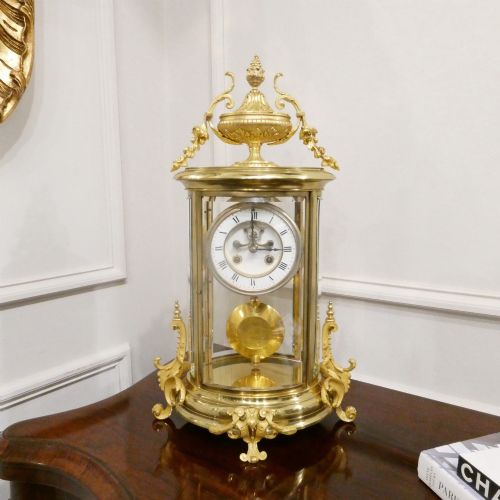
A gold four glass clock is a precision mantel timepiece encased in clear panels that display the intricate movement within, prized for bringing light and mechanical motion to a room.
How They Were Made
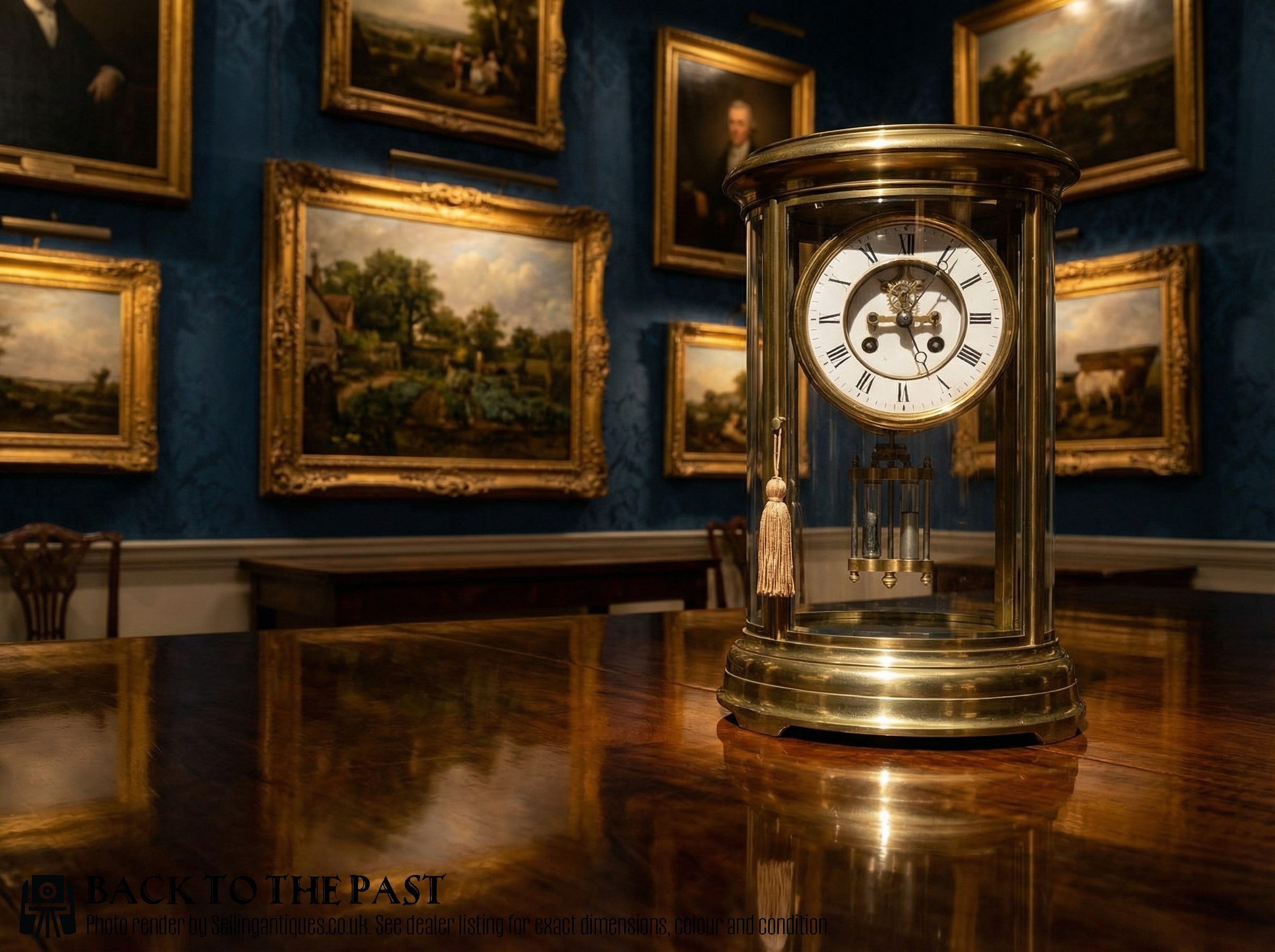
Maker workshops constructed these timepieces using heavy brass or bronze frames cast and subsequently gilded or polished to achieve a bright finish. Bevelled glass panels fit snugly into the brass housing, secured to provide clear views of the inner gears and escapement.
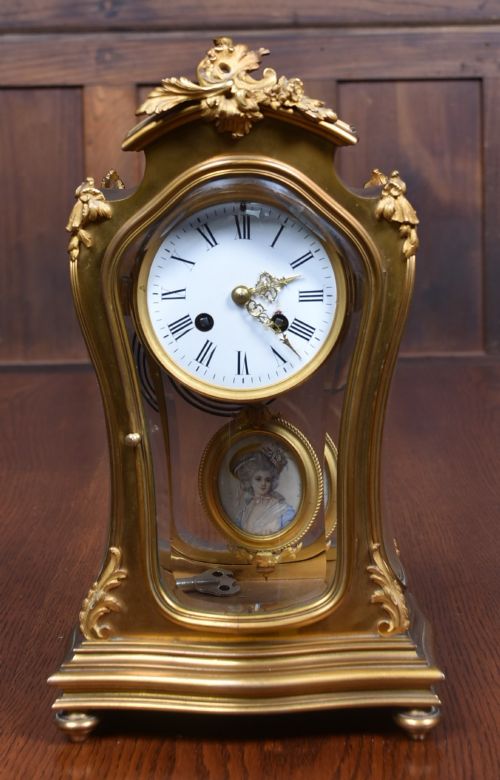
Dials were commonly fashioned from white enamel with painted numerals, occasionally complemented by hand-painted miniatures or visible mercury-filled pendulum tubes. Metal components underwent careful machining to ensure the delicate striking and timing trains operated smoothly together.
What Varies in Quality
Superior examples distinguish themselves through the crispness of the gilt casting and the weight of the bronze or brass framework. Finely detailed mounts, signed movements by established makers, and unblemished bevelled glass elevate certain pieces above standard production models.
The complexity of the movement also dictates standing, with moon-phase dials, mercury pendulums, or striking mechanisms marking out the more ambitious horological achievements. Simpler timepieces offer clean lines, yet lack the intricate mechanical additions found on the upper tier.
Some models hide a miniature painted inside the bezel, giving the clockmaker a secret canvas.
Samuel Marti·Rodier·AD Mougin·Samuel Marti et Cie
The Gold Four Glass Clock Glossary
- Four glass clock
- A mantel clock featuring bevelled glass panes on the front, back, and sides to expose the movement. This design gained popularity in France during the nineteenth century.
- Gilt bronze
- Metal cast in bronze and coated with a layer of gold. It provides a durable and bright surface finish.
- Ormolu
- A metallic alloy resembling gold, used for furniture mounts and clock cases. French makers applied this technique extensively during the nineteenth century.
- Mercury pendulum
- A temperature-compensated pendulum using vials of mercury to maintain consistent timekeeping. It appears in better quality Victorian and French clocks.
- Crystal regulator
- An alternative term for a four glass clock highlighting the transparent case. These timepieces often house high-grade movements.
Gold Four Glass Clock: Frequently Asked Questions
How do I wind a four glass clock?
Use the appropriate key on the winding arbors found on the enamel dial face. Turn gently until resistance is met.
Avoid over-winding to protect the internal springs and maintain accurate timekeeping.
Where should I place my clock?
Position the piece on a sturdy mantelpiece or bracket away from direct sunlight and draughts. A level surface ensures the pendulum swings evenly.
Keep the clock clear of exterior walls that experience heavy temperature shifts.
How do I tell a French clock from other types?
Look for signature stamps from makers on the movement backplate and distinct brass or gilt bronze case styling. French nineteenth-century examples often feature bevelled glass panels.
Inspect the dial for fine enamel work and traditional numeric formatting characteristic of the period.
What is a mercury pendulum?
A mercury pendulum contains sealed tubes of liquid mercury designed to counteract temperature changes. This clever adjustment keeps the pendulum length constant.
Such pendulums are typically found on higher-grade nineteenth-century timepieces.