


Gold Celestial Jewellery
Gold celestial jewellery captures the night sky in precious metals and gemstones, offering timeless motifs of stars, moons, and sunbursts that collectors treasure.
Gold Celestial Jewellery
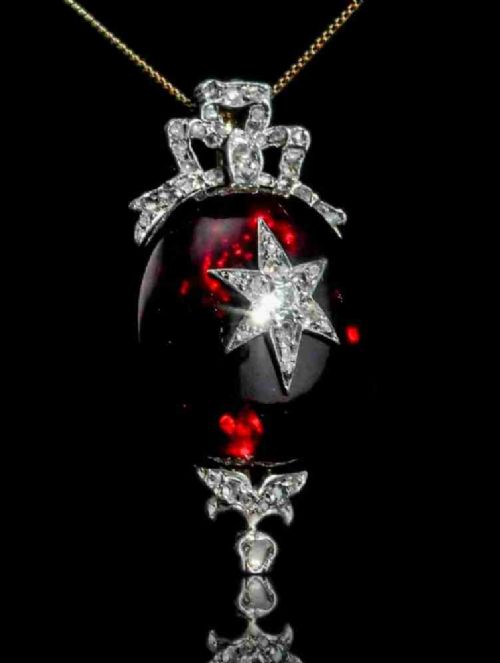
Gold celestial jewellery encompasses rings, brooches, pendants, and earrings shaped as stars, crescents, sunbursts, and planetary motifs. These pieces span the Georgian, Victorian, Edwardian, and mid-century eras, reflecting a long fascination with astronomical themes.
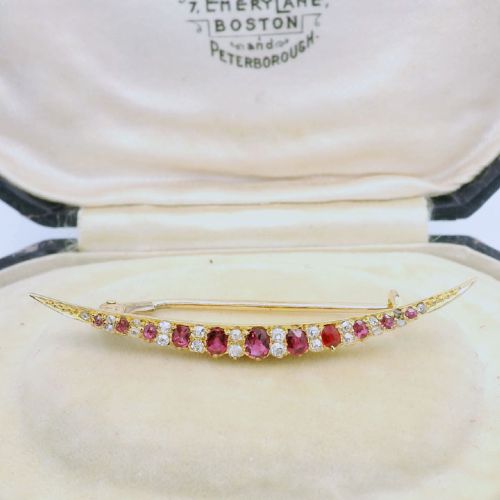
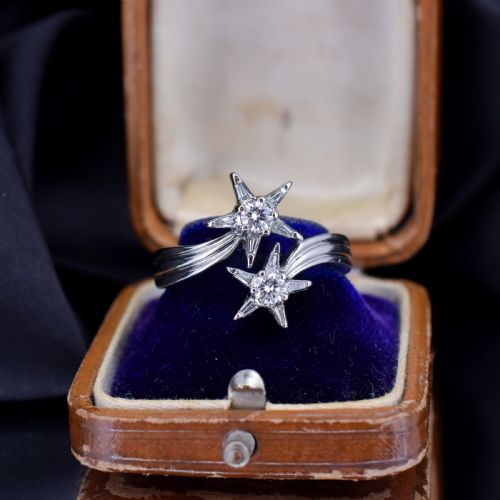
The Victorian and Edwardian periods provide the majority of these pieces, frequently combining warm yellow gold with silver settings to enhance the brilliance of old-cut diamonds. Crescent moons and starbursts dominate the surviving forms, often executed as convertible brooch-pendants or rings.
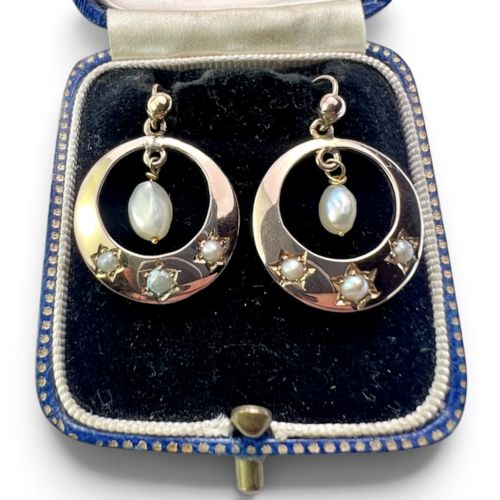
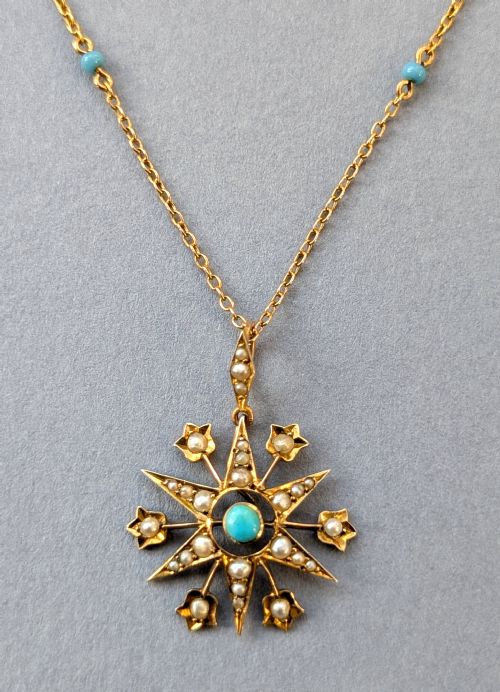
Geographical origins and maker marks vary, though many pieces survive from British and European workshops of the nineteenth and early twentieth centuries. Collectors encounter everything from delicate seed-pearl drop pendants to substantial diamond tiaras set with multiple starbursts.
Materials and Techniques
Goldsmiths utilised varying purities of yellow and white gold, alongside silver-topped gold settings, to mount sparkling diamond, ruby, sapphire, and turquoise stones. Silver was frequently employed on the face of starburst brooches to keep claw and collet settings bright against darker stones.
Lapidaries shaped diamonds in old European, rose, and old mine cuts, scattering them alongside pearls, seed pearls, and cabochon garnets or rubies to depict constellations and lunar phases. Enamel work also appeared on select rings to deepen the colour of the night sky behind gold stars.
Victorian astronomers and stargazers clearly influenced jewellers, who even fashioned rings as rings of the heavens.
Quality Variations
The calibre of gem-cutting and the precision of setting distinguish finer examples from standard work. Early hand-cut diamonds with lively facets command greater attention than dull or heavily included stones.
Structural integrity in convertible pieces, such as secure hinges and removable fittings on brooch-pendants, marks superior craftsmanship. The crispness of chased star rays and the matching of natural pearls or turquoise cabochons further elevate a piece.
Hirsch and Oppenheimer
The Gold Celestial Jewellery Glossary
- Star-set
- A gemstone embedded flush into the metal with small engraved rays radiating outwards to resemble a star. This technique was popular in Victorian rings.
- Old European cut
- An early form of brilliant diamond cut characterised by a small table, high crown, and large culet. It displays chunky facet patterns under candlelight.
- Crescent brooch
- A curved ornament shaped like a waxing or waning moon, frequently embellished with graduated diamonds, pearls, or coloured gems.
- Convertible pendant
- A versatile piece of jewellery designed to transform from a brooch to a pendant through detachable bails or pin stems.
- Gypsy set
- A ring style where gemstones are set flush into a thick tapered band of gold. It emerged in the nineteenth century for both men and women.
Gold Celestial Jewellery: Frequently Asked Questions
What periods do these pieces date from?
The selection spans from the Georgian era through the Victorian and Edwardian periods, extending into mid-century designs. Victorian examples represent the largest share of surviving astronomical pieces.
Earlier pieces often feature rose-cut diamonds and closed-back settings, while Edwardian and later pieces utilise platinum and white gold alongside yellow gold mounts.
How were star and moon motifs worn?
Celestial motifs appeared across a wide array of personal adornment, functioning as day and evening wear. Brooches were pinned to lapels or bodices, while rings adorned fingers in both solitaire and band formats.
Larger items like starbursts often doubled as pendants or featured on tiaras for formal court occasions, showcasing the versatility demanded by past owners.
Are these pieces usually marked with hallmarks?
Many older pieces bear partial hallmarks, maker marks, or purity stamps, though numerous antique items have lost marks through sizing or wear. British standards often show carat marks such as nine, fifteen, or eighteen carat gold.
Unmarked pieces are normally assessed through metal testing, construction techniques, and the cutting style of the accompanying gemstones.
How do I care for antique gemstone jewellery?
Gentle cleaning with a soft brush and warm soapy water suits most gold and diamond items, avoiding harsh chemical dips. Pearls and turquoise require particular care as they are porous and sensitive to moisture and cosmetics.
Storing pieces individually in soft pouches prevents delicate stones like turquoise and seed pearls from scratching against diamonds or hard metals.