
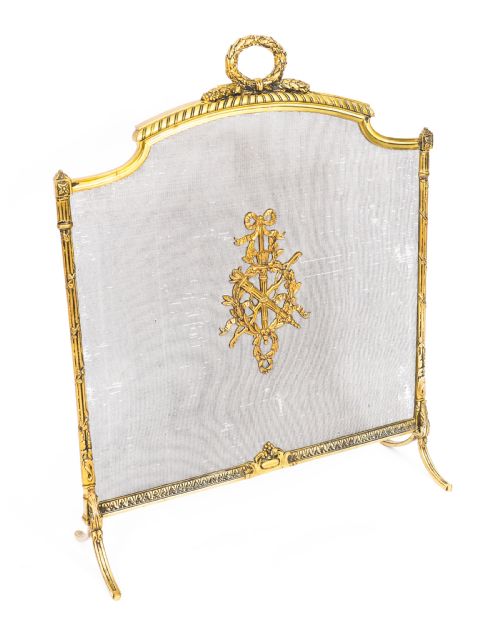


Gold Bronze Hearth Guards
Gold bronze hearth guards bring warmth and French revival grandeur to a room, offering both decorative splendour and protection around the fireplace.
Gold Bronze Hearth Guards
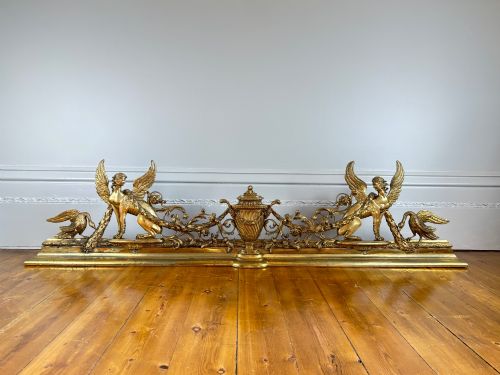
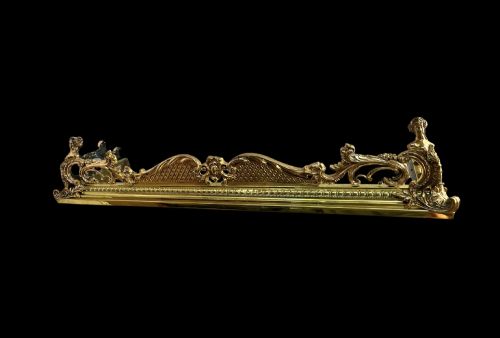
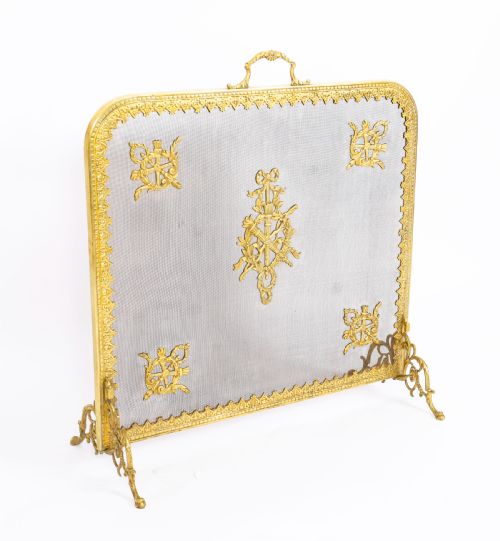
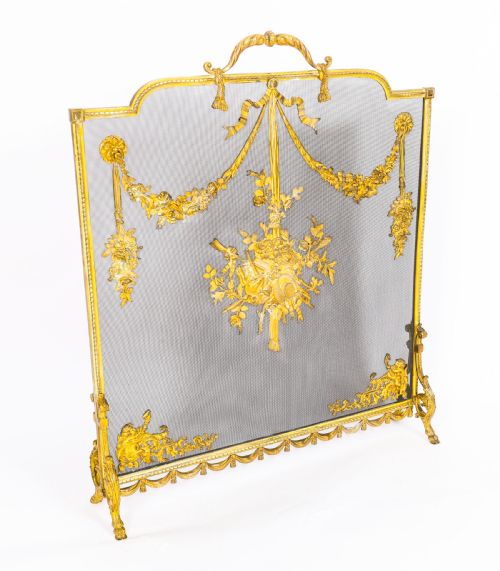
When you search for gold bronze hearth guards, you encounter an array of ornate fireplace accessories designed to shield a room from embers. These pieces primarily manifest as fire screens, fireplace fenders, and chenets originating from the nineteenth century.
The versions you are most likely to meet on this page span the Victorian era and the years around nineteen hundred. They frequently display revival styles such as Louis XV, Rococo, and French Empire.
Makers and designers from this period utilised rich decorative motifs including floral trophies, musical instruments, and classical trophies. Such items transform a utilitarian hearth into a focal point of interior design.
Materials and construction methods
Craftsmen built these guards using heavy metals such as cast iron, steel mesh, and brass to provide a sturdy structural core. Gilt bronze, ormolu, and gilded bronze were then applied to create a lustrous golden finish.
Intricate decorative elements were cast and chased by hand before being mounted onto wire mesh or solid frames. This combination of durable base metals and gleaming surface gilding defined the production of high-end nineteenth century fire furniture.
Listings feature items from the Victorian period alongside pieces dated around eighteen hundred, eighteen sixty, eighteen seventy, eighteen ninety, and nineteen hundred.
Assessing quality and craftsmanship
Quality in these pieces rests upon the crispness of the casting and the depth of the hand-chasing on the ormolu and gilt bronze surfaces. Superior examples display sharply defined motifs and robust construction rather than soft details or weak joints.
The sophistication of the revival style also dictates the standing of a piece, with complex Rococo and Empire compositions requiring greater artisanal skill than simpler linear designs.
E F Caldwell New York
The Gold Bronze Hearth Guards Glossary
- Ormolu
- Finely ground high-carat gold mercury-gilded onto a bronze or brass object. This technique imparts a rich, lasting golden sheen to nineteenth-century metalwork.
- Chenets
- Andirons or firedogs placed on the hearth to support logs. They often match or accompany fire screens and fenders in a unified fireplace scheme.
- Fender
- A low metal guard placed around the hearth opening. It contains ash and keeps stray embers from rolling onto the floorboards.
- Fire Screen
- A decorative panel placed before an unlit fireplace during warmer months. It shields the room from the dark void of the hearth while displaying intricate metalwork.
- Rococo Revival
- A nineteenth-century design movement favouring asymmetrical curves, scrollwork, and naturalistic floral motifs. It draws inspiration from the eighteenth-century reign of Louis XV.
Gold Bronze Hearth Guards: Frequently Asked Questions
What is a gold bronze hearth guard?
A gold bronze hearth guard is a decorative fireplace accessory, such as a screen or fender, made from gilded metal. These pieces were designed to protect rooms from sparks while enhancing the interior aesthetic.
They reflect historical French revival styles and serve as major decorative statements in period rooms.
How do I use a fire screen?
Fire screens are traditionally placed in front of the fireplace opening when the fire is not actively burning. They conceal the grate during summer months and add decorative interest to the hearth.
Some designs also functioned to shield occupants from the intense radiant heat of an open fire.
What is the difference between ormolu and gilt bronze?
Ormolu specifically refers to the historical French process of applying finely ground gold amalgam to a bronze base. Gilt bronze is a broader term for bronze objects that have been covered in a golden surface layer.
Both materials were widely utilised in nineteenth-century hearth furnishings for their luxurious finish.
How do I date a nineteenth century fender?
Dating these items involves examining the casting techniques, the specific revival style, and any maker signatures or stamps. Victorian and late nineteenth-century pieces often combine machine assistance with hand finishing.
Stylistic cues such as Empire trophies or Rococo scrolls help narrow down the period of manufacture.