


French Bronze Andirons
French bronze andirons are substantial hearth furniture cast and gilded to warm formal rooms with classical or rococo ornament.
French Bronze Andirons
French bronze andirons sit within the broader category of fireplace accessories and firedogs, serving both a structural purpose in supporting logs and a decorative role on the hearth. When exploring french bronze andirons, buyers encounter matching pairs designed to anchor an open fireplace with metalwork sculpture.
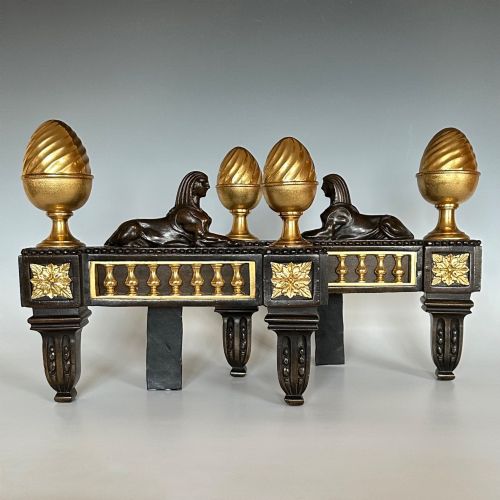
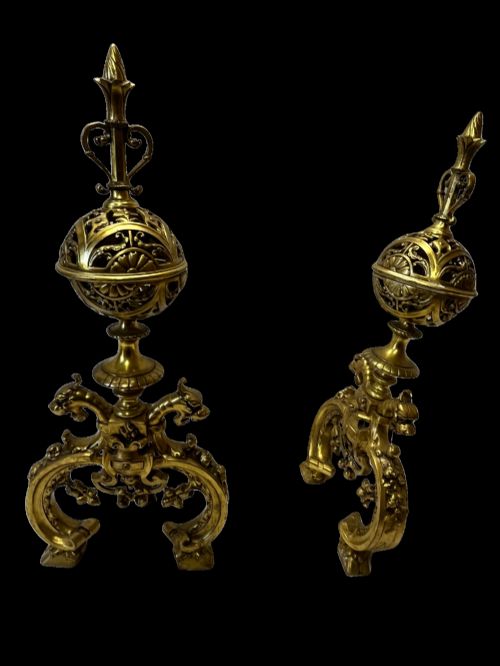
The pieces appearing on this page span several distinct periods including the eighteenth century, the Regency era, and the late nineteenth century. Common stylistic expressions among these listings include French Rococo, Rococo Revival, Louis XIV Revival, French Empire, and Neoclassical designs.
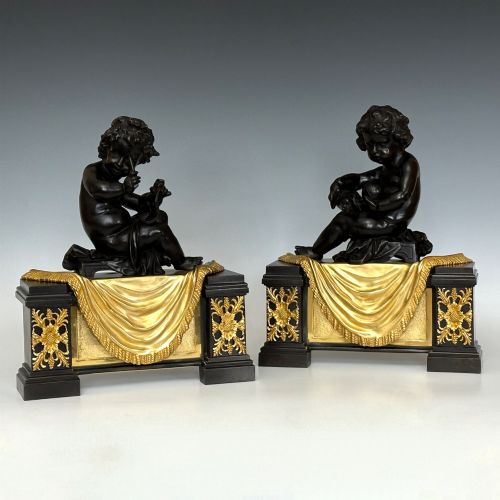
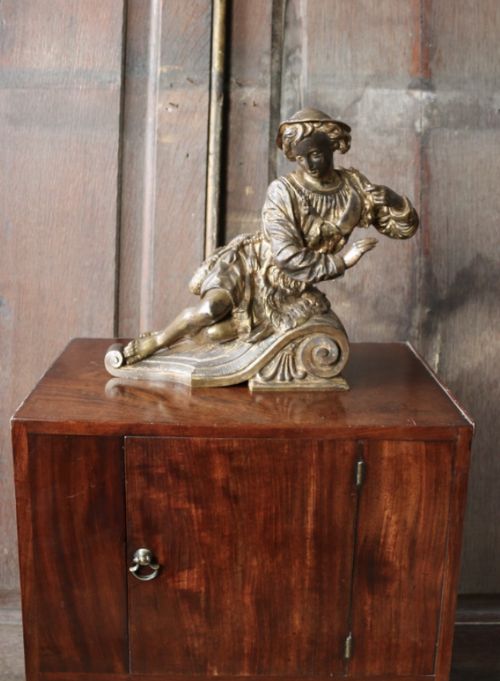
Makers and metalworkers fashioned these hearth furnishings into various figurative and architectural forms, including cherub motifs, caryatids, and statuettes. Alongside standard bronze construction, many examples incorporate ormolu, parcel gilt surfaces, cast iron components, and gilded brass.
How they were made
The primary metalwork relies on bronze, cast brass, and cast iron to provide structural heft and durability against intense hearth heat. Artisans shaped these core metals through casting techniques before assembling the modular components of each andiron.
Surface embellishment frequently involves ormolu, gilt bronze, and parcel gilding to catch the flickering light of an open fire. These golden applications highlight the intricate details of rococo curves, cherub figures, and classical revival motifs.
Cherubs and caryatids bravely hold up heavy logs through centuries of indoor smoke.
What varies in quality
The distinction between standard hearth hardware and exceptional decorative metalwork rests on the crispness of the chased detail and the depth of the gilding. Superior examples display sharply defined figural casting where facial expressions and drapery folds remain distinct.
Proportion and weight also dictate the tier of a pair, with finer specimens utilising heavier bronze foundations paired with rich ormolu mounts. The harmony between the bronze body and its gilded accents reveals the skill of the original foundry.
The French Bronze Andirons Glossary
- Andiron
- A metal support for firewood used in an open fireplace. Also known as a firedog or chenet.
- Ormolu
- Finely ground high-carat gold applied to a bronze object using a mercury amalgamation process. This technique creates a durable and brilliant golden surface finish.
- Chenet
- The French term for an andiron or fire dog. These decorative metal supports often feature prominent figural or architectural frontispieces.
- Parcel Gilt
- A decorative treatment where only specific portions of an object receive gold leaf or gilding. This method creates contrast between the dark bronze and the bright golden highlights.
- Caryatid
- A sculpted female figure serving as an architectural support. In fireplace accessories, these figures often form the main upright body of the andiron.
French Bronze Andirons: Frequently Asked Questions
How were andirons used in the hearth?
These metal supports held logs off the hearth floor to allow proper airflow beneath the fire. This positioning helped wood burn more efficiently while protecting the masonry behind the hearth.
Beyond simple utility, the ornate front stands remained visible even when the fireplace was unlit. They acted as permanent sculptural fixtures within the principal rooms of a grand interior.
What is the difference between chenets and andirons?
The terms describe the exact same object class used for supporting firewood in an open hearth. Chenet is simply the traditional French term frequently applied to continental European metalwork.
English inventories often use andirons or fire dogs for identical forms. On this page, the designations appear interchangeably depending on the listing's terminology.
How do I distinguish between eighteenth and nineteenth-century pieces?
Eighteenth-century examples typically display the authentic casting characteristics and wear patterns of the period's rococo or neoclassical movements. Metal composition and hand-chasing methods offer strong clues to age.
Nineteenth-century pieces often reflect revival styles such as Louis XIV or Rococo Revival. Makers during this later era consciously replicated earlier aesthetics while employing contemporary foundry practices.
How do I care for bronze and ormolu on a hearth?
Dust these metal pieces gently with a soft, dry cloth to prevent the accumulation of soot and airborne debris. Avoid using harsh chemical polishes that can strip away historic gilding or damage the bronze patina.
If placed near an active fire, ensure the metalwork is positioned safely away from direct flame and extreme heat spikes. Protective screens help shield delicate ormolu surfaces from flying sparks and ash.