
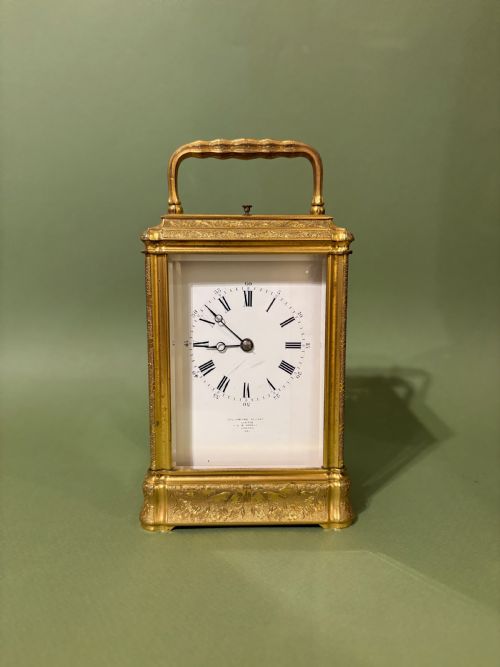
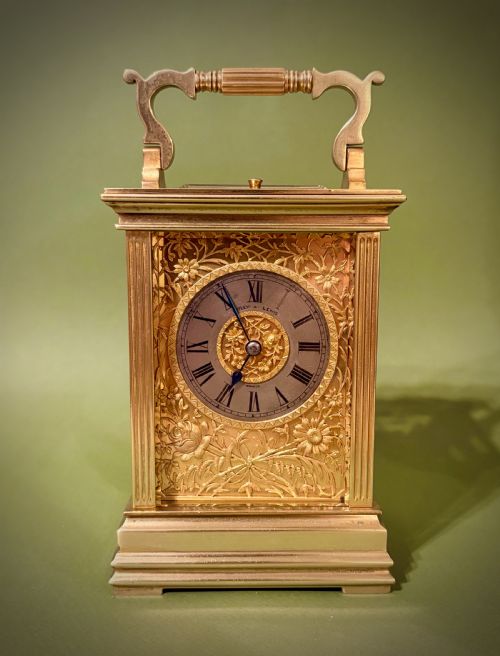
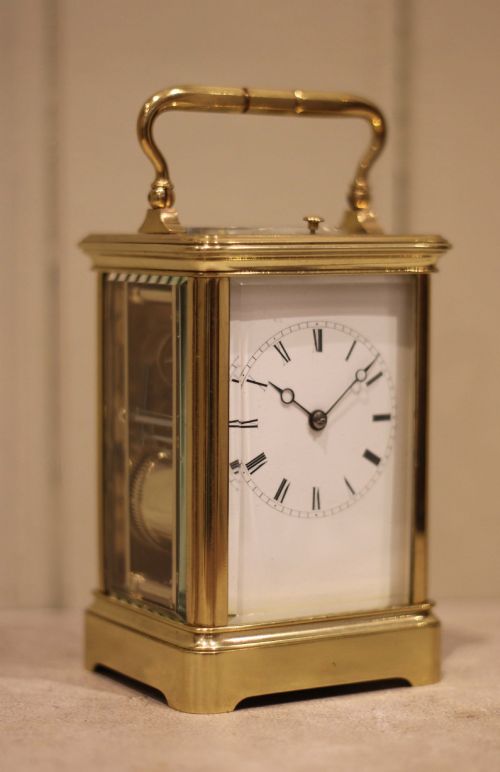
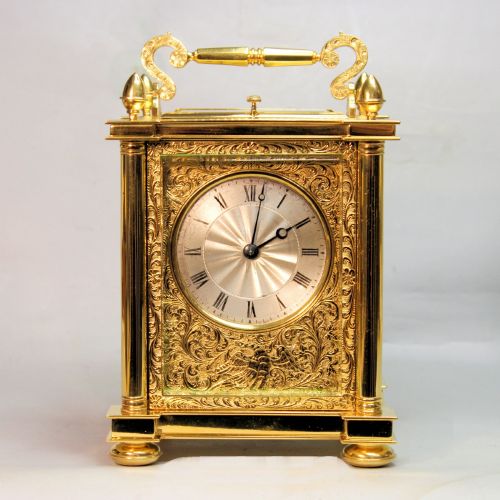
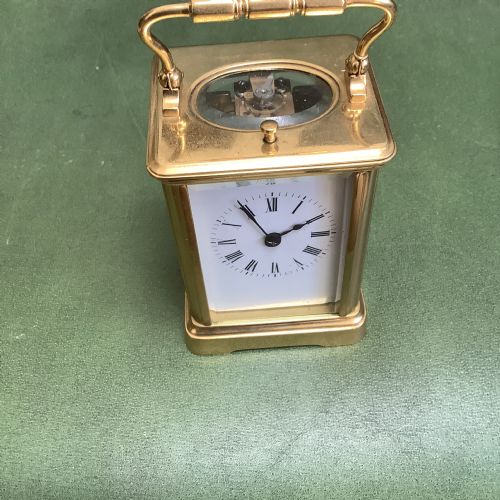
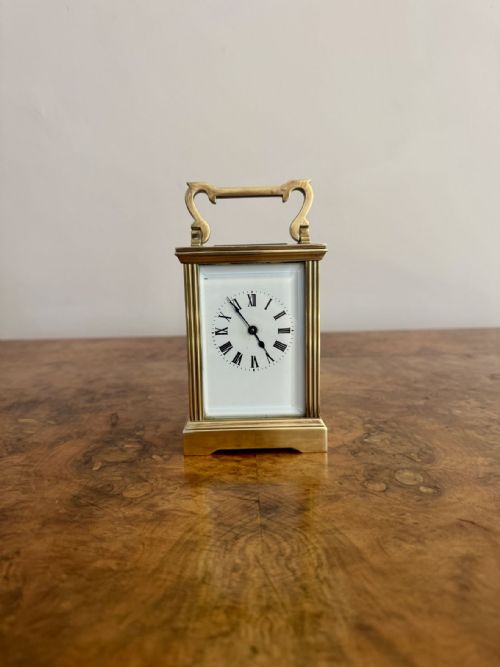
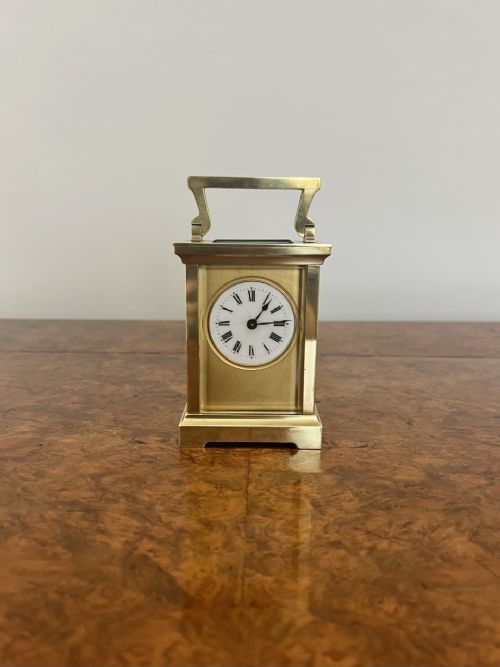

Gold Brass Carriage Clock
These gold brass carriage clock pieces bring substantial nineteenth-century weight and refined French mechanical engineering directly to a desk or mantelpiece.

What a gold brass carriage clock is
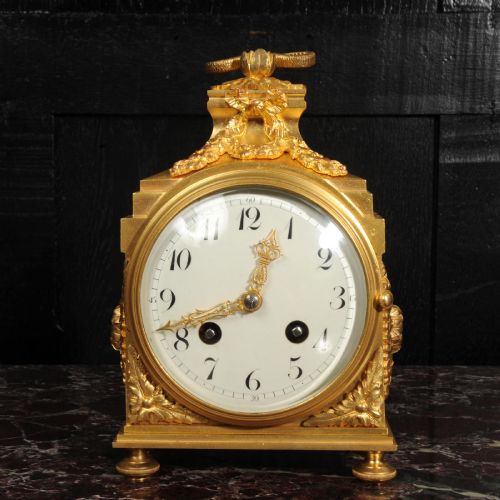
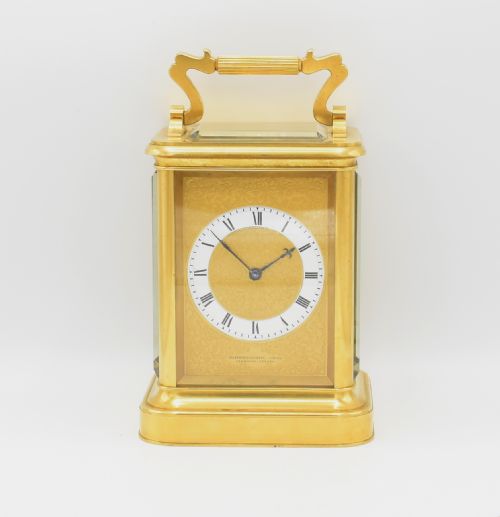
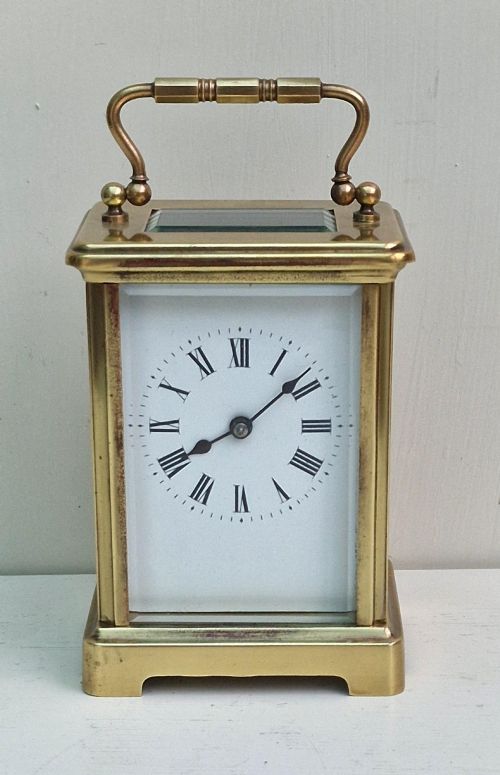
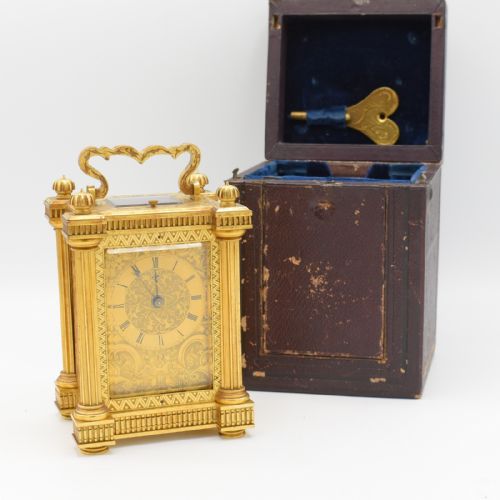
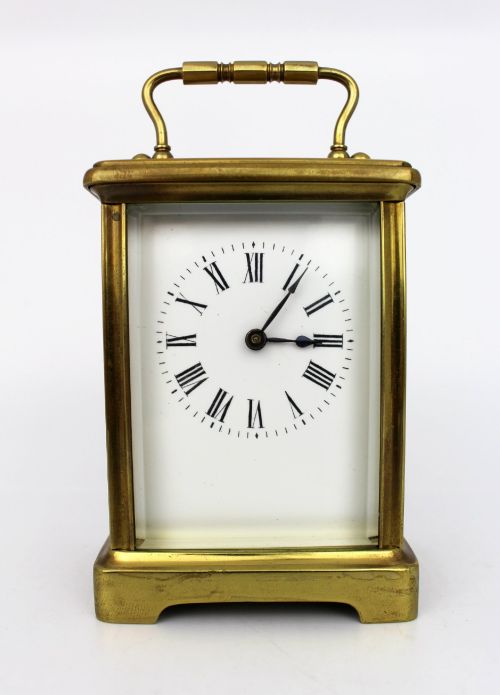
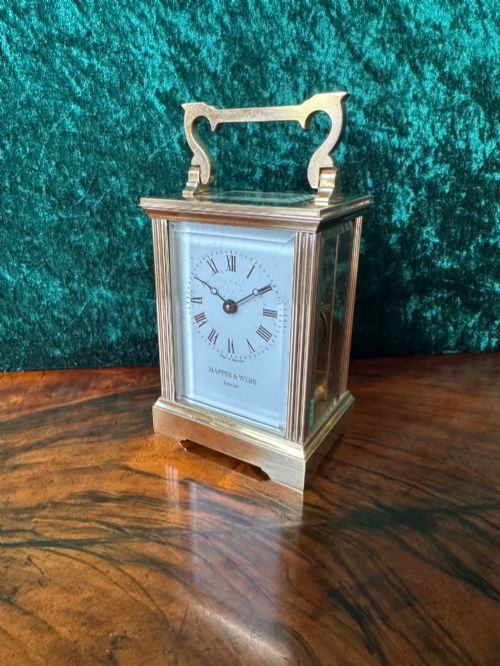
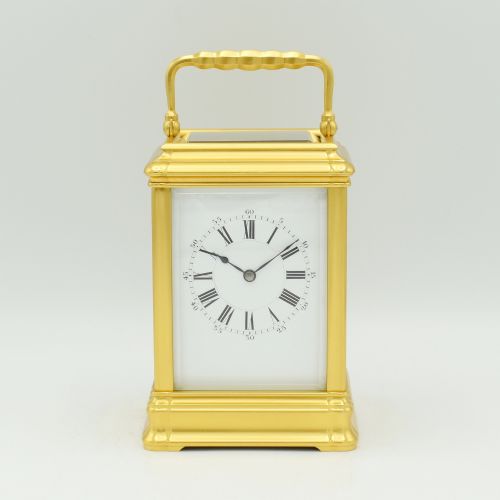
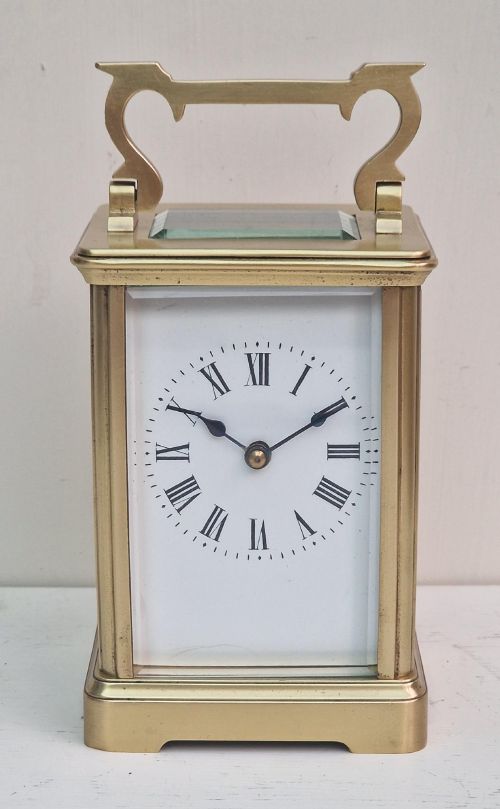
A gold brass carriage clock brings together portable horology and decorative metalwork, spanning periods such as 1870, 1890, and 1900. These items encompass distinct forms including miniature carriage clocks, architectural carriage clocks, gorge case carriage clocks, and related French four glass mantel clocks or longcase clocks.
The objects appearing on this page reflect Victorian and Edwardian tastes, alongside 19th Century French, Classical Revival, and Rococo Revival styles. Buyers encounter both compact miniature examples and larger architectural pieces designed for prominent display.
How they were made
Maker workshops constructed these timepieces primarily using brass, gilt bronze, and gilded brass, shaping metal housings to hold mechanical clockwork. Glass panels fitted into frames allow a clear view of internal gears.
Many examples incorporate enamel details, while certain pieces feature faux tortoiseshell elements for added texture. Mechanical builds on select items include bell striking, repeating, and alarm complications.
Retail Price Guide 2026
Typical UK retail prices for gold brass carriage clock, calculated from the Sellingantiques database of over a million retail prices indexed since 2003. This retail price guide relies exclusively on Sellingantiques data; no external sources or auction records are used, so the figures do not describe the wider market.
Object forms include standard carriage clocks, miniature versions, architectural designs, and associated mantel or longcase clocks.
What varies in quality
Quality separates standard mass production from superior work through the crispness of cast metal ornamentation and the refinement of architectural proportions. Heavy gilt bronze and detailed engraving elevate an object above simple stamped brass construction.
Complexity of movement also divides ordinary items from exceptional ones, particularly when mechanisms include multiple complications like striking, repeating, and alarm functions within a gorge case.
The Gold Brass Carriage Clock Glossary
- Carriage clock
- A portable spring-driven timepiece originally designed for travellers during the nineteenth century. These clocks typically feature a rectangular brass case with glass panels and a handle on top.
- Gorge case
- A distinct carriage clock case style defined by stepped mouldings around the top and bottom plates. This form represents classic French manufacturing standards.
- Gilt bronze
- Metalwork coated with a thin layer of gold, providing a rich metallic finish that resists tarnish. It appears on finer architectural and decorative clock housings.
- Repeating mechanism
- A complication that allows the clock to repeat the last hour or quarter-hour strike upon demand by pressing a button. This technical feature indicates higher grade workshop production.
- Enamel
- A smooth, fused glassy substance applied to clock dials for numerals and markings. Clean enamel work ensures long-term legibility and decorative polish.
Frequently Asked Questions
How do I wind a carriage clock?
Wind the mainspring using a dedicated key inserted into the arbours found on the back plate. Turn gently until resistance indicates the spring is fully tensioned.
Take care not to overwind the movement, as this strains the internal mechanism and damages vintage components.
Where should I place a carriage clock?
Position the clock on a stable, level surface such as a desk, mantelpiece, or bookshelf away from direct sunlight and draughts. A steady base ensures the pendulum or escapement beats evenly.
Avoid high-humidity environments like kitchens or bathrooms, which can tarnish the brass and degrade delicate internal parts.
How do I identify the period?
Examine the style of the brass casting, dial materials, and overall proportions to gauge whether a piece belongs to the Victorian, Edwardian, or nineteenth-century French eras. Decorative motifs like Classical or Rococo revival details often point to specific manufacturing decades.
Internal movement stamps and escapement types also offer reliable clues regarding production dates between 1870 and 1900.