

French Brass Desk Clock
A French brass desk clock brings domestic precision and nineteenth-century craftsmanship into a modern study or mantelpiece.
French Brass Desk Clock
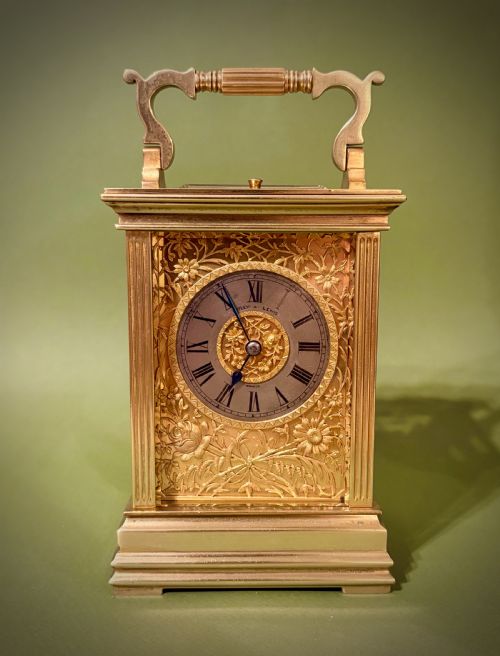
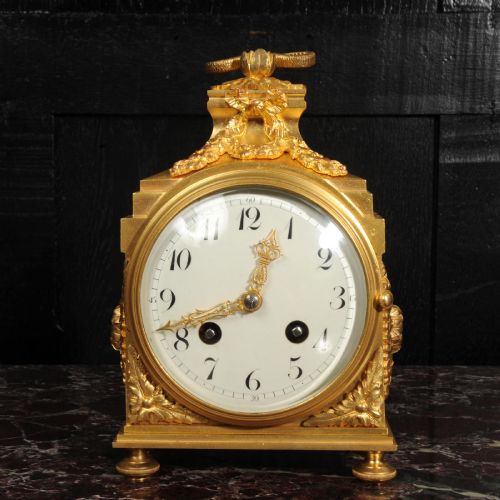
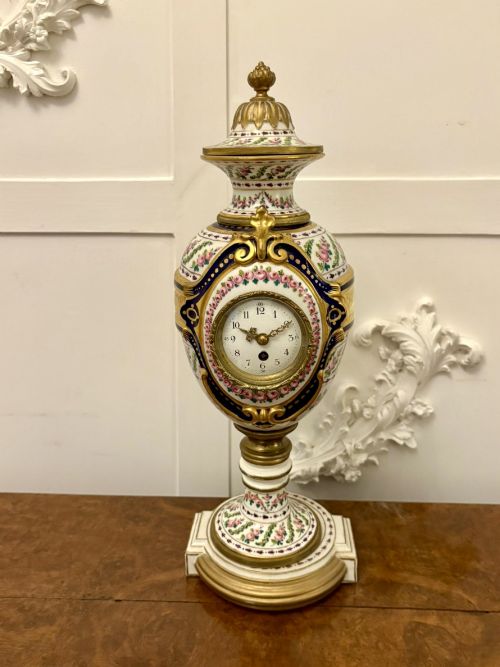
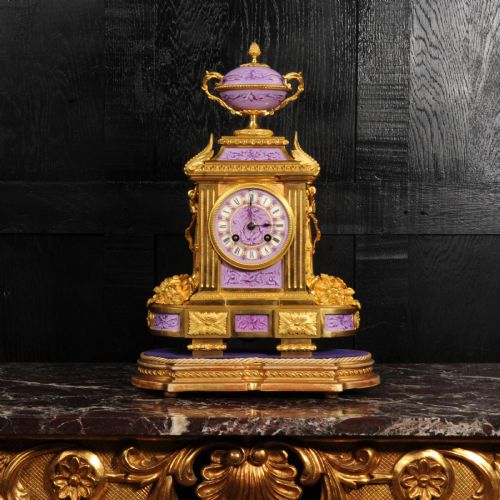
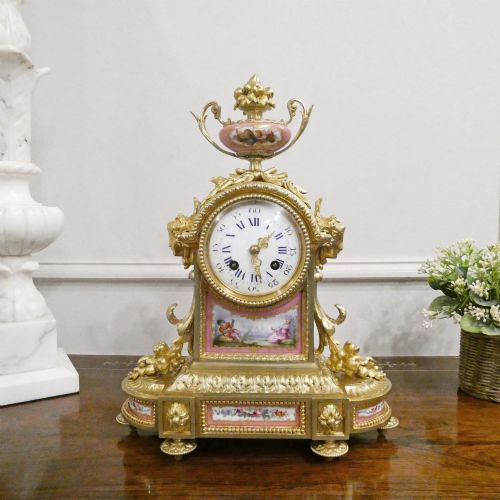
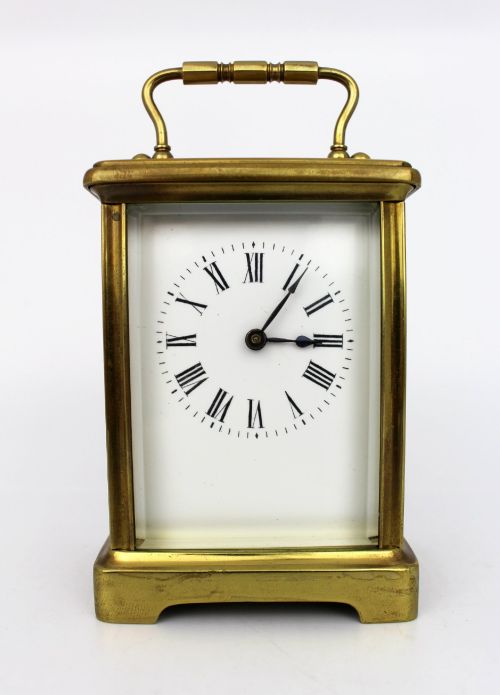
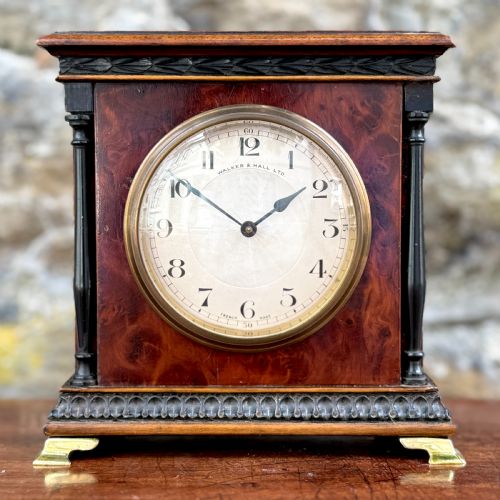
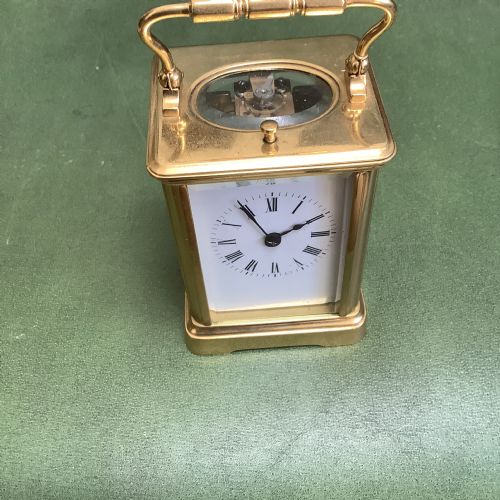
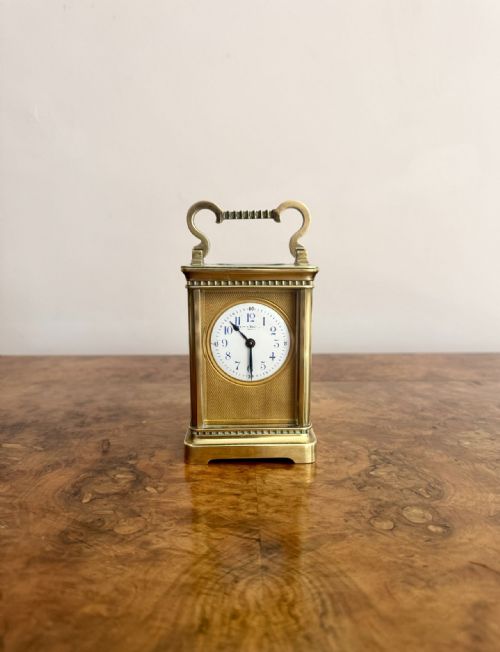
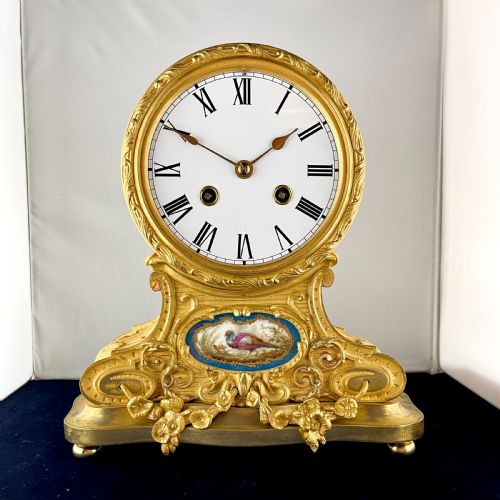
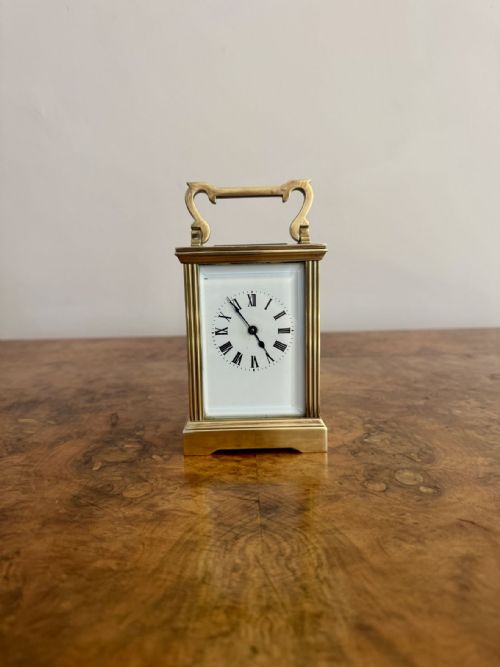
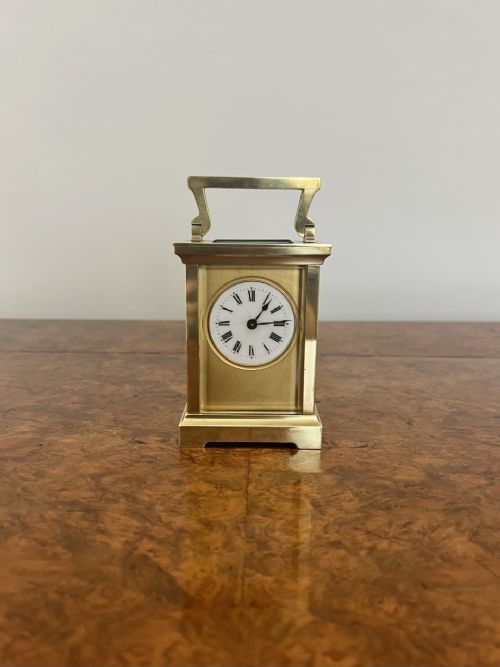
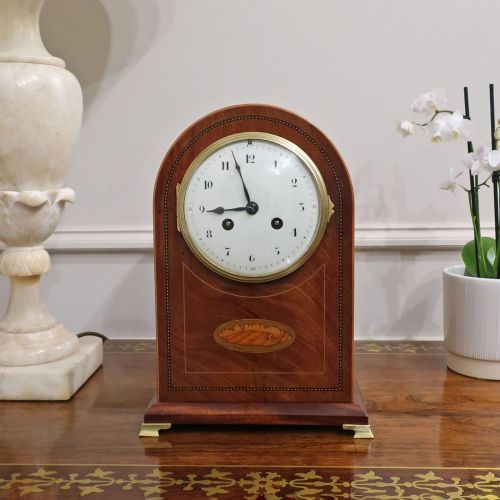
A French brass desk clock most commonly appears on this page as a carriage clock, mantel clock, or small timepiece housed in brass, gilt bronze, or ormolu. These objects date predominantly from the nineteenth century through the Edwardian period and the Belle Epoque, spanning styles from Victorian and French Empire to Rococo Revival.
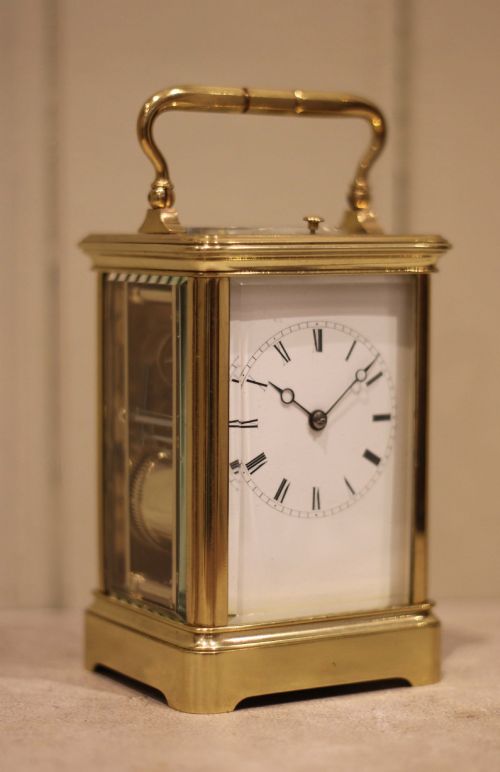
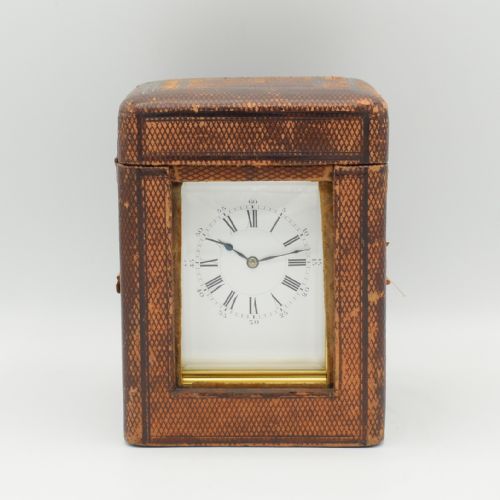
Carriage clocks dominate the selections, often featuring bevelled glass panels and travel cases intended for portability during the Victorian era. Alongside these, buyers encounter larger mantel clocks, drumhead clocks, and porcelain-mounted garniture sets that reflect the decorative tastes of nineteenth-century France.
Materials and construction
Maker workshops utilised heavy brass, gilt bronze, and ormolu to cast structural cases, frequently combining these metals with glass panels to display the mechanical movement within. Dials and decorative plaques often incorporate hand-painted porcelain, enamel, and Champlevé work.
Movements were engineered for reliability, incorporating escapements, striking mechanisms, and repeating functions that allowed owners to check the time in darkness. Leather travel cases accompanied portable pieces to protect the exterior gilding and glass during transit.
French Brass Desk Clock Retail Price Guide 2026
Typical asking prices for french brass desk clock among the pieces listed under this phrase on Sellingantiques today, from the lower quarter to the upper quarter. They describe what is for sale here now, not the wider market.
Early travellers relied on these heavy brass clocks to survive bumpy coach rides while still keeping track of tea time.
Evaluating craftsmanship
Superior examples display crisp casting and fine hand-engraving across the brass or gilt bronze case, whereas simpler pieces rely on plain surfaces and mass-produced components. The presence of fully engraved cases and robust eight-day movements distinguishes finer workshop output.
The integration of delicate materials such as Sèvres porcelain panels, Champlevé enamel, and intact bevelled glass indicates higher production standards. Makers who invested time in hand-painted details and complex striking or repeating trains produced objects that retain greater mechanical and decorative integrity today.
Henri Jacot·Achille Brocot·Japy Freres·Walker and Hall·Pickford of London·Canaillor of Paris·Drocourt Paris·Maurice & Marcel Moulin Favre-Bulle·Le Roy, Paris·Jaz
The French Brass Desk Clock Glossary
- Carriage clock
- A portable spring-driven timepiece designed for travel, typically fitted with a carrying handle and glass panels. These clocks originated to serve travellers in the nineteenth century.
- Ormolu
- Gilt bronze created by applying a mixture of finely powdered gold and mercury to a bronze base, then firing to drive off the mercury. This technique imparts a rich golden surface characteristic of French decorative arts.
- Champlevé
- An enamelling technique where troughs or cells are hollowed out of a metal surface and filled with vitreous enamel before firing. It creates vibrant coloured patterns across clock cases.
- Gorge case
- A stepped, rectangular brass case shape commonly found on nineteenth-century carriage clocks. The distinctive profile adds architectural depth to the exterior.
- Repeating mechanism
- A complication activated by a button or cord that chimes the last hour or quarter-hour on demand. It allowed users to tell time in a dark room.
French Brass Desk Clock: Frequently Asked Questions
How do I wind a French carriage clock?
Most carriage clocks use a dedicated key inserted into winding squares on the backplate. Turn the key gently until resistance signals the mainspring is fully tensioned.
Take care not to overwind the movement, as this can strain the internal spring mechanism and affect timekeeping accuracy.
Were these clocks meant for travel?
Carriage clocks were originally built for travellers who required portable timekeeping during nineteenth-century journeys. Their sturdy brass frames and fitted leather travel cases protected the delicate gear trains from rough movement.
Desk clocks and mantel clocks, by contrast, remained stationary in domestic rooms and offices.
What is a repeating carriage clock?
A repeating carriage clock includes an internal mechanism that chimes the hours and quarters when the owner presses a button on the top of the case. This allowed nineteenth-century users to check the time during the night without lighting a candle.
Standard timepieces lack this additional chiming complication.