



Gold Brass Candelabra Pair
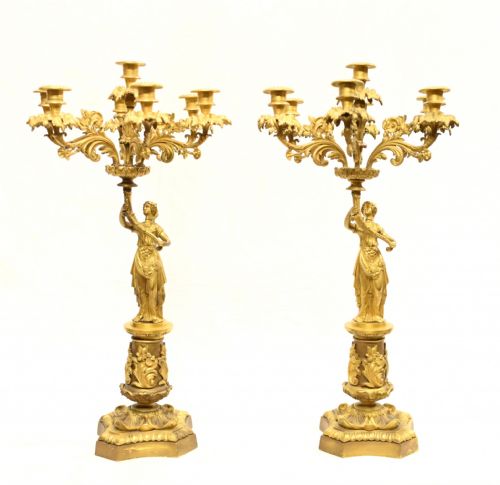
A gold brass candelabra pair brings commanding height and warm candlelit reflection to a mantelpiece or dining table.
Gold Brass Candelabra Pair
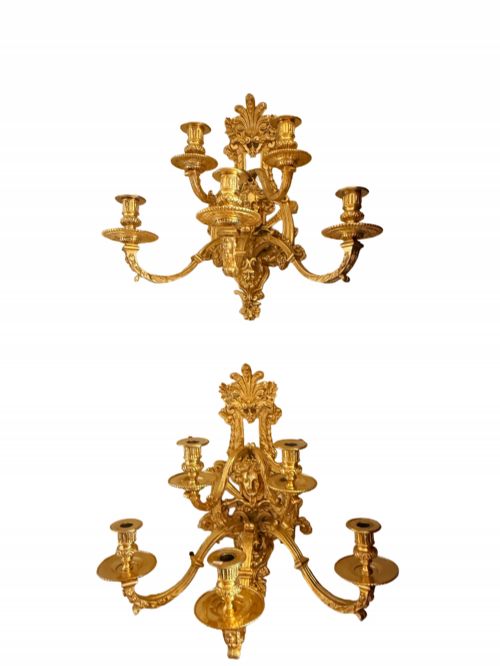
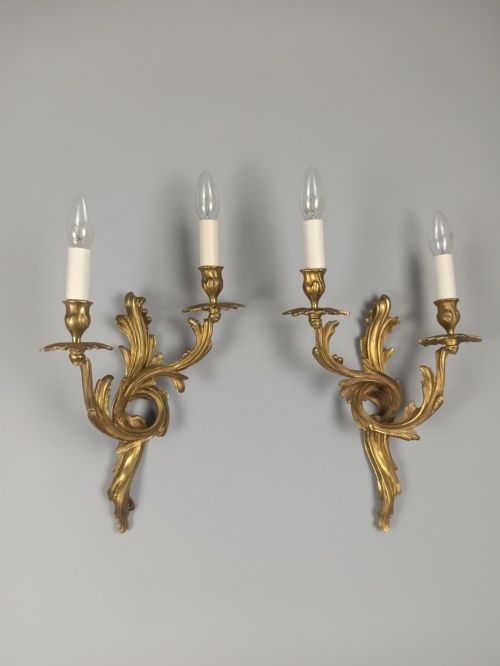
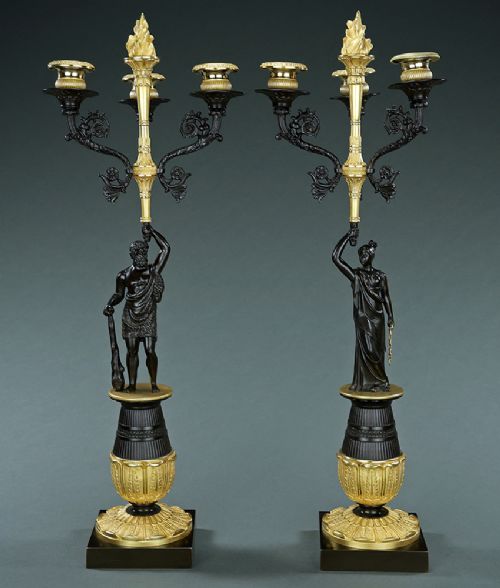
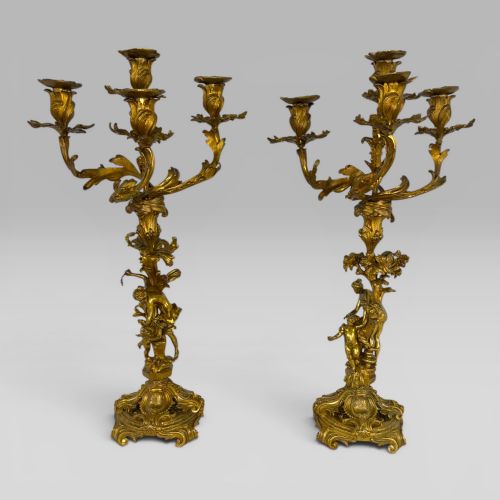
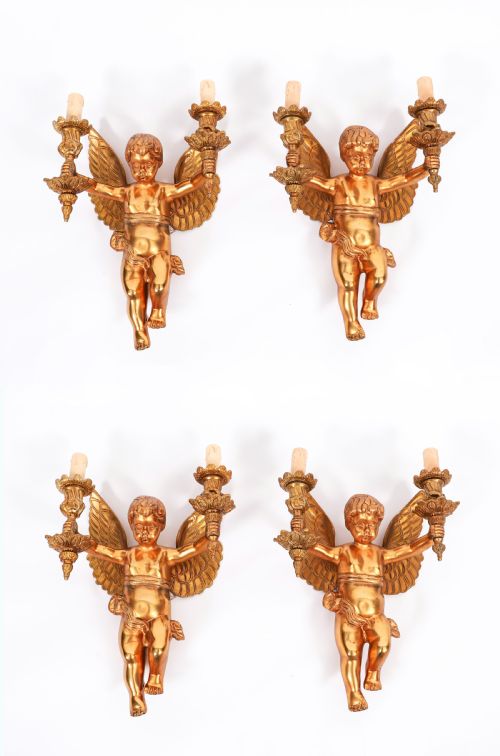
A gold brass candelabra pair consists of matched multi-branched lighting fixtures designed to hold several candles simultaneously, frequently encountered from nineteenth-century continental and domestic workshops. These symmetrical matching sets range from heavy tabletop columns to wall-mounted sconces intended to amplify interior illumination.
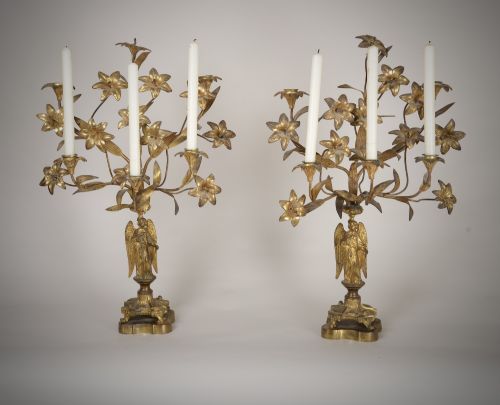
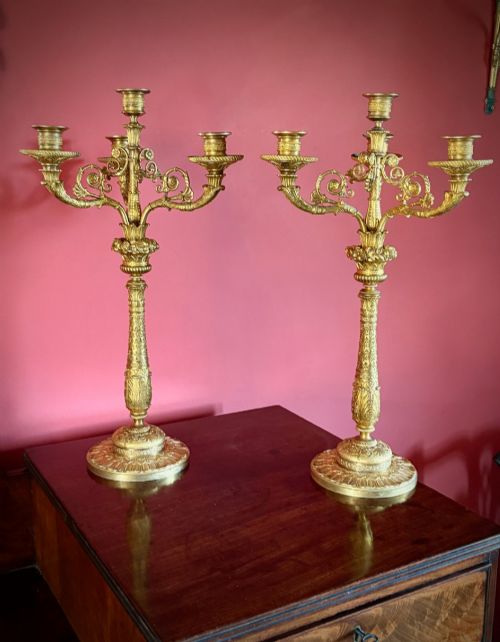
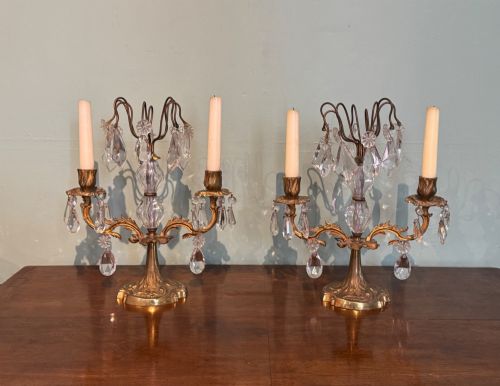
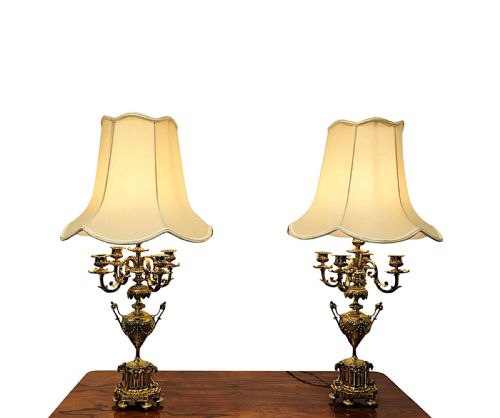
The selections span distinct stylistic revivals, with French Rococo, Empire, and Victorian interpretations appearing most often alongside Gothic and Arts and Crafts examples. Many surviving pairs incorporate multiple candle branches, sometimes adapted for electricity during later domestic modernisations while retaining their original metallic structure.
How they were made
Craftsmen utilised cast brass, bronze, and gilt metals, applying mercury gilding or ormolu techniques to impart a rich golden surface finish. These metallic components were frequently combined with carved marble bases, cut crystal drops, and porcelain elements to build complex, multi-tiered forms.
Foundry workers employed sand casting and lost-wax methods to shape intricate figural motifs, cherubs, and scrolling foliage before hand-chasing the metal surfaces to sharpen botanical details and drapery folds.
Materials documented across the inventory include gilt bronze, brass, ormolu, marble, patinated metal, and cut crystal.
What varies in quality
Quality rests upon the crispness of the metal chasing and the depth of the original gilding, where superior examples exhibit sharp relief work on cast details rather than smoothed, indistinct contours. The weight and stability of the underlying bronze or brass structure also dictate the overall standard, alongside the integration of secondary materials like veined marble or hand-cut crystal.
Artisans who devoted greater time to hand-finishing achieved significantly more lifelike figural execution in subjects such as cherubs, maidens, and mythological figures, distinguishing finer parlour pieces from standard production items.
The Gold Brass Candelabra Pair Glossary
- Ormolu
- A gilded bronze surface finish created by applying a mixture of mercury and gold to a cast bronze object. This historic technique produces a distinctive warm golden lustre.
- Candelabra
- A branched lighting fixture designed to hold multiple candles. These objects typically feature a central stem dividing into several arms.
- Patinated Metal
- Metal surfaces showing a natural or chemically induced ageing effect. This darkening or coloration develops over decades of exposure to air.
- Gilt Bronze
- Bronze metal coated with a thin layer of gold leaf or gold wash. It provides durable corrosion resistance alongside a decorative metallic sheen.
Gold Brass Candelabra Pair: Frequently Asked Questions
How do I clean a brass candelabra pair?
Dust the metal gently with a soft dry cloth to prevent surface grime accumulation over time. Avoid harsh commercial dips that can strip delicate gilt layers.
For stubborn marks, use warm water with mild soap on a damp cloth, drying immediately to protect the underlying brass or bronze finish.
Were these originally wired for electricity?
Nineteenth-century examples were designed exclusively for wax candles or oil before widespread domestic electrification. Many surviving sets were converted later in their lifespan to function as table lamps.
Conversion methods vary, with some alterations allowing the original candle sockets to remain intact alongside modern wiring.
How do I distinguish French styles from Victorian ones?
French designs from the nineteenth century frequently showcase exuberant Rococo curves, Neoclassical symmetry, or dramatic Empire motifs like military trophies and classical figures. Victorian British pieces tend toward heavier proportions, Gothic revival elements, or ornate ecclesiastical altar designs.
Examining the casting quality and secondary materials like marble or porcelain often clarifies the regional origin.
Can I use real candles in antique candelabras?
Standard taper candles fit securely into traditional nozzle cups, though dripless wax varieties help protect the metallic arms from accumulation. Ensure the candelabra stands on a level, stable surface away from drafts.
Check that the internal sockets are clear of old wax residue before inserting new candles.