


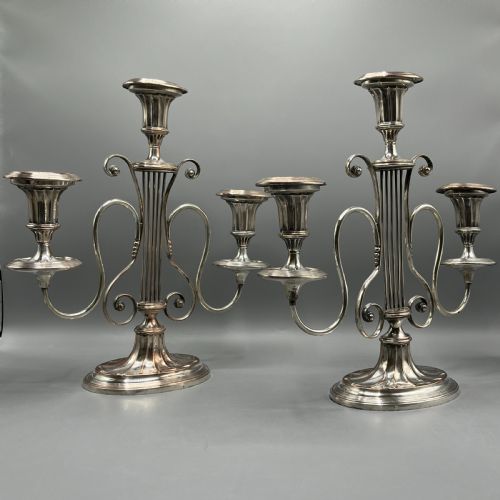


Triple Light Candelabra
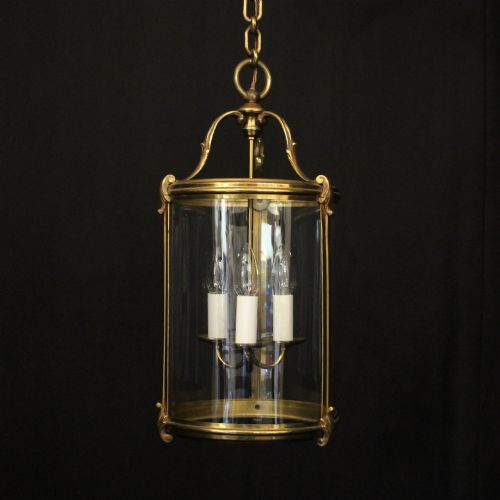
These triple light candelabra pieces bring balanced illumination and period presence to a room, ranging from Georgian silver to gilded French brass.
Triple Light Candelabra
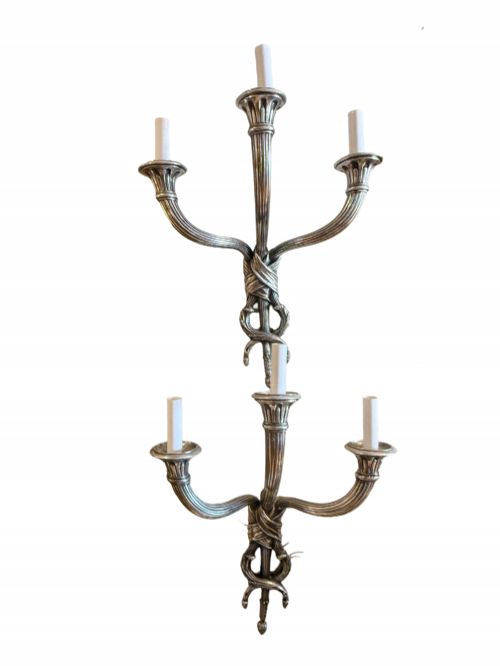
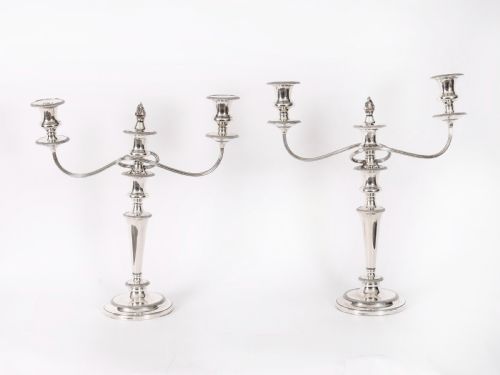
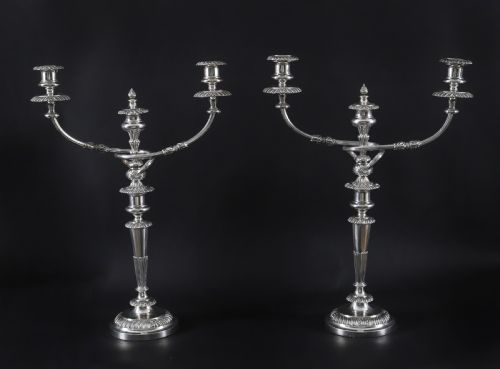
A triple light candelabra provides three branches for candles or wired fittings, designed as table centrepieces or wall sconces. When you search for triple light candelabra, you encounter items spanning the eighteenth century through to the interwar period.
The nineteenth century and the early decades of the twentieth century supply the largest number of pairs on this page. Formats vary from table candelabra to wall lights and hall lanterns sharing the same three-branch division.
Origin points divide between British workshops using Sheffield plate and silver, and continental makers favouring gilded bronze, brass, and carved giltwood.
Materials and construction methods
Metals form the core of these objects, utilising cast brass, bronze, copper, and silver plate over base metals. Silversmiths and founders employed traditional casting and chasing techniques to build structural rigidity into each branch.
Gilding and silvering techniques bring surface colour, from fire-gilt bronze to applied silver leaf on carved wooden frames. Crystal drops and accents appear on specific French and Italian designs, suspended from metal armatures.
Plating methods evolved from early fusion processes like Old Sheffield Plate to later electroplating techniques seen on Victorian and Edwardian examples.
Cherubs occasionally join the branches, reminding us that eighteenth-century lighting designers took divine intervention very literally.
Distinctions in quality and execution
The choice of base material and the durability of the surface plating or gilding separate workshop levels. Heavy gauge cast brass or bronze outlasts lighter stamped alternatives, while genuine fire gilding holds a warmer hue than modern lacquer finishes.
Garrard & Co·Matthew Boulton·Wm. Tonks & Sons
The Triple Light Candelabra Glossary
- Sheffield Plate
- An early composite material made by fusing a thin sheet of silver to a thicker copper ingot. This technique was largely superseded by nineteenth-century electroplating.
- Giltwood
- Timber, often gesso-prepared and carved, coated in fine gold leaf. It appears frequently on Italian and French wall lights from this selection.
- Sconce
- A wall-mounted lighting fixture designed to hold candles or lamps. These examples typically feature three arms projecting from a backplate.
- Ormolu
- Finely chased bronze finished with a high-karat gold amalgamation. The term describes French gilded bronze work from the eighteenth and nineteenth centuries.
Triple Light Candelabra: Frequently Asked Questions
How do I clean antique silver plated candelabra?
Use a soft cloth and a gentle, non-abrasive silver cleaner designed for plated items. Avoid harsh dips that can strip the remaining silver layer from the underlying base metal.
Take care around soldered joints and branch junctions where the plating may be thinner. Regular dusting with a dry microfiber cloth prevents the buildup of tarnish.
Were these candelabra originally wired for electricity?
Most pieces from the Georgian and Victorian eras began life holding wax candles. Conversion to electricity often occurred later in their lifespan to suit modern domestic interiors.
Some wall lights and lanterns were designed from the outset for oil or candles before later adaptations. Check the internal channels and base drillings to understand the wiring history of a specific pair.
How do I distinguish Georgian from Victorian pieces?
Georgian items often show the characteristic weight and Sheffield plate construction methods of the eighteenth century. Design motifs lean toward classical restraint or early neoclassical symmetry.
Victorian pieces frequently display heavier cast brass, more ornate revival styles like Rococo, or denser figural work. Maker marks and assay stamps, where present, help confirm the exact period of production.
Can wall sconces support heavy glass drops?
Wall sconces equipped with crystal drops rely on secure pin or wire attachments fitted through the metal arms. The structural integrity of the backplate determines the safe weight capacity.
Ensure the wall fixings match the weight of the metal and crystal combined. Periodic checks of the hanging loops prevent accidental loss during routine cleaning.