





Antique Crystal Candelabra Pair
An antique crystal candelabra pair brings sparkling illumination and period presence to a room, uniting cut glass with metal mounts.
Antique Crystal Candelabra Pair
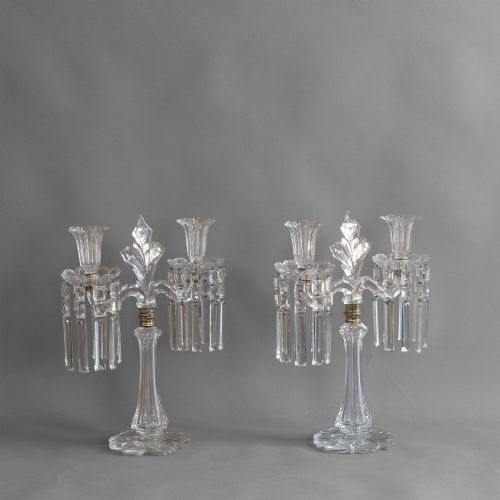
An antique crystal candelabra pair consists of matched table lighting fixtures designed to hold multiple candles, frequently adorned with hanging glass lustres. These decorative objects emerge across Victorian, Edwardian, and early twentieth-century periods, showing diverse influences from French Rococo Revival to Italian Baroque styles.
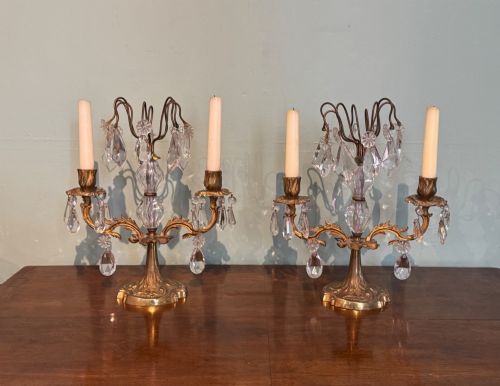
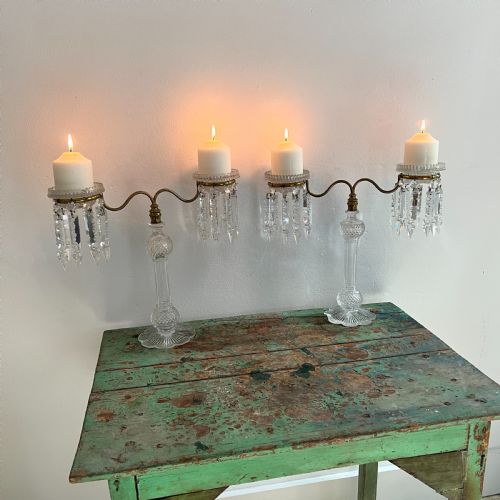
Most examples encountered on this page originate from French workshops or British makers, taking the form of multi-armed candelabra, lustre candlesticks, or converted table chandeliers. The selection includes paired items combining glass and crystal components with structural frames.
Buyers seeking an antique crystal candelabra pair will find configurations ranging from twin and triple arm table pieces to wall-mounted girandoles. The forms utilise brass, bronze, ormolu, and silvered metals alongside cut glass or crystal drops.
How they were made
The construction of these pieces combines metal casting with hand-cut glass manufacturing techniques. Founders shaped bronze, brass, or ormolu into structural arms and bases, while glassblowers and cutters produced the shafts, drip pans, and suspended lustres.
Metal components often feature gilding, patination, or silvering to contrast with the refractive quality of the crystal drops. Prisms and pendants are attached using delicate wire loops, allowing the cut glass elements to sway and catch the light.
Antique Crystal Candelabra Pair Retail Price Guide 2026
Typical asking prices for crystal candelabra pair among the pieces listed under this phrase on Sellingantiques today, from the lower quarter to the upper quarter. They describe what is for sale here now, not the wider market.
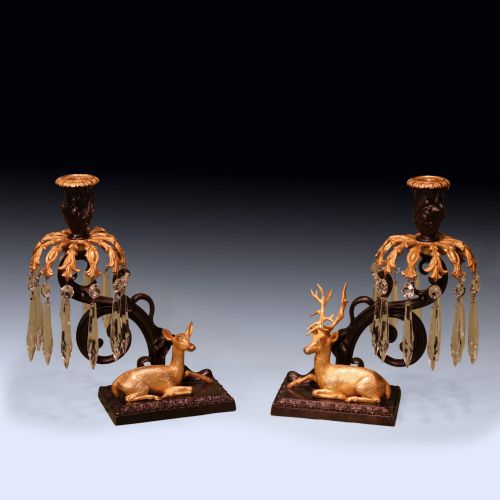
Some pairs incorporate bronze stags and does standing quietly beneath the crystal branches.
What varies in quality
Quality in these lighting pieces rests upon the crispness of the metal chasing and the depth of the glass cutting. Superior examples display sharply defined cast details in the bronze or ormolu mounts and heavy, clear crystal components with precise facets.
The harmony between the metal frame and the hanging lustres determines the visual success of the pair. Finer specimens retain their complete sets of matching glass drops and original patination on the supporting brass or bronze frames.
The Antique Crystal Candelabra Pair Glossary
- Lustre
- A glass candlestick or candelabra hung with cut glass pendants designed to refract candlelight. These pendants are suspended from the rim of the drip pan or upper bobeche.
- Ormolu
- Gilded bronze used extensively for decorative mounts on furniture and lighting fixtures. The technique involves applying a finely ground gold-mercury amalgam to a bronze base before firing.
- Girandole
- A branched wall light or candelabra featuring a mirrored backplate to multiply the reflected light. These decorative fixtures are frequently styled in ornate Rococo or Baroque revival patterns.
- Bobeche
- A small collar or disc fitted below the candle nozzle to catch melting wax. In crystal pieces, this component often supports the pins for hanging glass drops.
Antique Crystal Candelabra Pair: Frequently Asked Questions
How do I clean an antique crystal candelabra pair?
Maintenance requires gentle cleaning of each glass pendant and metal arm using a soft, dry cloth or a mild solution of warm water and liquid soap. Individual lustres should be unhooked and washed separately to prevent damage to the surrounding structure.
Avoid using harsh chemical cleaners or abrasive cloths on the ormolu, bronze, or silvered surfaces, as these can strip the original patination. Ensure every component is completely dry before reassembling the hanging crystal drops.
Were these candelabra originally wired for electricity?
Most pieces from the nineteenth and early twentieth centuries were designed exclusively for wax candles before being adapted later. Some examples incorporate contemporary conversions to table lamps or retain their original configurations without internal wiring.
When examining a pair, check the base and central shaft for evidence of past electrical work or modifications. Preserved candle pans and removable nozzles often indicate a piece maintained its original lighting function.
How do I identify French styles in these pieces?
French lighting designs from the periods represented often display characteristic Rococo Revival or Empire motifs such as scrolling foliage, asymmetrical curves, and classical figures. The inclusion of 'Au Bon Sauvage' or chateau-inspired themes points directly to continental decorative traditions.
Examining the metalwork reveals the distinct hand-chasing and gilding techniques typical of Parisian workshops. The integration of bronze, ormolu, and crystal reflects the high standards of nineteenth-century French metal and glass artistry.