




French Crystal Table Lights
French crystal table lights combine cut glass and gilt metal to illuminate rooms with nineteenth- and early twentieth-century elegance.
French Crystal Table Lights
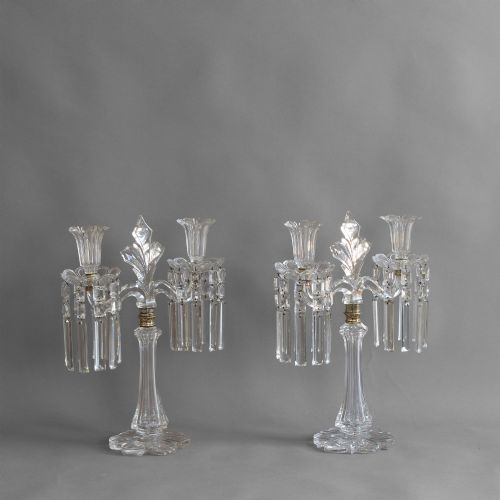
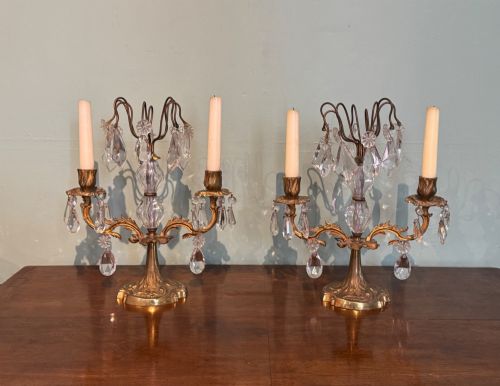
When you search for french crystal table lights, you encounter a varied selection of antique illumination ranging from candelabra and lustres to table lamps and girandoles. These pieces originate from periods spanning the nineteenth century through the 1930s, encompassing styles such as Louis XVI, Rococo Revival, and Art Nouveau.
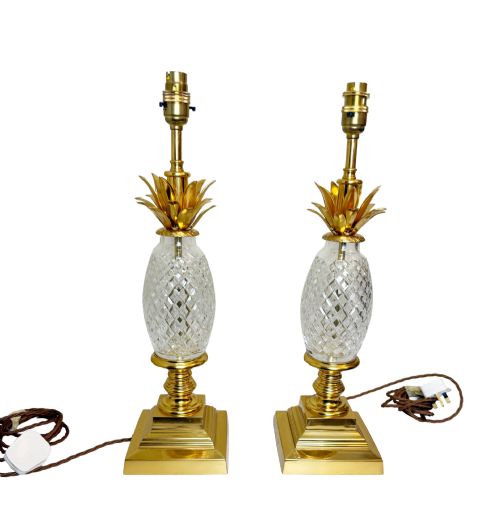
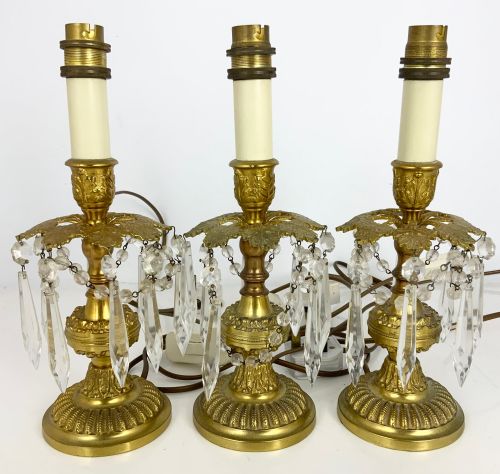
The most common formats on this page include pairs of lustres hung with cut glass drops, multi-armed candelabra fitted for candles or electricity, and columnar lamps mounted in brass, ormolu, or gilt bronze. Many examples integrate figural or architectural motifs, drawing on French Chateau, Beaux-Arts, and Belle Epoque design traditions.
The forms serve both functional and decorative roles, utilising reflective glass and crystal components to amplify the ambient glow. Whether configured as a simple candlestick or a complex multi-branch table chandelier, each object reflects the distinct aesthetic priorities of its decade of manufacture.
How they were made
The construction of these pieces relies on the combination of cast metals and worked glass. Frameworks and mounts consist of brass, gilt bronze, ormolu, and silvered metal, often shaped into foliate, figural, or architectural supports.
Pendants, drops, and columns incorporate cut crystal, cut glass, frosted glass, and opaline, shaped through moulding and hand-cutting to catch the light. Metal components are assembled using threaded fittings, pins, and sockets to secure the heavy crystal elements safely in place.
Observed periods span from 1870 through the Edwardian era and the 1930s, encompassing various nineteenth-century styles.
What varies in quality
Quality in these lighting pieces depends upon the crispness of the metal casting and the depth of the hand-cut facets on the glass. Finer mounts display sharp chasing and secure, heavy gilding, whereas simpler versions exhibit softer surface detail and lighter metal gauges.
The integration of the crystal elements further separates standard production from superior work. Well-made examples feature thick, clear drops with matching prisms and solid stone or metal bases that balance the weight of the upper branches.
The French Crystal Table Lights Glossary
- Lustre
- A decorative table ornament featuring a central stem hung with cut glass pendants designed to reflect candlelight. These fixtures often double as small candelabra.
- Ormolu
- A metallic technique involving the application of finely ground high-carat gold to a bronze base. This finish provides a warm, durable golden sheen to the metal mounts.
- Girandole
- A branched candleholder or light fixture featuring reflective mirrored or crystal backplates. The form is designed to multiply the illumination within a room.
- Opaline
- A type of semi-translucent glass popular in nineteenth-century French decorative objects. It yields a milky, pastel appearance that diffuses light softly.
- Candelabra
- A multi-branched candlestick designed to hold several candles simultaneously. Antique French versions frequently incorporate crystal drops along the arms.
French Crystal Table Lights: Frequently Asked Questions
What is a table lustre?
A table lustre is an ornamental candleholder adorned with suspended crystal pendants designed to catch and scatter light.
These pieces function primarily as decorative centrepieces on side tables or mantelpieces rather than reading lamps.
Were these lamps originally electric?
Most pieces from the nineteenth and early twentieth centuries were built to hold candles or oil before being converted to electricity later.
Wiring is typically added through the central column without altering the historic metal or glass components.
How do I identify Louis XVI style?
Louis XVI style pieces feature classical symmetry, straight fluted columns, and restrained geometric or architectural ornamentation.
This aesthetic contrasts with the more flowing, asymmetrical curves found in earlier Rococo Revival designs.
What is the difference between ormolu and gilt brass?
Ormolu consists of gold mercury gilding applied to a bronze substrate, producing a rich and enduring golden lustre.
Gilt brass utilises a brass base metal with applied gold leaf or wash, resulting in a slightly lighter tone and weight.
How should I clean antique crystal drops?
Clean crystal drops gently by hand using lukewarm water and a mild detergent, wiping each prism individually.
Avoid submerging mounted metal frames to protect historic patinas and delicate gilt surfaces from moisture damage.