
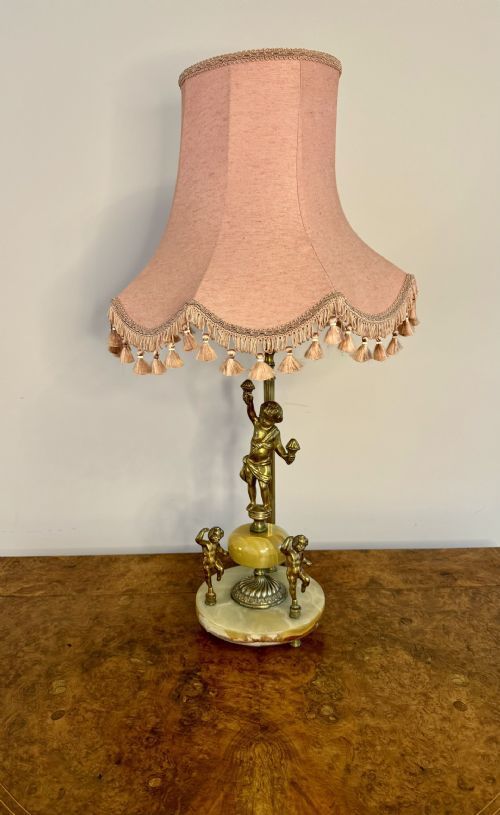


French Chateau Table Lighting
French chateau table lighting brings grand nineteenth-century reception rooms into modern spaces through gilded bronze, marble, and hand-carved wood.
French Chateau Table Lighting
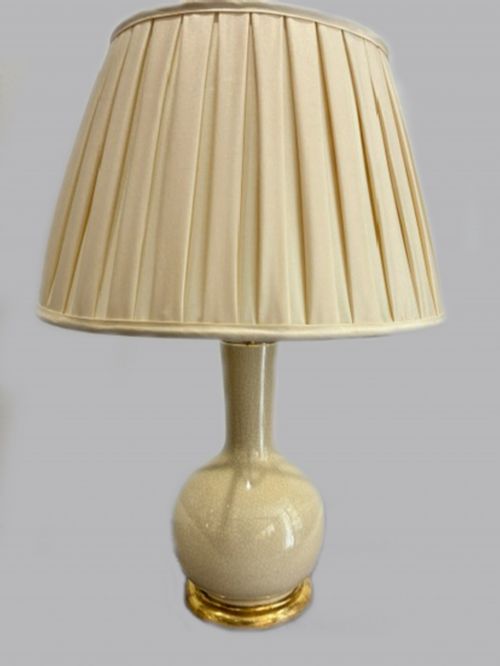
French chateau table lighting encompasses decorative items designed to illuminate stately rooms, drawing from a rich tradition of continental craftsmanship. Buyers searching for french chateau table lighting encounter pieces ranging from converted nineteenth-century vases to elaborate candelabra and carved wooden lamp bases.
The selections span the nineteenth century up to the early twentieth century, reflecting Victorian, Louis XVI, and Rococo Revival influences. Many examples combine natural materials like marble and porcelain with metal mounts, showing the evolution from candle holders to electrified lighting.
Common forms include pairs of table lamps, multi-branch candelabra, and standard lamps. These objects frequently incorporate classical motifs such as cherubs, floral designs, and architectural pillars suited to formal interiors.
Materials and construction methods
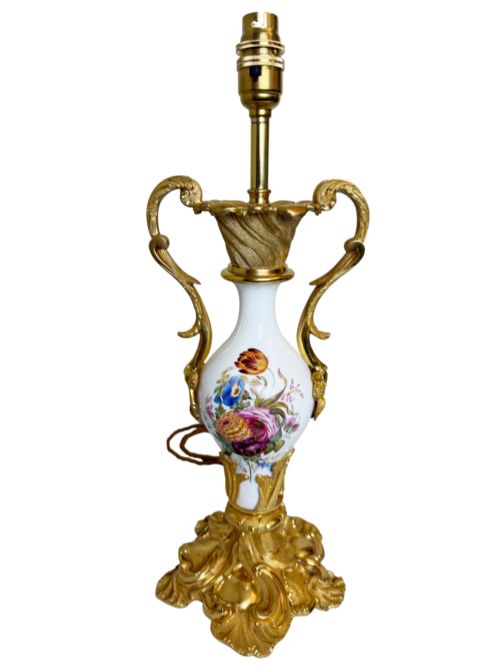
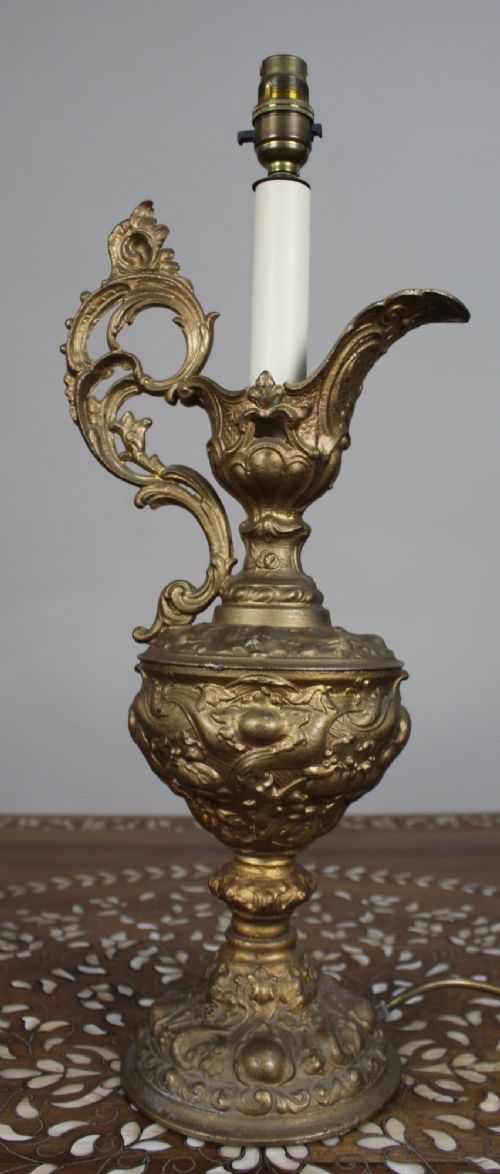
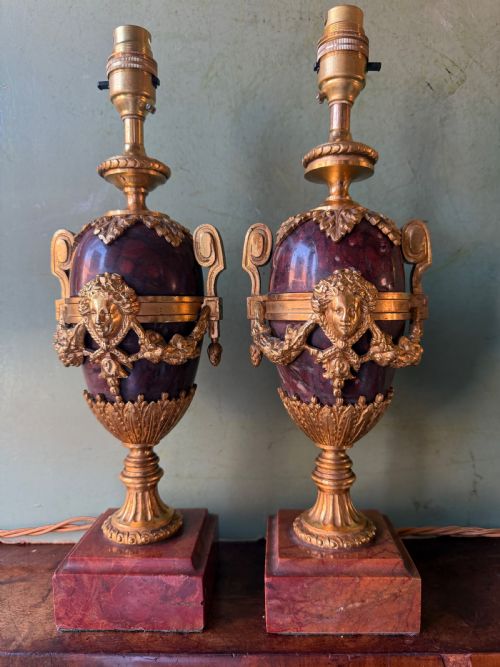
Makers utilised cast bronze, brass, and ormolu to construct durable frames and decorative mounts, often finishing surfaces with fine gilding. These metals provide the structural integrity and heavy bases characteristic of period lighting.
Stoneware components like rouge marble, green marble, and various ceramics, including Sevres style porcelain, were turned or moulded to form bodies and columns. Artisans combined these mineral elements with crystal drops and fabric shades to diffuse light.
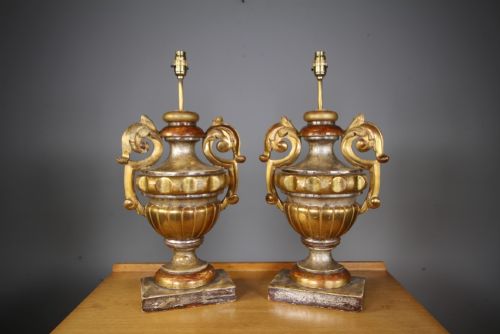
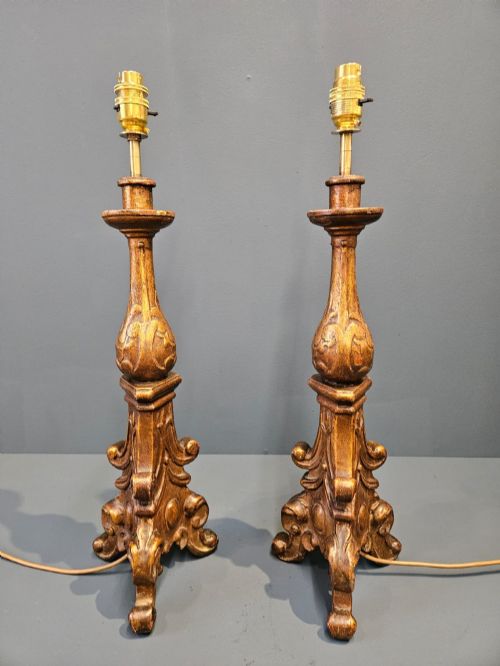
Woodworking traditions appear in carved pine and giltwood pieces shaped by hand. Craftsmen applied silver leaf and paint finishes to timber surfaces, demonstrating traditional joinery and carving techniques.
Materials across these listings include marble, crystal, and ormolu spanning the Victorian and Louis XVI style periods.
Distinctions in craftsmanship
The choice of raw material impacts the overall weight and presence, with solid natural marbles and high-fired porcelains commanding greater visual depth than moulded plaster or simple timber bases.
Integration of components reveals maker skill, particularly where metal mounts fit seamlessly against porcelain bodies or carved stone without visible gaps or rough joins.
The French Chateau Table Lighting Glossary
- Ormolu
- A type of gilded brass or bronze applied to furniture and lighting mounts. This surface treatment gives a bright golden appearance mimicking solid gold.
- Candelabra
- A branched candlestick holder designed to support multiple lights simultaneously. These often feature elaborate arms radiating from a central stem.
- Girandole
- A branched wall sconce or table candelabrum featuring reflective glass or mirror backs. The glass surfaces help amplify the illumination of the candles.
- Cloisonné
- An ancient technique for decorating metalwork objects with coloured glass paste separated by thin metal strips. These decorated sections add vibrant colour to lamp bases.
- Table Lustres
- Small decorative candelabra hung with cut crystal glass drops. The crystal pendants catch and refract candlelight across the room.
French Chateau Table Lighting: Frequently Asked Questions
How do I identify Louis XVI style lighting?
Louis XVI style pieces display straight architectural lines, symmetrical forms, and classical motifs such as fluted columns and ribbon twists.
They stand apart from earlier Rococo designs through a disciplined restraint and preference for geometric balance.
Were these lamps originally electric?
Most nineteenth-century examples began life as oil lamps, candles, or gas fixtures before being adapted for modern wiring.
Conversion work often retains the original antique body while updating internal fittings for safety.
How should I clean ormolu mounts?
Ormolu requires gentle dusting with a soft dry cloth to protect the delicate gold leaf or mercury gilding.
Avoid chemical polishes and abrasive cleaners that strip away the historic surface finish.
What is Sevres style porcelain?
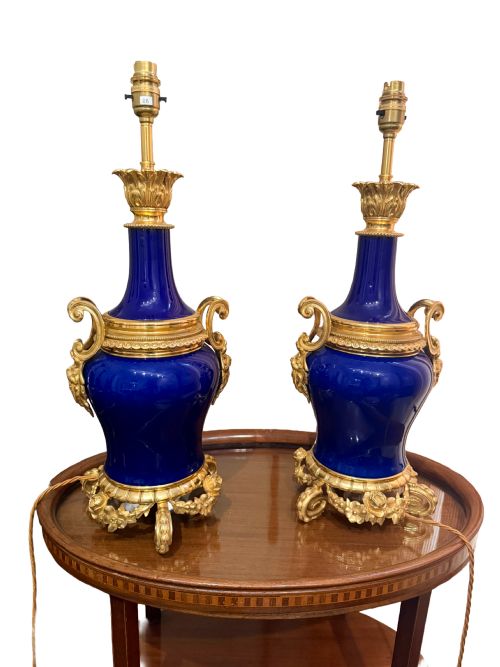
This term describes porcelain decorated in the manner of the famous French royal manufactory, known for rich blue grounds and gilded accents.
Such pieces often feature hand-painted scenes or floral panels integrated into lamp bodies.