


Gold Bone China Plates
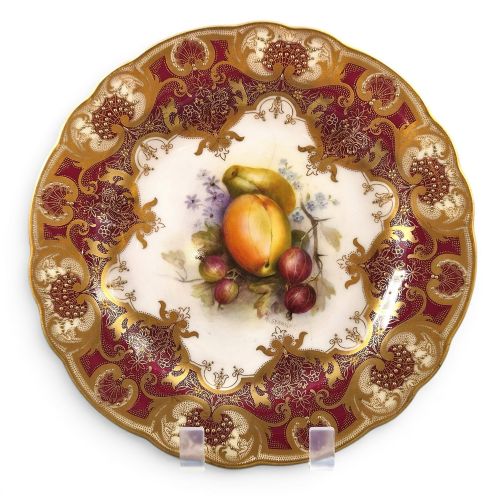
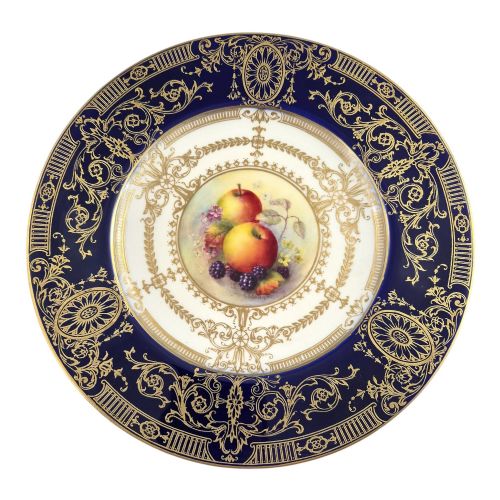
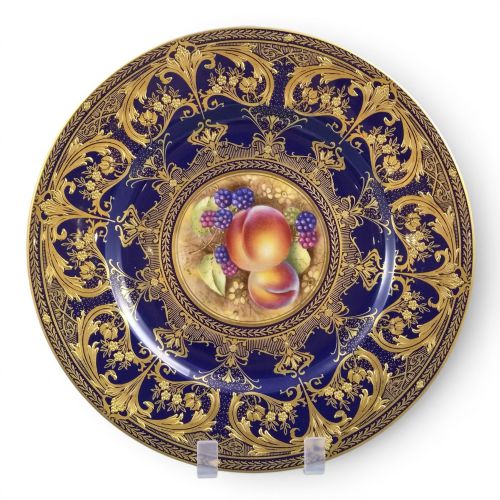
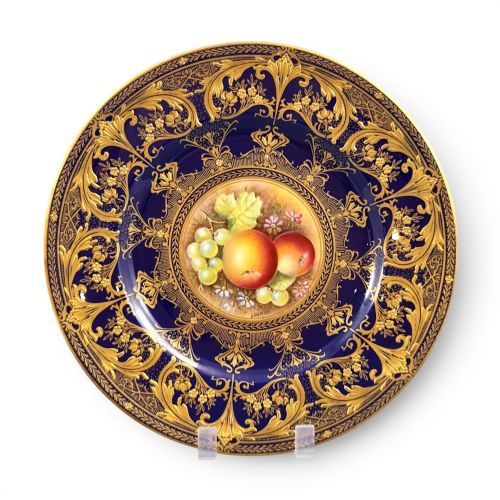
Gold bone china plates bring hand-painted fruit, botanical studies and rich gilding to the table from British potteries spanning the Georgian era to the mid-twentieth century.
Gold Bone China Plates
Gold bone china plates appear in forms such as cabinet plates, dessert plates, serving dishes and soup dishes. The selection stretches from Georgian and Regency services to Edwardian and later twentieth-century painted fruit pieces.
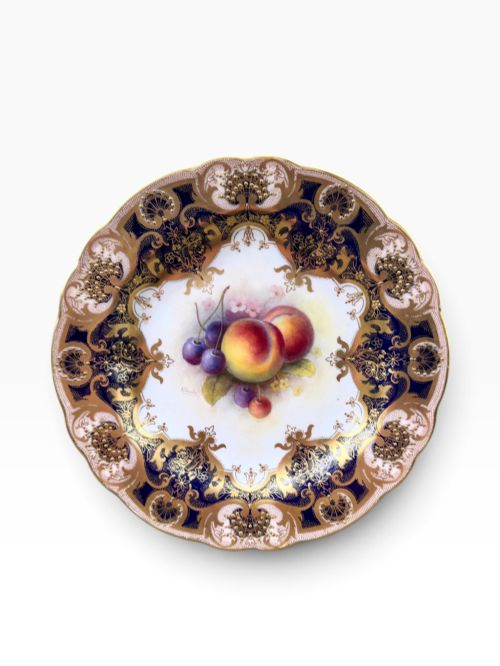
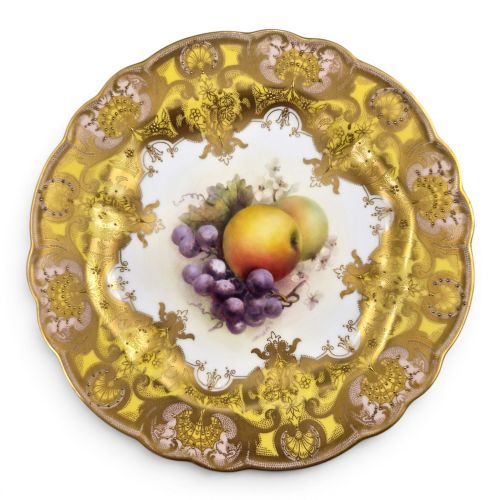
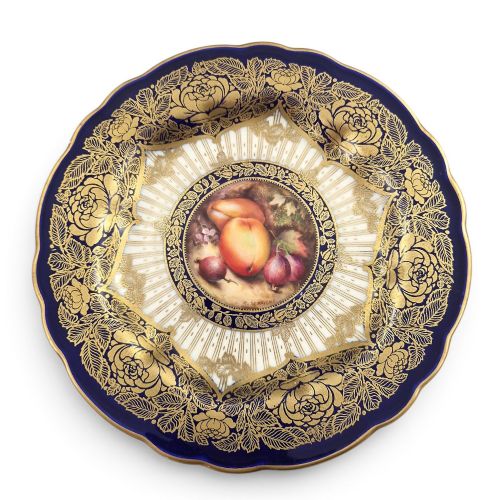
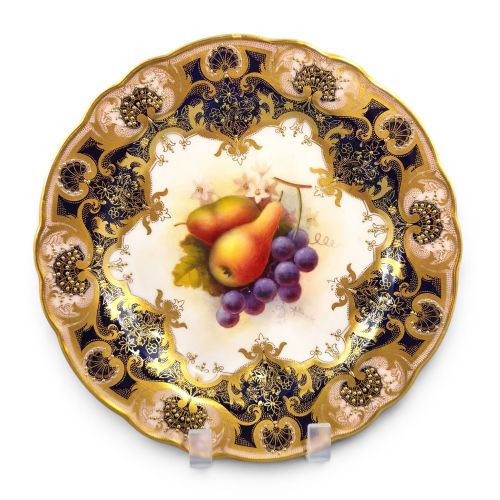
Makers represented include Royal Worcester, Royal Crown Derby, Minton, Coalport, and Flight, Barr & Barr. Painted fruit cabinet plates by artists like Richard Sebright, Albert Shuck and Brian Leaman recur frequently across the listings.
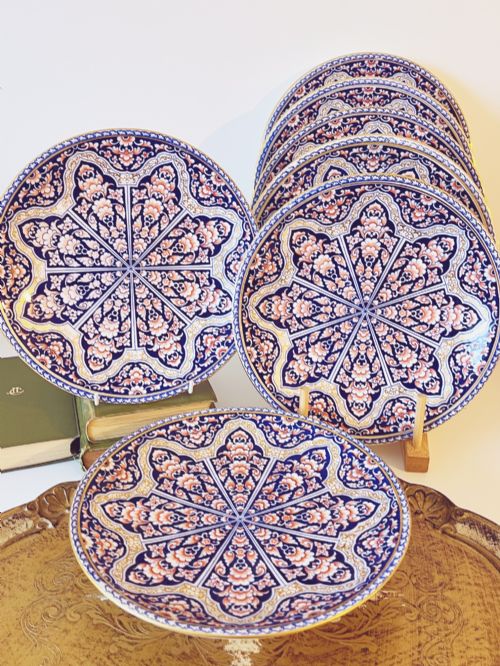
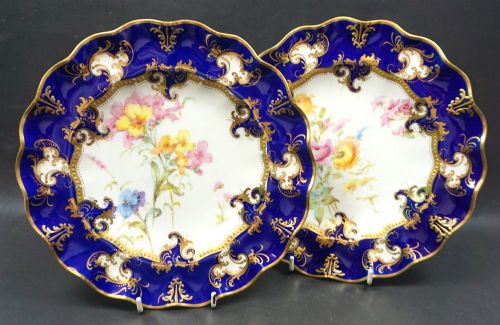
The material ranges from bone china and porcelain to earthenware, decorated with gold leaf, gilt enamel and hand-painted subjects from orchids and birds to Japanese style motifs.
Assessing quality
Quality rests upon the skill of the artist, particularly in hand-painted fruit and botanical studies where signed work by known painters commands greater attention.
The precision of the gilding and the crispness of moulded details such as basketweave borders distinguish standard production wares from high-status commission pieces.
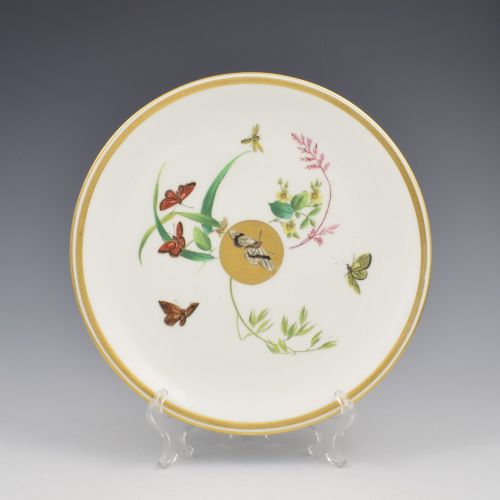
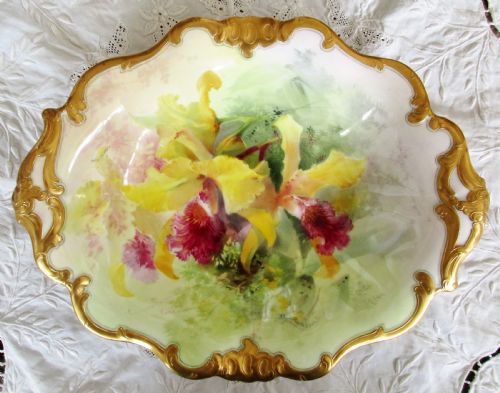
Several plates show detailed botanical studies of orchids and butterflies alongside golden Japanese style sun motifs.
Royal Worcester·Royal Crown Derby·Minton·Coalport·Flight Barr And Barr·Royal Doulton·Bloor Derby
The Gold Bone China Plates Glossary
- Cabinet plate
- A decorative plate intended for display in a cabinet rather than for dining use. These often feature elaborate hand-painted scenes and rich gilding.
- Pate-sur-pate
- A ceramic decoration method where wet porcelain slip is built up in layers to create a low relief cameo effect against a contrasting background.
- Gilding
- The application of gold leaf or gold dust to ceramic surfaces. It provides the metallic borders and highlights characteristic of fine antique dinner services.
- Dessert service
- A matching set of plates, dishes and comports designed for the final course of a formal meal. Surviving pieces often display botanical or fruit subjects.
- Enamel
- Opaque glass-based colour fused to the ceramic body during firing. It supplies the vibrant reds, blues and greens seen on floral and fruit plates.
Gold Bone China Plates: Frequently Asked Questions
How do I date these plates?
Dating relies on manufacturer backstamps, impressed marks, and pattern numbers recorded on the reverse of the ceramic body. Stylistic indicators, such as Regency shapes or Art Deco motifs, also help narrow down the period of manufacture.
Comparison with documented works by specific painters like Richard Sebright provides further chronological context for pieces produced during the Edwardian and later periods.
Were these plates used for dining?
Many pieces originated as part of larger dessert services intended for formal dining tables. Serving dishes, comports and dessert plates saw active use during the Georgian and Victorian periods.
Cabinet plates, by contrast, were created specifically for visual display in reception rooms and dining parlours rather than for serving food.
How should I clean them?
Careful hand washing in warm water using a mild detergent preserves the delicate enamel paints and gold leaf highlights. Dishwashers should be avoided entirely to prevent abrasion.
Soft cloths and gentle drying protect the aged ceramic surface and prevent damage to the historic glaze.
What is painted fruit?
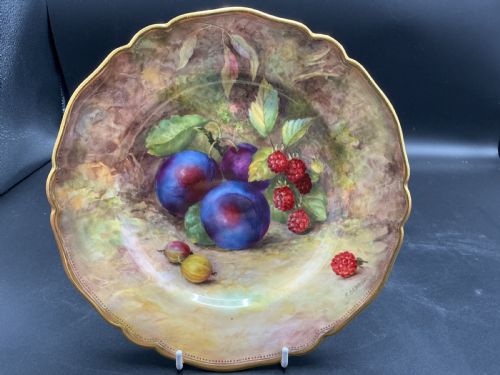
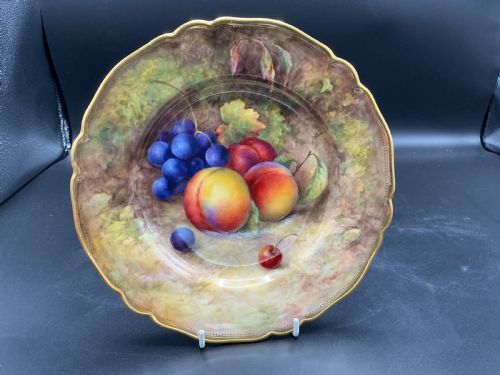
Painted fruit refers to a specialised genre of ceramic decoration where artists rendered detailed studies of apples, grapes, peaches and plums. Factories like Royal Worcester employed master painters to execute these lifelike compositions.
Signed examples by artists such as Thomas Steele, Albert Shuck and Brian Leaman represent the peak of this decorative tradition.