




Gold Arched Floor Mirror
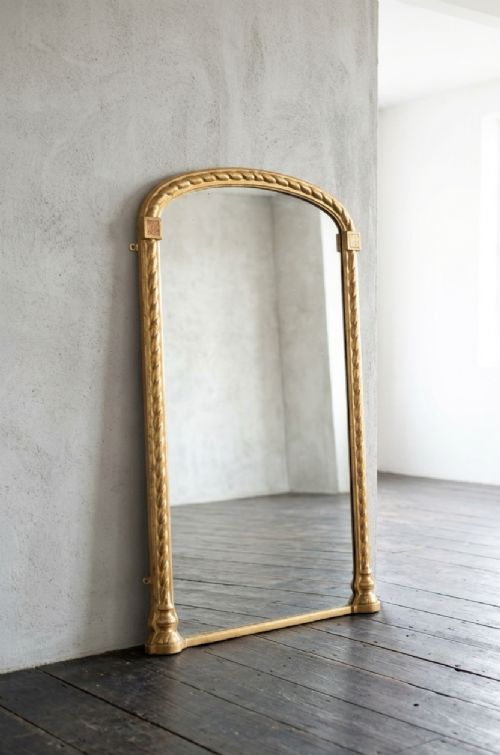
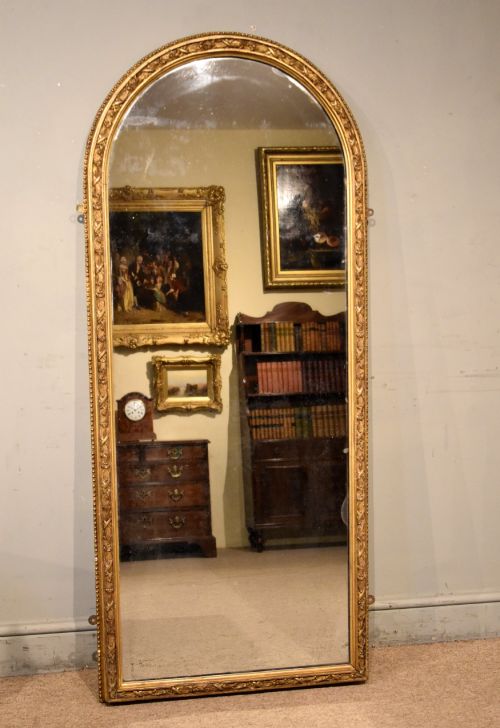
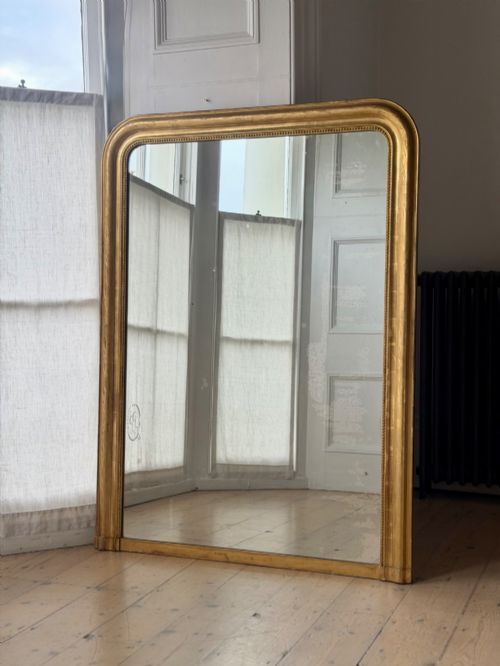
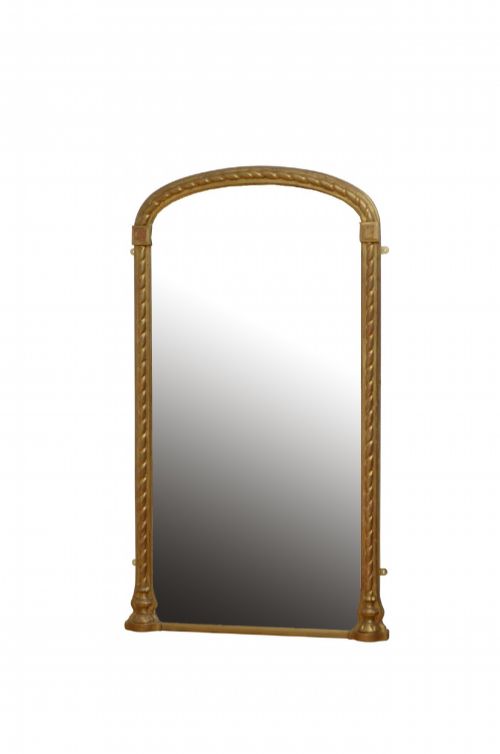
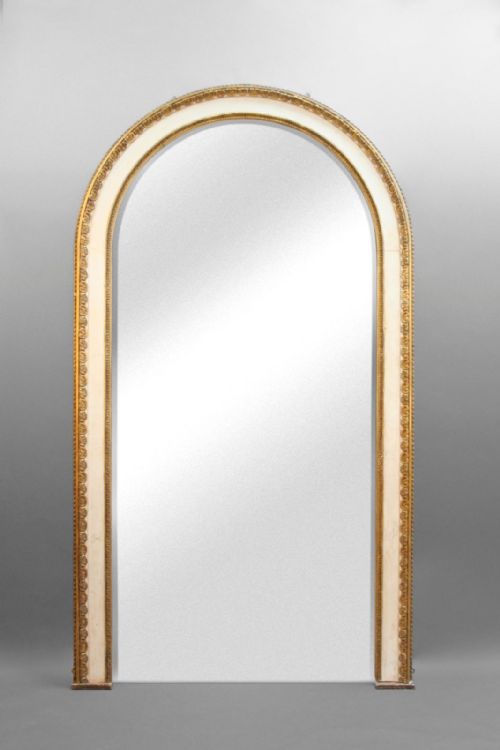
A gold arched floor mirror brings height and reflected light to a room, drawing the eye upward with its curved top.
Gold Arched Floor Mirror
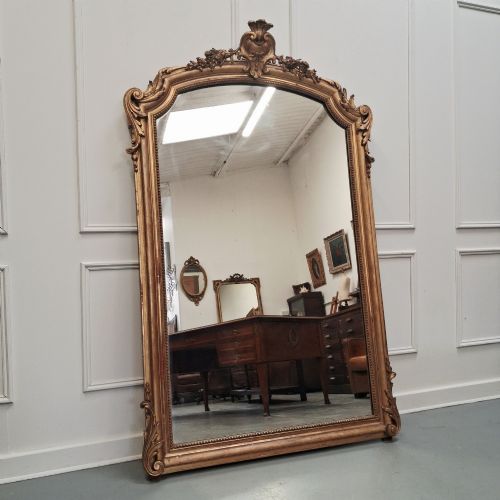
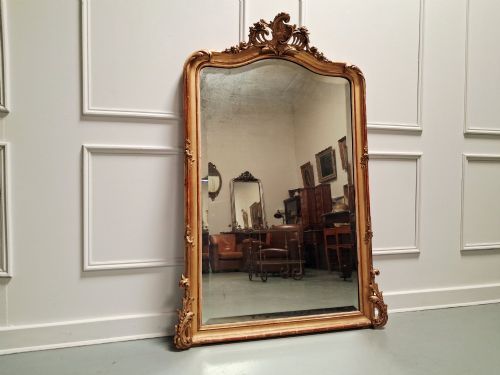
A gold arched floor mirror serves as a substantial vertical element in a room, designed to stand upon the floor or lean against a wall. The pieces found here span the nineteenth century and the early twentieth century, with nineteenth-century French examples appearing most frequently.
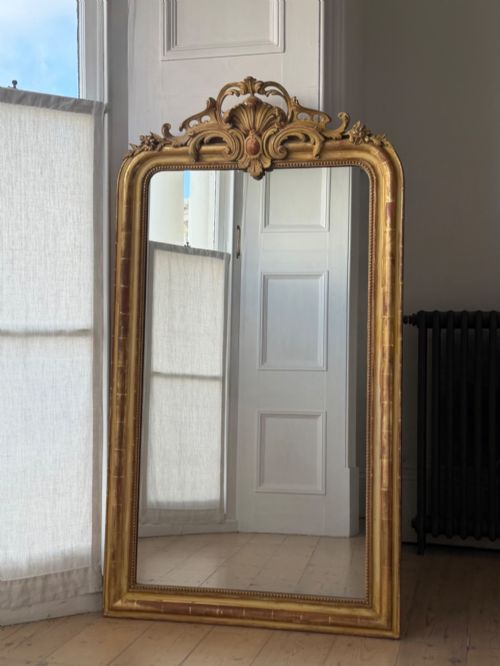
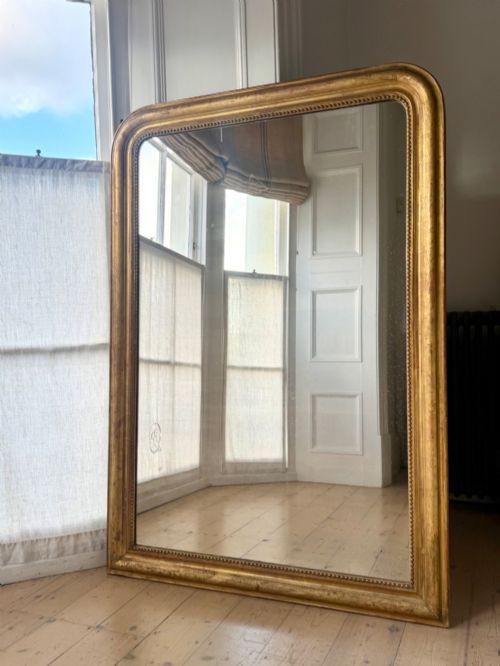
Many of these large items function as leaner mirrors, pier mirrors, or overmantels, featuring distinctive curved tops and tall proportions. Styles range from French Louis Philippe and Rococo Revival to Victorian and William IV designs.
The form developed to bounce natural light deep into reception rooms and parlours while providing a full-length reflection. The arched silhouette softens the strict geometry of interior walls.
Materials and construction
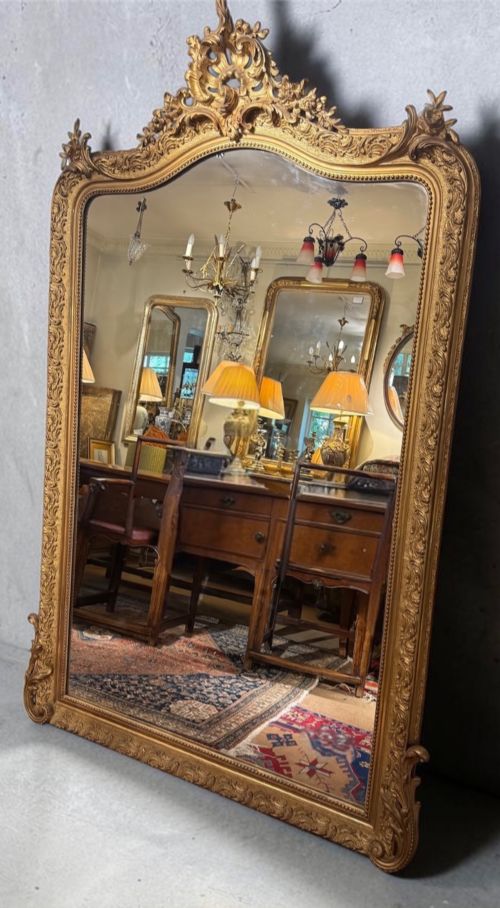
Carved wood and gesso provide the foundational structure for the elaborate frames, often finished with gold leaf, silver leaf, or giltwood applications. Artisans built these heavy frames to support substantial glass plates.
The optical qualities of the glass vary between traditional mercury glass and bevelled mirror glass. Frames frequently incorporate rope carving, crests, and layered ground colours such as red beneath the gilding.
Gold Arched Floor Mirror Retail Price Guide 2026
Typical asking prices for gold arched floor mirror among the pieces listed under this phrase on Sellingantiques today, from the lower quarter to the upper quarter. They describe what is for sale here now, not the wider market.
Look closely at the corners to find traces of red bole peeking through worn gold leaf where centuries of dusting fingers brushed past.
Markers of distinction
The depth and crispness of the wood and gesso carving dictate the visual weight and refinement of the frame. Superior examples display meticulously shaped crests and well-preserved original gilding over the wood substrate.
The integrity and clarity of the mirror plate itself distinguish finer pieces, particularly where early mercury glass or hand-bevelled edges survive intact. The harmony between the scale of the arch and the proportions of the vertical sides determines the overall presence of the object.
The Gold Arched Floor Mirror Glossary
- Giltwood
- Wood that has been coated with a thin layer of gold leaf or gold paint. This finish creates the characteristic bright metallic sheen seen on nineteenth-century frames.
- Gesso
- A plaster-like mixture applied to wood frames to create a smooth surface for carving and gilding. Artisans mould intricate relief details into this compound before applying gold leaf.
- Mercury glass
- A type of double-walled glass blown in the nineteenth century with a silvering mixture inserted between the layers. It produces a mottled, atmospheric reflection.
- Pier mirror
- A tall mirror designed specifically to hang on the wall between two windows, often placed above a small console table. They maximise light in darker architectural spaces.
- Louis Philippe
- A French stylistic period from the mid-nineteenth century characterised by restrained curves and simple arched tops. These frames avoid excessive ornamentation in favour of clean architectural lines.
Gold Arched Floor Mirror: Frequently Asked Questions
How do I safely lean a floor mirror?
A heavy floor mirror should rest securely against a structurally sound wall with the base positioned slightly out from the skirting board. Anti-tip hardware fixed discreetly to the frame top ensures stability in rooms with foot traffic.
Ensuring the weight rests evenly prevents undue stress on the wooden joints and the glass plate.
What is the difference between a leaner and an overmantel mirror?
Leaner mirrors are constructed with sufficient height and weight distribution to stand directly on the floor against a vertical surface. Overmantel mirrors traditionally feature proportions designed specifically to sit upon the mantelpiece above a fireplace.
Both forms utilise the arched top shape to draw the eye upward within the interior space.
How should I clean antique mirror glass?
Antique mirror glass requires gentle cleaning with a soft microfibre cloth and a mild, ammonia-free solution applied to the cloth rather than directly to the glass. This prevents moisture from seeping behind the plate and damaging the silvering.
Care must be taken around the edges where the original backing or mercury layer may be exposed.
How do I date a nineteenth-century gilt mirror?
Dating relies on examining the construction methods of the wood frame, the type of gesso preparation, and the characteristics of the glass plate. Nineteenth-century pieces often display hand-bevelex glass, subtle tool marks on the timber, and specific stylistic cues such as Rococo revival motifs or Louis Philippe framing.
Wear patterns on the gilt surface also offer clues to the age of the piece.