

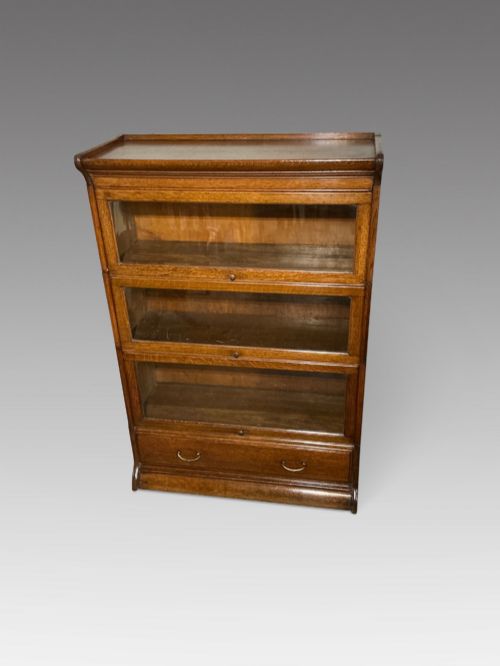
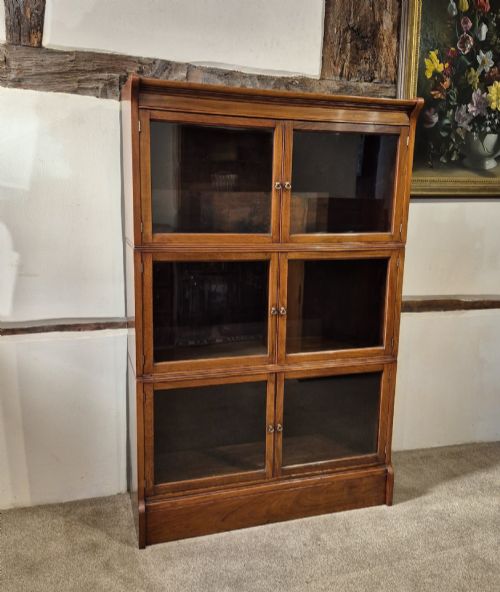
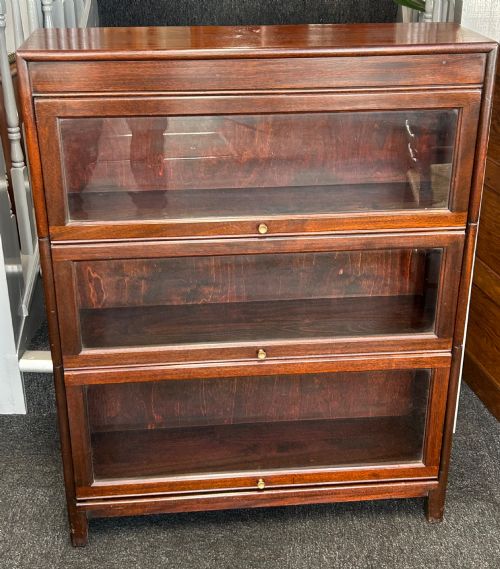
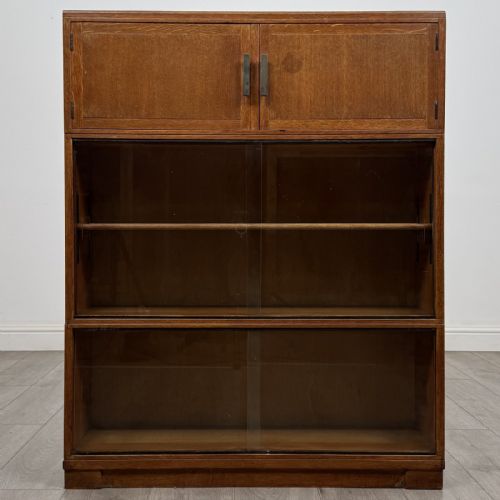


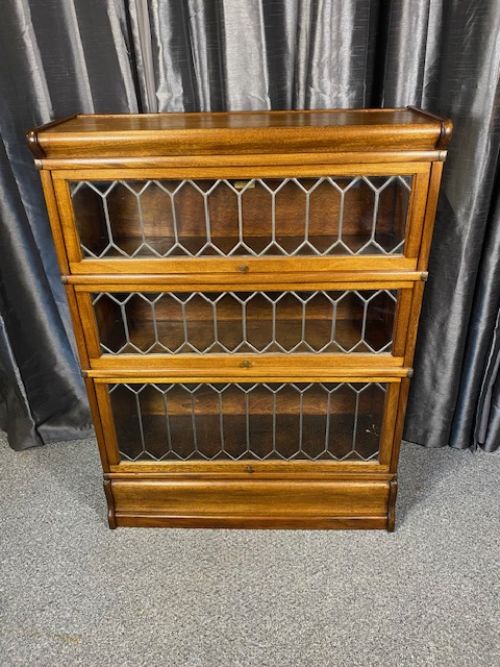

Globe Wernicke Style Bookcase
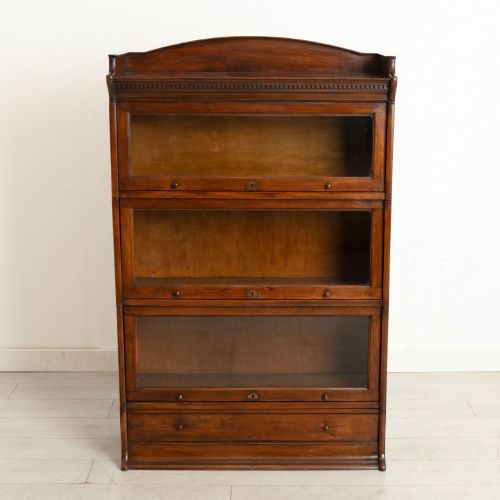
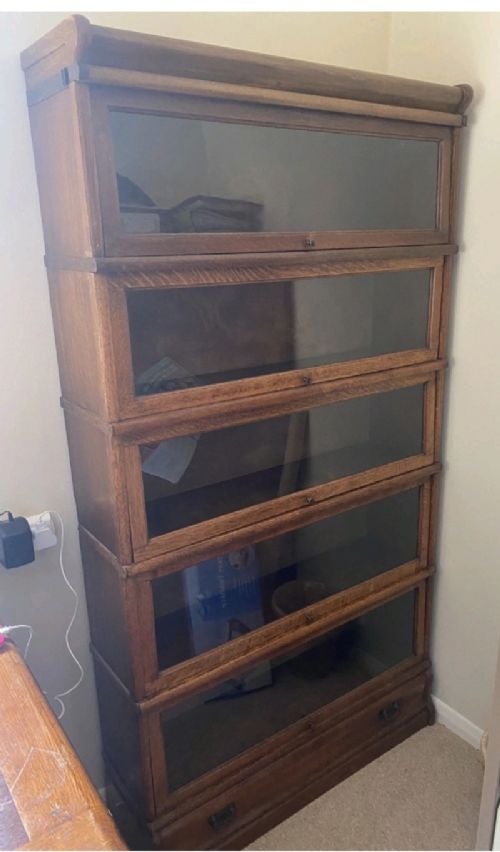
These stacking globe wernicke style bookcase designs offer modular storage with glazed lifting doors, appealing to collectors seeking period office furniture.
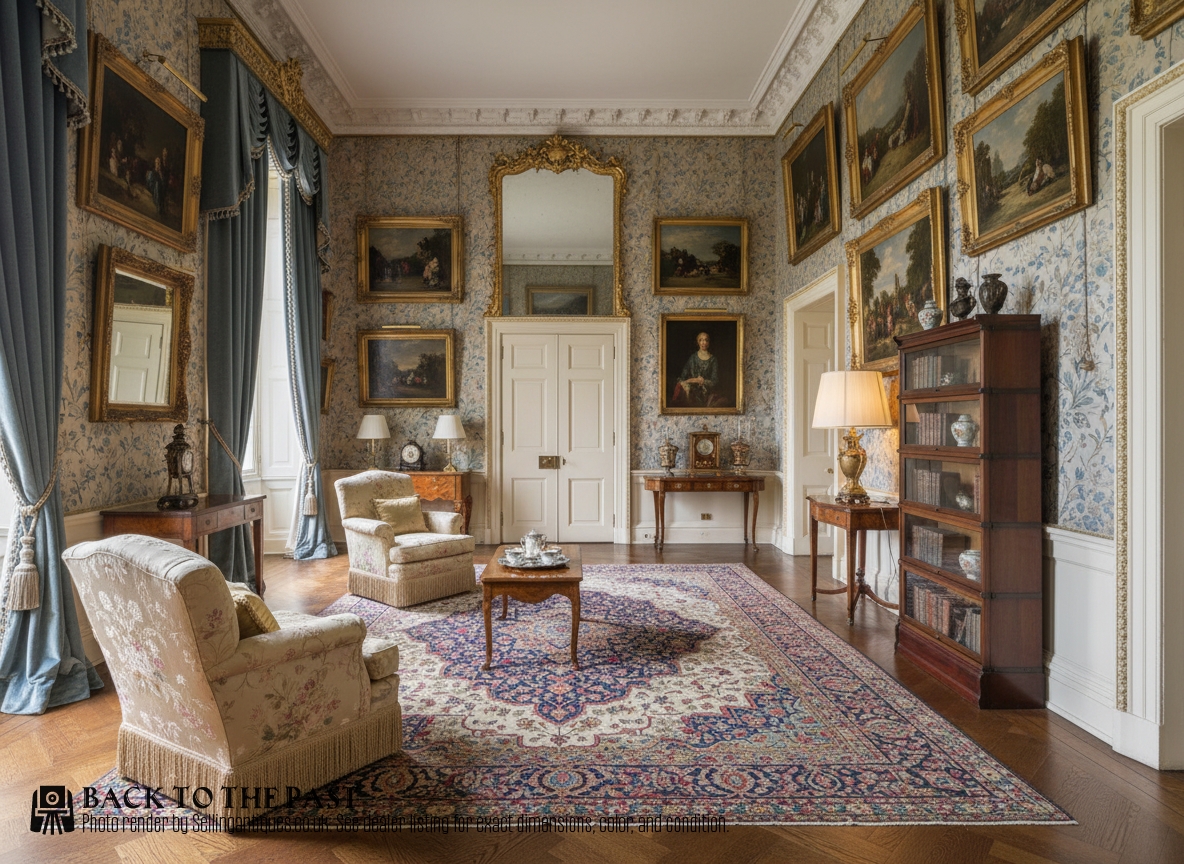
Globe Wernicke Style Bookcase
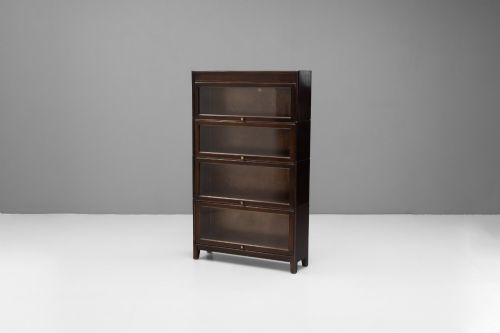
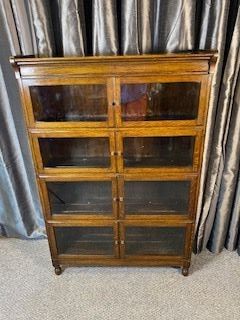
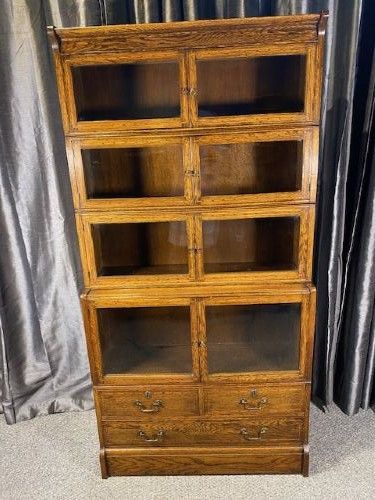
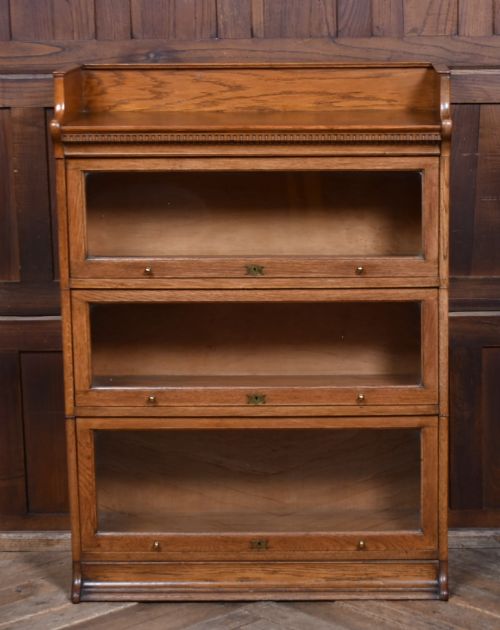
A globe wernicke style bookcase comprises modular sections that stack vertically, allowing individual tiers to house books behind rising glass panels. This design developed for lawyers and offices to protect volumes from dust while remaining easily reconfigured.
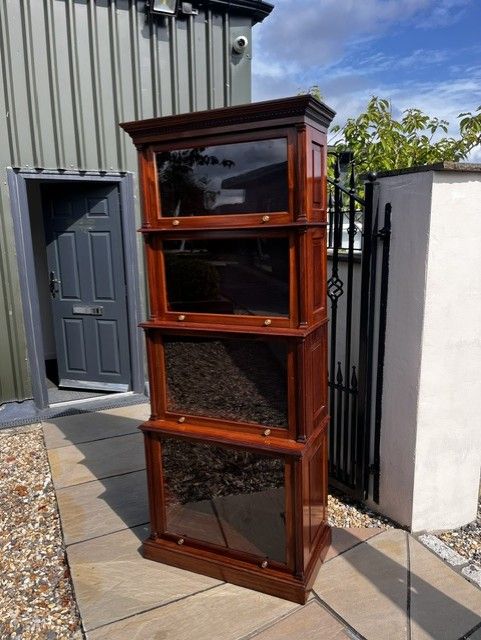
The version most commonly met on this page is constructed from oak, though mahogany examples also appear alongside varied multi-tier formats. These pieces date predominantly from the Edwardian period through to the nineteen thirties.
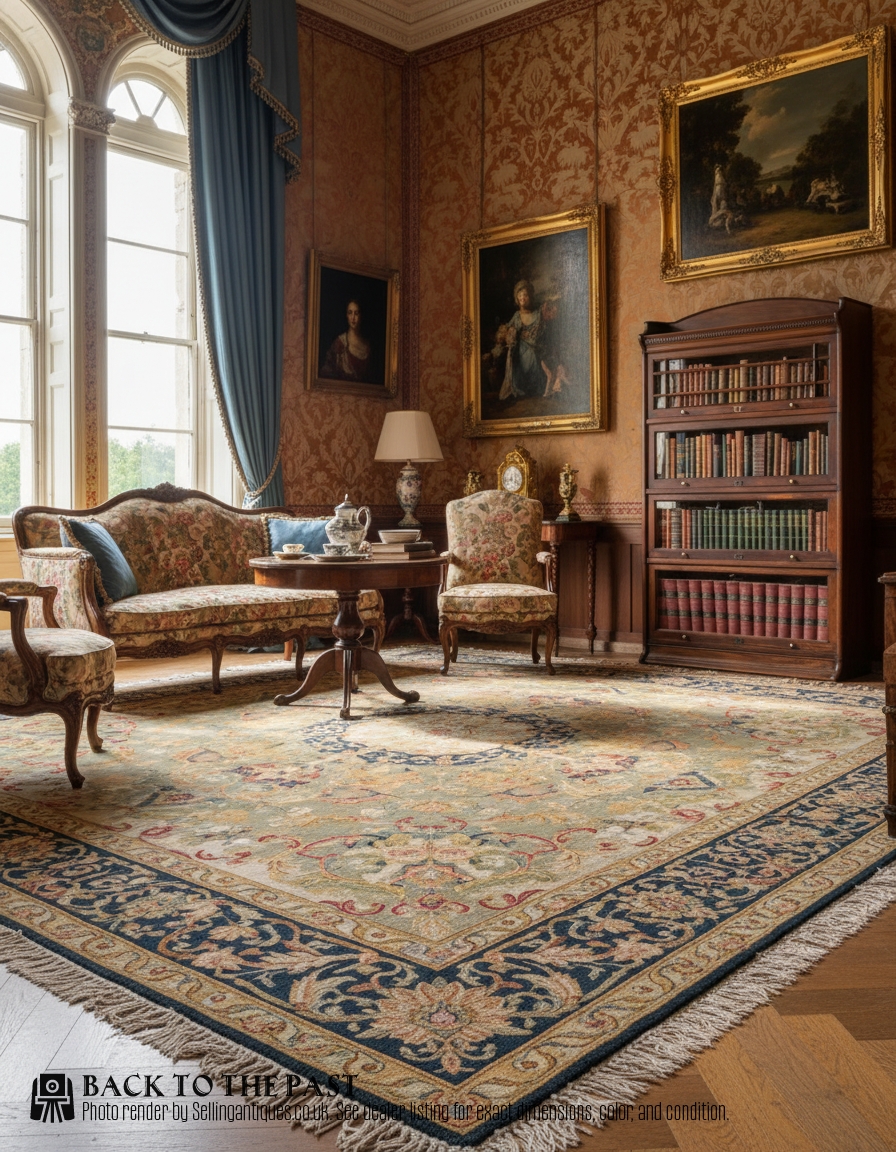
How They Were Made
Cabinet makers utilised solid oak and mahogany timbers for the carcases, often applying finishes such as limed treatments or golden tones. Brass hardware connects and operates the stacking mechanism, while metal components reinforce the internal lifting arms of the glass doors.
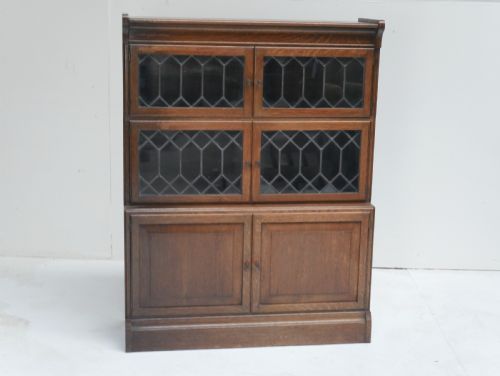
Glazing takes the form of plain glass or leaded panes fitted into individual tier frames. Each section operates independently, resting upon the tier beneath without permanent fixtures.
Globe Wernicke Style Bookcase Retail Price Guide 2026
Typical asking prices for globe wernicke style bookcase among the pieces listed under this phrase on Sellingantiques today, from the lower quarter to the upper quarter. They describe what is for sale here now, not the wider market.
Some barristers insisted on glass doors so they could read case titles without opening the cabinet during court preparation.
What Varies in Quality
The distinction between tiers rests upon timber selection and construction depth, where solid mahogany or figured golden oak denote higher workshop output. Simpler utilitarian office variants contrast with refined domestic editions featuring decorative finishes like limed oak or inlaid details.
Mechanical execution separates standard production from superior examples. Smooth operation of the lifting glass doors and precise alignment of stacked sections indicate careful original manufacture.
Globe Wernicke·Lebus·Minty·Heal's·Gunn·AMYL·Warwick
The Globe Wernicke Style Bookcase Glossary
- Sectional bookcase
- A modular piece built from separate tiers that stack together vertically. Each tier functions as a standalone cabinet enclosing books behind its own door.
- Barrister bookcase
- An alternative term for a stacking bookcase designed for legal professionals. These units protected working libraries while allowing quick transport during relocation.
- Leaded glass
- Small panes of glass joined together by lead strips into decorative geometric patterns. This technique appears on select glazed cabinet doors.
- Limed oak
- Timber treated with a special finish that leaves a white pigment in the open grain. This decorative surface treatment gains popularity during later decades.
Globe Wernicke Style Bookcase: Frequently Asked Questions
What is a globe wernicke style bookcase?
A modular shelving unit built from separate stacking sections with glazed lifting doors. Each tier operates independently to protect books from dust.
These pieces emerged around the turn of the twentieth century as functional office furniture before entering domestic libraries.
How do the stacking sections work?
Each tier rests upon the one below using specialised metal or brass guide arms attached to the glass doors. Lifting the door allows it to slide inside the top of the section.
Individual tiers can be separated or rearranged freely because the units are not permanently fixed together.
What woods were used for these bookcases?
Makers utilised oak and mahogany predominantly, with variations including golden oak, solid mahogany, and limed oak finishes. Some examples feature ebonised surfaces or inlaid details.
Glass, brass, and lead materials complete the construction of the doors and internal mechanisms.
How do I date a sectional bookcase?
Dating relies on stylistic clues and construction methods spanning the Edwardian era into the nineteen thirties. Art Deco examples exhibit cleaner geometric lines and lighter oak finishes.
Makers' stamps or labels found inside the cabinet tiers provide direct evidence of manufacture.