



Glider Stand Rocking Horse
A glider stand rocking horse is a substantial wooden toy designed for children, offering a smoother motion than traditional bow rockers.
Glider Stand Rocking Horse
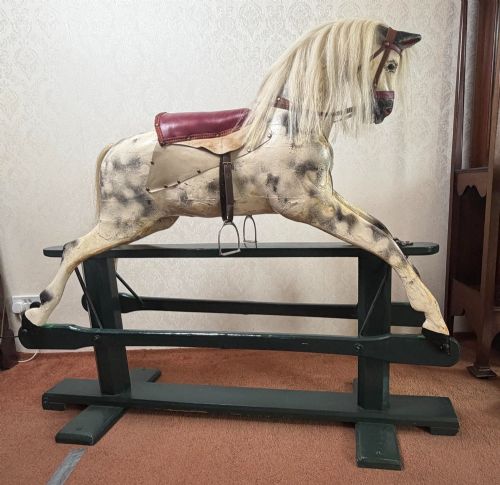
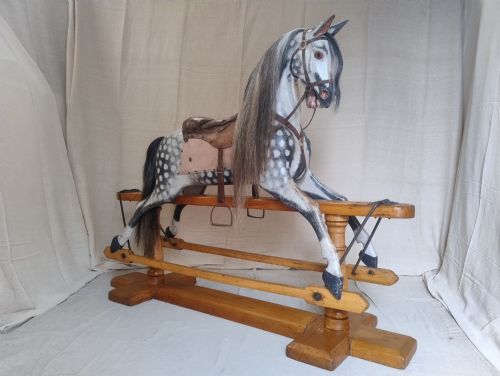
A glider stand rocking horse sits on a suspended mechanical frame rather than curved wooden rockers, allowing the animal to glide smoothly back and forth. These pieces date across the Victorian, Edwardian, and interwar periods, reflecting changes in domestic play and toy manufacturing.
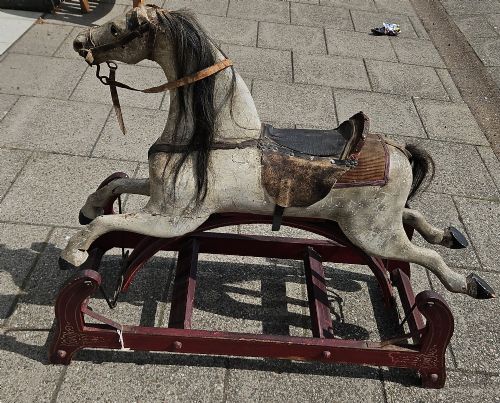
The animals themselves take the form of carved wooden horses, often painted with dappled coats and fitted with tack. On this page, most examples appear mounted on traditional bow rockers rather than safety glider stands, despite the search phrase.
Origins span British workshops of the nineteenth and twentieth centuries, with traditional British styles dominating the selection. Buyers encounter both monumental Victorian showpieces and simpler interwar toys intended for active play.
Materials and construction methods
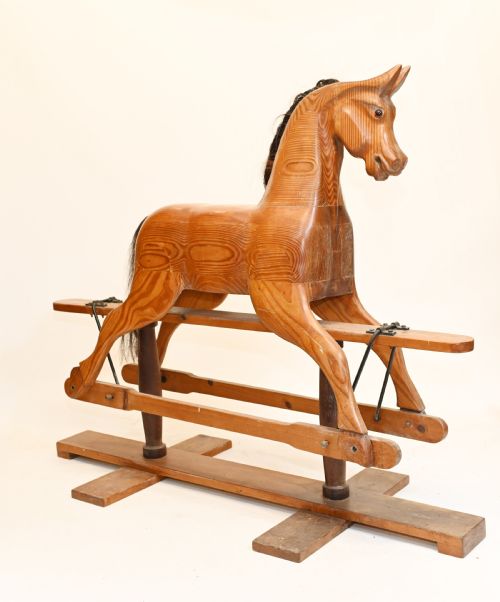
Makers shaped the bodies from solid timber such as pine, carving the heads and limbs before assembling the core structure. Glass eyes and real horsehair manes and tails added realistic detail to the painted wooden forms.
Metal brackets, iron pins, and steel swing arms connected the animal to its stand in glider variants, enabling the swinging motion. Leather straps provided reins and harness work, completing the traditional tack.
Some horses bear the honest scars of nursery battles, retaining decades of children's fingerprints in their playworn paint.
Distinctions in quality and preservation
The depth and expression of the carving set superior pieces apart, particularly around the head, ears, and open mouth. Master carvers achieved anatomical realism that simpler workshop output lacked.
Survival of original paintwork, glass eyes, and horsehair significantly influences the character of a piece. Retaining early or original surfaces demonstrates how the toy was kept through generations.
F.H. Ayres·Lines Bros Sportiboy·Collinsons
The Glider Stand Rocking Horse Glossary
- Bow rocker
- The curved wooden shoes attached to the feet of traditional rocking horses. They allow the horse to rock back and forth on the floor.
- Dappling
- The painted spot pattern applied to the horse body. Traditional makers used stencils or brushwork to create realistic grey or bay markings.
- Glider stand
- A mechanical wooden or iron frame that suspends the rocking horse above the ground. This system provides a level sliding motion without the horse moving across the room.
- Horsehair
- Natural hair utilised for the mane and tail of traditional horses. It offers durability and an authentic texture compared to synthetic alternatives.
Glider Stand Rocking Horse: Frequently Asked Questions
How do glider stands differ from bow rockers?
A glider stand uses a mechanical linkage of wooden or iron arms to suspend the horse above a fixed base. This mechanism moves the animal forward and backward on a level plane.
Traditional bow rockers rely on curved wooden feet resting directly on the floor. This older design creates a tilting arc rather than a gliding motion.
Are these toys safe for modern children?
Antique rocking horses were built to nineteenth and twentieth-century standards using solid timber and iron fittings. They often feature heavy wooden bodies and metal mechanical parts that lack modern safety certifications.
Most buyers today treat them as decorative objects or traditional nursery items. If used by children, they require close adult supervision.
How should I care for original paint and horsehair?
Preserving original surfaces requires a stable indoor environment away from direct sunlight and damp conditions. Dusting gently with a dry, soft cloth prevents grime accumulation without harming the painted finish.
Avoid using liquid cleaners, polishes, or modern solvents on antique paint or horsehair manes. Leather tack benefits from occasional specialist leather conditioning if it remains dry.
How can I tell the age of a rocking horse?
Dating relies on construction methods, timber types, and the style of the carving. Victorian examples often display deep, detailed hand-carving and horsehair stuffing, while later twentieth-century pieces can utilise simpler forms and different joint techniques.
Maker marks, stencilled signatures on the stand, and surviving original paint finishes also help narrow down the decade of production.